Respecting Differences: A Story About Respect
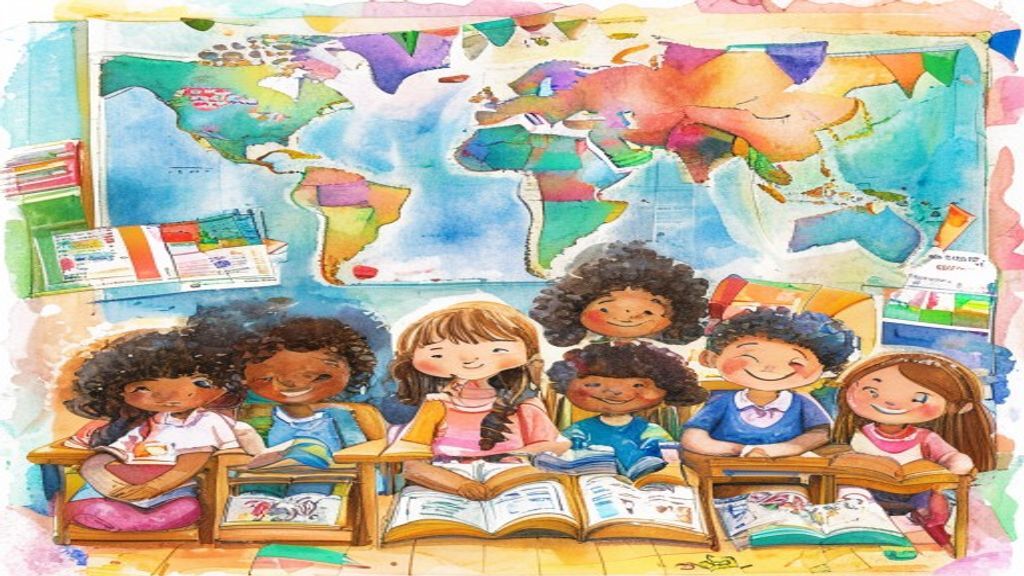
Once upon a time, in a cozy classroom filled with maps and colorful flags from every corner of the world, sat seven children who were about to embark on the most magical journey of their young lives. Their teacher, Ms. Amara, had sparkling brown eyes and a laugh that sounded like wind chimes on a breezy summer day. She believed that the best lessons weren't found in textbooks, but in the hearts and stories of people everywhere.
"Class," Ms. Amara announced one bright Monday morning, her voice dancing with excitement, "this week, we are going to travel the world without ever leaving our classroom!"
Little Maya's hand shot up like a rocket. She wore a bright yellow dress and had her dark hair braided with colorful beads that clicked softly when she moved. "But Ms. Amara, how can we travel without going anywhere?"
Ms. Amara smiled and opened a beautiful wooden box on her desk. Inside were seven golden envelopes, each sealed with a wax stamp bearing a different symbol—a sun, a moon, a star, a wave, a mountain, a tree, and a bird.
"Each of you will receive a special invitation," Ms. Amara explained. "Inside, you'll find the name of a country and a mission. Your job is to learn about that place, its people, their traditions, and what makes their culture beautiful and unique. Then, on Friday, you'll teach us what you've learned."
The children exchanged excited glances. There was Maya from Kenya, with her bright smile and love for singing. Beside her sat Hiroshi, whose grandparents had come from Japan and who always brought the most beautiful origami to show and tell. Next to Hiroshi was Sofia, whose family came from Mexico and made the most delicious tamales anyone had ever tasted.
Across the table sat twins Aiden and Ava, whose great-grandparents had immigrated from Ireland and Italy, bringing with them stories of leprechauns and feasts that lasted for days. Beside them was little Jamal, whose rhythmic name matched his love for the drum beats his father played, music that had traveled from Ghana generations ago. And finally, there was Yuki, quiet and thoughtful, whose mother had taught her the gentle art of Korean tea ceremonies.
Each child opened their golden envelope with trembling hands.
Maya gasped. "I'm learning about Japan!"
Hiroshi's eyes grew wide. "And I'm discovering Kenya!"
The children laughed with delight at the wonderful swap. Ms. Amara had intentionally given each child a culture different from their own. "The best way to understand someone," she said softly, "is to walk in their shoes, even if just for a little while."
That night, the magic began.
Maya sat at her kitchen table with her mother, poring over books about Japan. She learned about the cherry blossoms that painted the country pink every spring, about the graceful art of tea ceremonies, and about how Japanese children showed respect by bowing and listening carefully to their elders. "In Japan," her mother read, "harmony is very important. People work hard to make sure everyone feels comfortable and respected."
Maya practiced bowing in front of her mirror. "Like this, Mama?" she asked, bending at her waist.
"Just like that, sweetie. But remember, respect isn't just about bowing. It's about opening your heart to understand why others do things differently than we do."
Meanwhile, Hiroshi was having dinner with his grandparents, who were helping him learn about Kenya. His grandfather showed him pictures of the great Maasai people, with their beautiful beaded jewelry and vibrant red shúkà cloth. "The Maasai," his grandfather explained, "greet each other by asking about their families and their cows. Cows are very important in their culture—they represent wealth and life."
"But we don't have cows, Grandpa," Hiroshi said, confused.
His grandfather chuckled. "No, but we have other things we value. In Japan, we value harmony and working together. In Kenya, they value community and taking care of each other. Different doesn't mean wrong, Hiroshi. Different means the world is rich with many beautiful ways of living."
As the week went on, each child dove deep into their research.
Sofia discovered that Ireland wasn't just about leprechauns and four-leaf clovers. She learned about the hauntingly beautiful tradition of sean-nós singing, where stories were passed down through generations in melodies that could make you cry and smile at the same time. She learned about the warm hospitality of the Irish people, how they would invite a stranger into their home for tea and conversation, making them feel like family.
Aiden and Ava were enchanted by the Day of the Dead in Mexico. "It's not scary at all," Ava told her brother as they colored pictures of marigolds and sugar skulls. "It's about remembering people we love who have passed away. They make beautiful altars with photos and flowers and food, and they celebrate the lives of their ancestors."
"That's beautiful," Aiden whispered. "In America, we sometimes get sad when we talk about people who died. But in Mexico, they celebrate and tell happy stories. Both ways honor the people we miss."
Jamal was discovering the rich traditions of Italy. His eyes grew wide as he learned about the Sunday dinners where families gathered around tables laden with pasta and laughter, where grandparents told stories while children played underfoot. "It's like a big party every week!" he exclaimed to his mother.
"Family is the heart of Italian culture," his mother read from her tablet. "They believe that food cooked with love and shared together is the glue that keeps families strong."
And little Yuki, who was usually so quiet, became animated as she learned about Ghana. She discovered the talking drums, which could send messages across vast distances through different rhythms and tones. She learned about the kente cloth, with its bright geometric patterns that each told a story. "Every pattern means something," she told her father excitedly. "This one means strength, and this one means wisdom!"
Her father smiled. "Just like in Korea, where our traditional hanbok dresses have special meanings too. Every culture has its own way of telling stories and sharing wisdom."
By Friday morning, the classroom had been transformed. Each child had brought items to create a cultural corner representing their adopted country. Colorful fabrics hung from the walls, traditional foods sat on small tables (with ingredients listed for classmates with allergies), and handmade crafts decorated every surface.
Ms. Amara watched with tears in her eyes as the children presented what they'd learned.
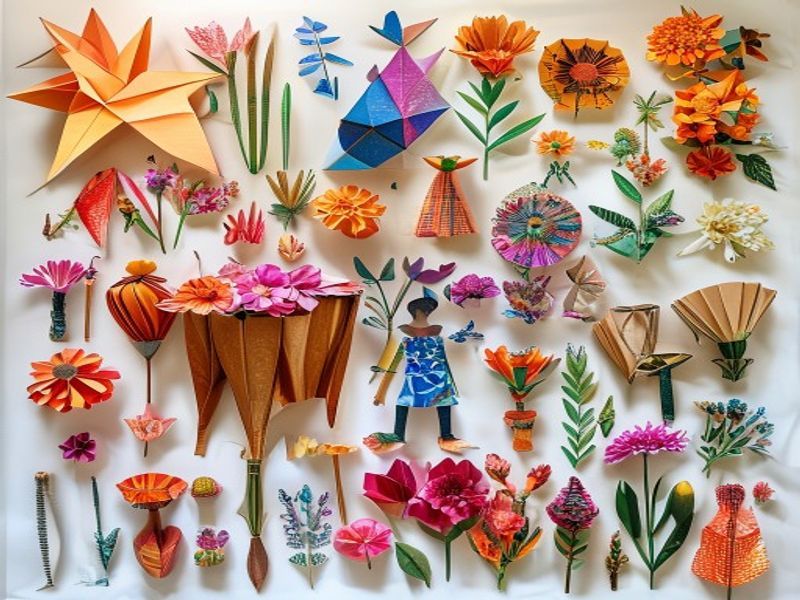
Maya demonstrated the Japanese art of origami, folding a simple paper into a beautiful crane. "In Japan," she explained, "they believe that if you fold a thousand paper cranes, your wish will come true. But more importantly, the cranes are given to people who are sick to wish them good health. It's about caring for others."
Hiroshi, wearing a colorful Maasai-inspired shúkà his grandmother had helped him make, taught the class how to say "Jambo" (hello) and "Asante" (thank you) in Swahili. "In Kenya," he said proudly, "community is everything. Everyone helps take care of everyone else. The whole village helps raise the children."
Sofia sang a bit of an Irish lullaby her grandmother had taught her, her voice sweet and clear. "In Ireland, they believe that stories and songs keep our ancestors alive in our hearts. When we sing their songs, we honor them."
Aiden and Ava explained the Day of the Dead, showing pictures of beautiful ofrendas (altars) decorated with marigolds, candles, and pan de muerto (bread of the dead). "It's not about being sad," Aiden said. "It's about celebrating that love never really dies. The people we love are always with us in our memories."
Jamal brought a drum and demonstrated some basic rhythms. "In Ghana, drums aren't just music," he explained. "They're a way of talking! Different beats mean different things. The drum can say 'come home' or 'celebration' or even tell stories about brave warriors."
And Yuki, who had been so shy at the beginning of the week, stood tall and proud as she showed the class a piece of kente cloth she'd made from paper strips. "Each color means something different," she said. "Gold is for royalty and wealth, green is for growth and renewal, blue is for peace and harmony, and red is for passion and strength."
As each child presented, something magical happened. The classroom wasn't just filled with information—it was filled with wonder, with questions, with connections being made between hearts.
"Ms. Amara," Maya asked, her eyes thoughtful, "why do people sometimes not like others who are different?"
Ms. Amara knelt down so she was eye-level with her students. "Sometimes, little one, people are afraid of what they don't understand. When we don't know about something, it can seem scary or strange. But when we take the time to learn, to really understand, we see that beneath all our differences, we all want the same things."
"What do we all want?" Jamal asked.
"We all want to be happy," Ms. Amara said softly. "We all want to be loved. We all want our families to be safe and healthy. We all want to belong somewhere and feel like we matter. The food we eat, the clothes we wear, the languages we speak—those are just the beautiful decorations on the outside. Inside, our hearts all beat the same."
The children nodded, understanding beginning to bloom in their young minds like flowers opening to the sun.
"So respecting differences," Sofia said slowly, working it out, "means knowing that my way isn't the only way, and that's okay?"
"Exactly!" Ms. Amara beamed. "Respecting differences means understanding that the world is richer because we're not all the same. Imagine if every song sounded identical, or every painting used only one color, or every story had the same ending. How boring that would be!"
"Like a rainbow with only one color!" Ava giggled.
"Or a garden with only one type of flower," Hiroshi added.
"Or a drum with only one beat," Jamal chimed in, tapping out a simple rhythm on his desk.
As the day ended, Ms. Amara gathered her students in a circle. "This week, you have all become teachers. You've shown me that when we approach differences with curiosity instead of fear, with wonder instead of judgment, we discover that the world is so much more beautiful than we ever imagined."
She looked at each child in turn—Maya with her bright beads, Hiroshi with his folded paper crane, Sofia with her Irish song in her heart, Aiden and Ava with their colorful altar pictures, Jamal with his drumming hands, and Yuki with her kente-patterned paper art.
"Respect," Ms. Amara said, "isn't about everyone being the same. It's about honoring that we are different, and those differences make our classroom, our community, and our world a place where everyone has something precious to share."
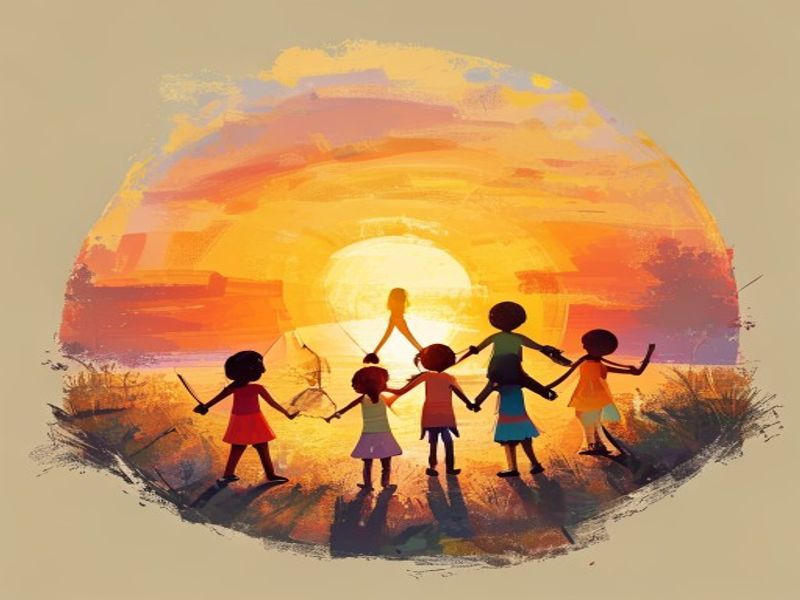
The children joined hands, forming a circle of seven different colors, seven different stories, seven different hearts beating as one.
"Will we do this again, Ms. Amara?" Yuki asked quietly.
"Oh yes, my dear," Ms. Amara smiled. "The world is so very big, and there are so many more beautiful stories to learn. And every story we learn brings us closer together."
As the sun set outside their classroom window, painting the sky in brilliant oranges and purples, the seven children made a promise to each other. They would never again look at someone who seemed different and feel afraid or unsure. Instead, they would feel curious. They would ask questions. They would listen with open hearts.
Because they had learned the most important lesson of all: that respect is the key that unlocks the treasure chest of human connection, and inside that chest, the greatest treasure isn't gold or jewels—it's understanding.
And with understanding comes love.
And with love, anything is possible.
The end.