The Clever Crows Colorful Problem: A Story About Creativity
A Story About Creativity
Deep in the heart of Whispering Woods, where sunlight filtered through leaves like golden honey and mushrooms grew in fairy rings, there lived a young crow named Corbin. Unlike his brothers and sisters who spent their days cawing from treetops and collecting shiny pebbles, Corbin had a very special gift—he saw problems as puzzles waiting to be solved.
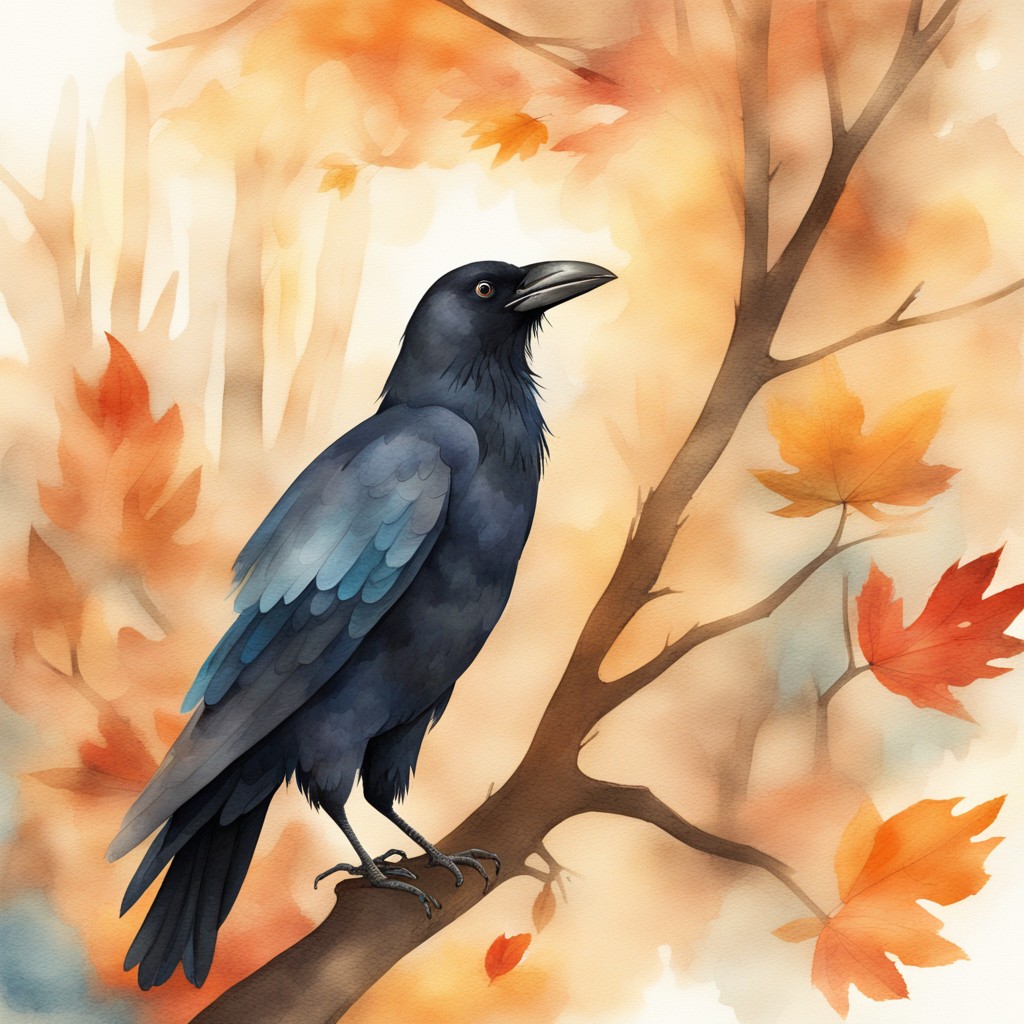
Corbin's feathers were not the sleek black of his family, but a dusty charcoal that looked almost blue when the sun hit them just right. His eyes, bright and curious, missed nothing. While other crows were content to follow the same paths and eat the same foods, Corbin was always asking, "What if?" and "Why not?"
One crisp autumn morning, as orange and red leaves danced down from the canopy like nature's own confetti, the animals of Whispering Woods gathered beneath the Great Oak for their weekly meeting. The air smelled of cinnamon and pine, and everyone could feel that change was coming.
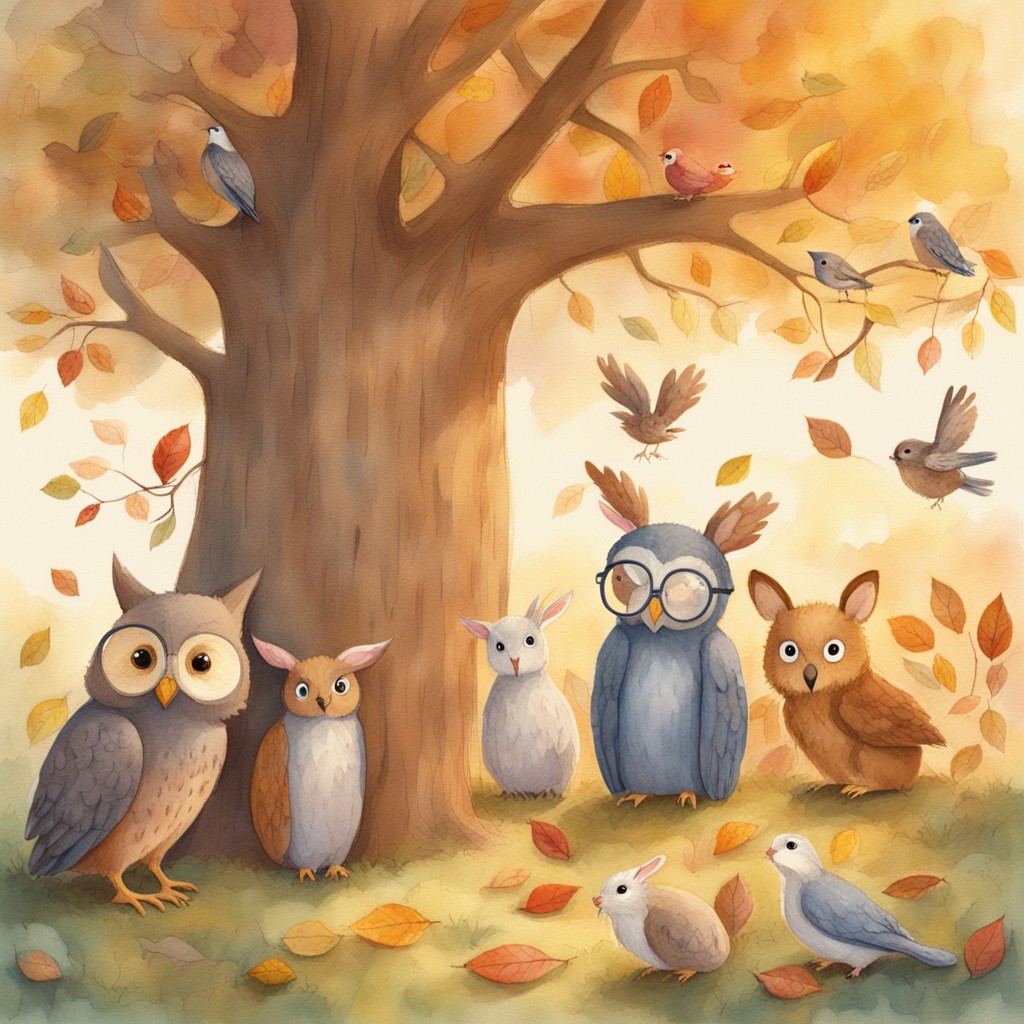
"Friends!" called out Elder Owl, his spectacles perched on his beak as he read from an ancient bark tablet. "Winter approaches fast. Our food stores are low, and the Great Blizzard of last year taught us we must be prepared. But we have a problem—our storage cave has collapsed!"
A murmur of worry rippled through the crowd. The storage cave was where the forest animals kept their nuts, berries, and seeds safe from snow and frost. Without it, they would face a hungry winter.
"We could dig a new cave," suggested Burly the bear, scratching his shaggy brown head. "But the ground is already growing hard with frost."
"We could hide food in our homes," chirped Chickadee, her tiny wings fluttering nervously. "But my nest is too small for more than a few seeds."
"We could ask the humans for help," squeaked Field Mouse, though everyone knew that rarely ended well for woodland creatures.
One by one, the animals shared their ideas, but each had a flaw. The meeting ended with bowed heads and heavy hearts. Winter was only weeks away, and they had no solution.
Corbin watched all of this from his perch on a low branch, his head tilted to one side as he thought. That evening, as the forest grew dark and the first stars began to twinkle, he stayed awake, his clever mind racing.
"The problem isn't finding a cave," Corbin said to himself. "The problem is keeping food dry and safe. A cave is just one solution. What if there are others?"
The next morning, Corbin woke before dawn. He flew through the misty forest, his wings cutting through the fog like a ship through gentle waves. He visited the meadow, the riverbank, the old orchard at the forest's edge. He watched spiders spin their intricate webs, studied how bees built their waxy honeycombs, and observed how squirrels sometimes buried nuts in hollow logs.
And then, at the edge of the thundering Silverstream Falls, Corbin saw something that made his heart leap. Behind the waterfall, where the rock face was dry and protected, grew clusters of mushrooms in natural hollows. The constant mist kept them moist, but the overhanging rock kept them from drowning.
"That's it!" Corbin cried, his voice echoing against the rocks. "Not a cave—a network! Many small spaces, not one big one!"
He raced back to the Great Oak, where the animals were once again worrying about their predicament. Corbin landed on a branch and cleared his throat.
"Friends!" he called out. "I have an idea, but I need your help."
The animals looked up, curious but skeptical. What could one young crow do that they hadn't already tried?
"Tell us, young Corbin," said Elder Owl kindly.
"The storage cave was one big space," Corbin explained, hopping down to a lower branch so everyone could see him. "But why do we need everything in one place? Why not many small places?"
He spread his wings wide. "Look around us! The forest is full of solutions! Hollow trees, abandoned burrows, rock crevices, spaces behind waterfalls! We don't need to build one big cave—we need to create a Hidden Harvest Network!"
"A what?" asked Rabbit, his long ears perked forward.
"A network of small storage places, scattered throughout the forest," Corbin said excitedly. "If one gets discovered or damaged, we don't lose everything. And we can put different foods in different places based on what they need to stay fresh!"
He pointed his beak toward the north. "The hollow beech tree stays cool and dry—perfect for nuts!"
He gestured east. "The boggy area near the marsh stays moist—we can store root vegetables there!"
He turned south. "The sunny ridge is warm and breezy—ideal for drying berries into fruit leather!"
The animals exchanged glances, their eyes slowly widening with understanding and hope.
"But how will we remember where everything is?" asked Squirrel, always practical. "I have trouble remembering where I bury my own nuts!"
Corbin's eyes sparkled. "That's where creativity becomes even more important. We create a system!"
Over the next three days, Corbin worked tirelessly with the animals of Whispering Woods. He was everywhere at once—helping Beavers reinforce hollow logs with mud and sticks, showing Badgers how to dig side chambers in their burrows that stayed at the perfect temperature for storing apples, and teaching the birds to weave waterproof baskets from reeds to hang in sheltered tree hollows.
But Corbin's most ingenious invention came on the third day.
"We need a map," he announced, "but not one written on paper that can get wet or lost. We need a living map!"
He gathered the wisest animals—the ones who knew the forest best. Together, they created the Memory Garden.
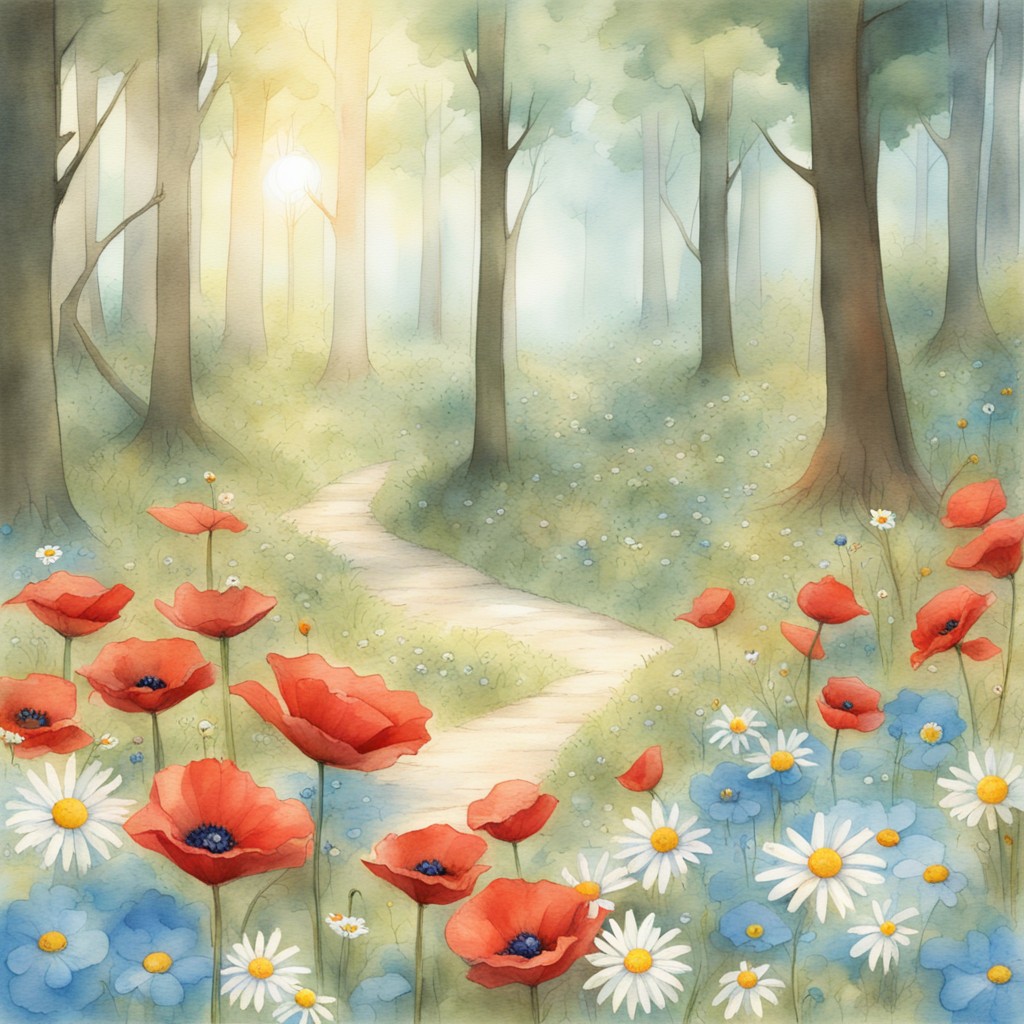
"Here, by the entrance to the Hidden Harvest Network, we plant flowers and herbs in a special pattern," Corbin explained, arranging seeds in the soft earth. "Red poppies point toward the nut storage. Blue forget-me-nots lead to the dried berries. White daisies show the way to the root cellar burrows."
The animals watched in amazement as Corbin created a beautiful garden that was not just lovely to look at, but told a story and gave directions. Even the youngest rabbit could follow the flower path to find food.
"And for those who cannot visit the Memory Garden," Corbin added, "we create a Song of Storage!"
He taught the birds a special melody, with different notes indicating different directions and storage locations. The Song of Storage echoed through the forest, and soon every creature knew that three high chirps followed by a trill meant "nuts in the hollow beech," while a warbling whistle meant "berries on the sunny ridge."
As the first snowflakes began to fall, gently dusting the forest like powdered sugar on a cake, the animals of Whispering Woods gathered once more beneath the Great Oak. But this time, there was no worry in their hearts—only gratitude and wonder.
"Corbin," said Elder Owl, his eyes glistening with pride, "you have saved us all. But how did you think of such a solution?"
Corbin ruffled his feathers modestly. "I just looked at the problem differently," he said. "Everyone was trying to solve the cave problem—how to replace what we lost. But I asked a different question: how do we keep our food safe? Once I asked that, I saw that the forest was already full of answers. We just had to be creative enough to see them."
Burly the bear stepped forward and placed a paw gently on Corbin's wing. "You didn't just solve our problem," the bear rumbled warmly. "You made our forest stronger. If a fox finds one storage place, he only gets a small portion, not everything. If a storm damages one hollow tree, we have dozens more. Your creativity didn't just save us—it protected us."
Winter came to Whispering Woods, blanketing the forest in white. But inside their warm homes, the animals were safe and well-fed. The Hidden Harvest Network worked perfectly. Whenever someone needed food, they followed the flowers or listened for the song, and they found what they needed.
Corbin became known throughout the forest as the Clever Crow, but he never let it go to his head. He continued to ask "What if?" and "Why not?" He taught the younger animals that creativity wasn't about being the smartest or having the best ideas—it was about being curious, asking different questions, and never giving up.
One snowy evening, as Corbin sat by his window watching the moonlight sparkle on the fresh snow, there was a gentle tap at his door. It was a young sparrow, shivering and nervous.
"Mr. Corbin?" the sparrow squeaked. "I have a problem. My family's nest is too cold, and we don't have enough feathers to keep warm. What should we do?"
Corbin's eyes lit up with that familiar spark of creativity. He thought of the abandoned squirrel dreys lined with soft moss, of the warm pockets of air trapped in snow banks, of how certain grasses woven together could create insulation.
"Come in, little one," Corbin said warmly. "Let's think about this together. Sometimes the best creativity happens when we put our minds together. Tell me—what if we looked at warmth differently?"
And as the fire crackled and the wind howled outside, two creative minds began to solve another problem, proving that creativity is not a gift we use up—it's a light that grows brighter every time we share it.
From that winter on, whenever the animals of Whispering Woods faced a challenge, they didn't just look for the obvious answer. They looked for the creative one. And more often than not, they found that the solutions were all around them, waiting to be discovered by minds curious enough to see them.
Because as Corbin taught them, creativity isn't about having all the answers—it's about being brave enough to ask new questions.
In the heart of Whispering Woods, if you listen carefully on a quiet night, you can still hear the Song of Storage echoing through the trees—a reminder that with creativity, no problem is too big to solve.