The Tree Court’s Wisest Judge: A Story About Justice
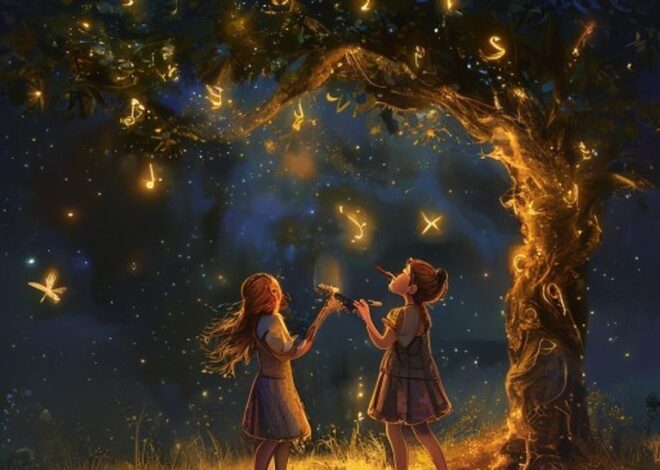
In the oldest part of the Whispering Woods, where the trees grew so tall they tickled the clouds and their roots wove together like fingers in a handshake, there stood a magnificent oak tree. This was no ordinary oak. For five hundred years, it had stood watch over the forest, and its hollow trunk had served as the Tree Court—the place where all disputes were settled fairly.
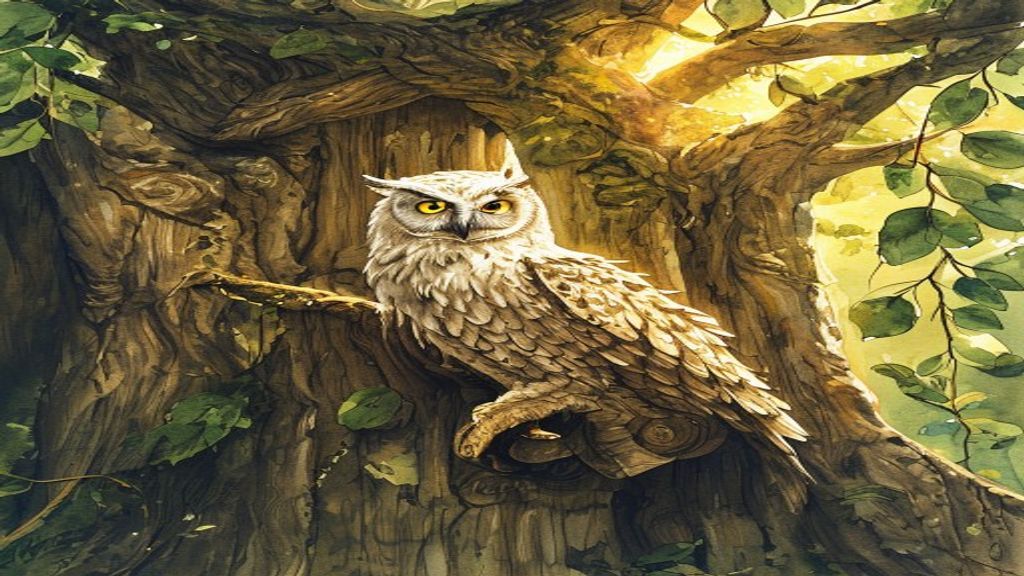
Every animal in the forest, from the smallest mouse to the largest bear, knew that if they had a problem they couldn't solve, they could climb the winding staircase of twisted vines to the Tree Court. And there, perched upon a branch carved smooth by centuries of use, sat Judge Oliver—the wisest owl in all the woodland realms.
Judge Oliver was ancient. His feathers had once been the color of autumn chestnuts, but now they were frosted with silver, like morning dew on fallen leaves. His eyes, though—his eyes remained sharp and golden, seeing not just what was on the surface, but the truth that lay beneath.
For as long as any creature could remember, Oliver had presided over the Tree Court. And in all that time, no one had ever questioned his fairness. For Oliver understood something that many forget: justice is not about being right—it is about being fair.
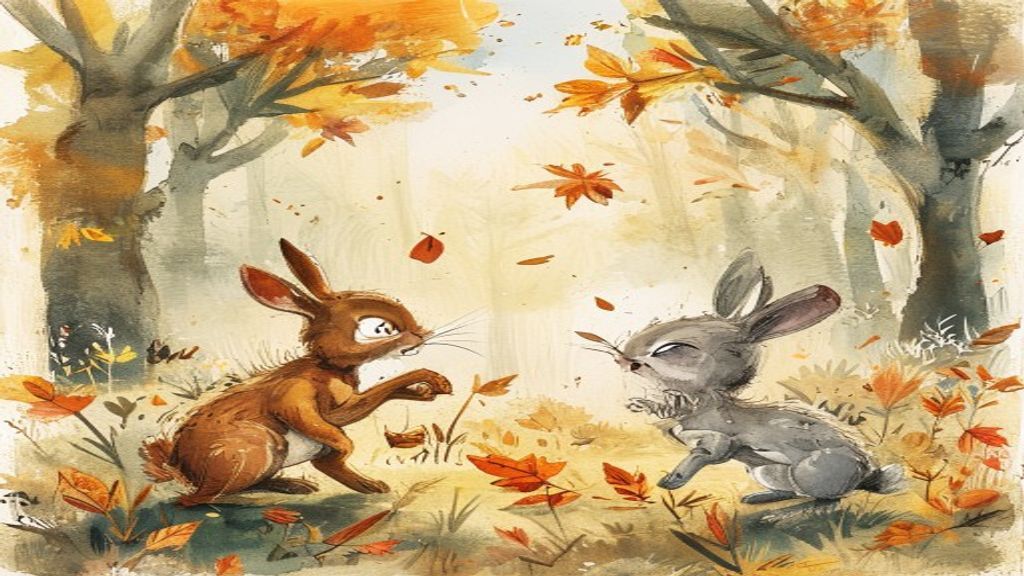
One crisp autumn morning, as golden leaves danced on the breeze like nature's own confetti, a commotion arose in the eastern meadow. Two young rabbits—Thistle and Bramble, brothers who had always shared everything—were having a terrible argument.
"It's my turn to use the big burrow!" Thistle shouted, his nose twitching with anger. "You had it all summer!"
"But I found it first!" Bramble retorted, thumping his foot so hard that mushrooms trembled. "Finders keepers! That's the law!"
Their argument grew louder and louder, drawing a crowd of curious forest dwellers. Squirrels stopped gathering nuts. Birds paused their morning songs. Even Old Mother Badger poked her head from her sett to see what the fuss was about.
"They'll come to blows soon," whispered a sparrow to her friend.
"Someone should fetch Judge Oliver," suggested a wise old tortoise who had seen many such disputes in his long life.
And so it was that Thistle and Bramble found themselves climbing the winding vine staircase to the Tree Court, their anger still hot but their hearts beginning to worry. For though they were fighting, they were still brothers, and neither truly wanted to hurt the other.
Judge Oliver listened to their story with infinite patience. When Thistle spoke, the owl's golden eyes focused entirely on him. When Bramble interrupted, those same eyes turned to the younger brother with equal attention. And when both fell silent, Oliver blinked slowly and hooted, "Tell me, young rabbits—what is it you truly want?"
"I want the big burrow!" they said in unison, then glared at each other.
"Yes, yes," Oliver said softly. "But why? What makes this burrow so special that you would quarrel with one you love?"
The rabbits fell silent. They had been so busy arguing that they hadn't stopped to think about why.
"It... it has the best view of the meadow," Thistle admitted. "I like to watch the sunrise."
"And it stays cool in summer," Bramble added. "And... and it's where Mama used to read us stories before she passed to the Great Warren in the sky."
Their eyes filled with tears. The memory of their mother softened their anger into something sadder, something that hurt in a different way.
Judge Oliver nodded, understanding dawning in his ancient eyes. "Ah. So it is not really the burrow you fight over, but your mother's memory. You both want to feel close to her."
The rabbits nodded, suddenly looking very young and very small.
"Then I have a question for you both," Oliver continued. "If your mother were here, what would she want? Would she want her sons to fight? Or would she want you to find a way to share her memory together?"
Thistle and Bramble looked at each other, shame replacing anger in their hearts.
"She would want us to be kind to each other," Thistle whispered.
"She always said sharing makes things sweeter," Bramble agreed.
Judge Oliver spread his wings in a gesture of approval. "Then here is my judgment: You shall share the burrow. Thistle shall have it in the mornings to watch the sunrise. Bramble shall have it in the afternoons when the heat comes. And in the evenings, you shall meet there together and tell stories of your mother, so her memory lives on in both your hearts."
Word of Oliver's wisdom spread through the forest like ripples on a pond. The next day brought a new case—one far more complicated than a dispute between brothers.
Marta the Magpie stood accused by the entire community of songbirds.
"She steals our things!" cried a robin, hopping angrily on a branch. "My shiny button, gone!"
"My silver thread!" added a wren. "Vanished!"
"She's a thief!" the birds chorused. "Punish her!"
Marta stood alone, her black and white feathers drooping. She said nothing in her defense, only stared at the wooden floor of the Tree Court.
Judge Oliver studied her. "Marta," he said gently, "do you have anything to say?"
The magpie looked up, her dark eyes filled with tears. "I... I took the things," she admitted. "But I didn't mean to hurt anyone. I just... I see something shiny and I can't help myself."
"Then you confess to the theft?" Oliver asked.
"I do," Marta whispered. "And I am sorry. I will return everything."
"Banish her!" the birds cried. "Drive her from the forest!"
But Oliver raised a wing for silence. "Before I pass judgment, tell me—why do you take these things, Marta? What need drives you to steal from your neighbors?"
Marta looked down again. "My mate is sick. The blue-wing sickness. There is only one cure—sparkleberries that grow on the far side of the Mountain of Mist. I have been collecting shiny things to trade with the mountain goats for passage through their territory."
"You stole to save your love?" Oliver asked.
"I would steal the stars from the sky if it would save him," Marta said, her voice breaking. "But I know that was wrong. I should have asked for help."
Judge Oliver turned to the songbirds. "You who demand punishment—tell me, what is the purpose of justice? Is it to cause pain to those who have done wrong? Or is it to make things right?"
Marta has done wrong," Oliver continued. "She admits it freely and returns what she took. But she did wrong for a reason many of you might understand—to save one she loves. Should we punish her for love? Or should we help her save her mate?"
He turned back to Marta. "Here is my judgment: You shall return all that you took, with apologies to each victim. You shall also work for each of them for three days—helping the robin build her nest, assisting the wren in gathering food. And in return, the community shall help you gather sparkleberries for your mate. For justice without compassion is merely cruelty wearing a mask."
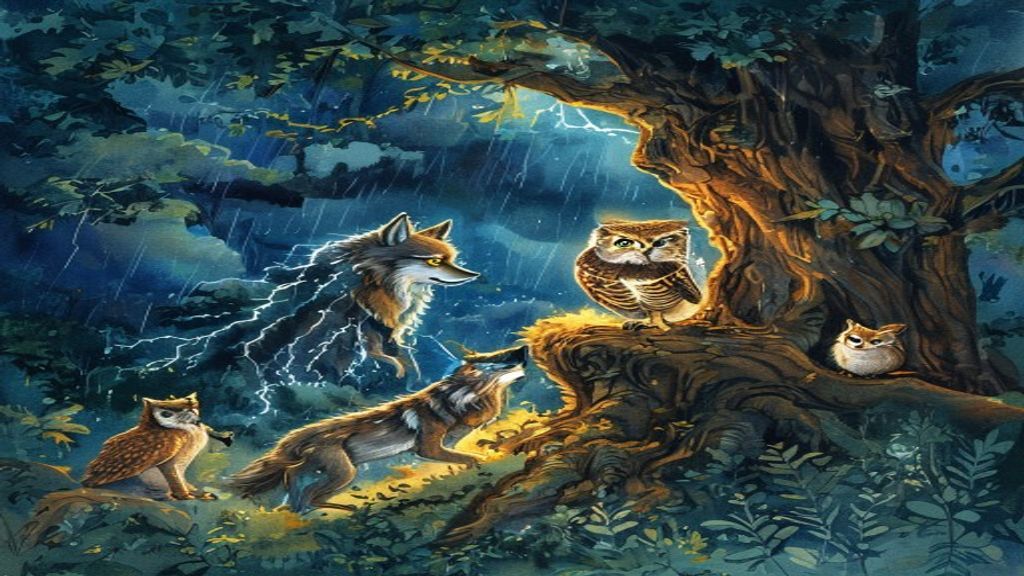
It arrived on a stormy night, when thunder rolled across the sky like giant drums and lightning painted the clouds in strokes of white fire. A young wolf named Shadow stood before the Tree Court, his fur wet and matted, his eyes wild with fear.
"I have done something terrible," Shadow confessed, his voice shaking. "I killed a deer. Not for food—not because I was hungry. But because... because I was angry."
"Shadow," he finally said, "what you have done is very serious. Life is precious—all life. To take it without need, without respect, is to wound the very fabric of the forest itself."
"I know," Shadow whispered. "I can't sleep. I can't eat. Every time I close my eyes, I see that deer's face. I deserve whatever punishment you give me."
"Punishment," Oliver said softly, "is not about what you deserve, young wolf. It is about what will make things right. Banishing you would not bring back the deer. It would only add another wound to the world."
"My father... he was the pack leader," Shadow said. "Two moons ago, hunters came. He tried to protect us, and they... they took him. I'm just... angry."
"You lost your father, your hero. And instead of being allowed to grieve, you were expected to be strong. So the anger grew, and grew, until it exploded at the wrong target."
"What do I do?" Shadow asked. "How do I make this right?"
"You cannot bring back the deer," Oliver said. "But you can honor that life by protecting others. Shadow shall serve the forest for one year. He will patrol the borders, protecting all creatures from the hunters who took his father. And each day, he will place a flower on the earth where the deer lived, remembering the life he took."
Shadow looked up. "You... you think I can be good?"
"I think you already are good," Oliver replied. "Justice is not about destroying the wicked—it is about helping the good find their way back to the light."
Years passed. Judge Oliver grew older, his silver feathers becoming almost white. Young creatures would ask, "Judge Oliver, how do you always know what is fair?"
And he would say, "I listen with an open heart, I ask questions with genuine curiosity, and I remember that everyone—every single creature—has a story. When you understand the story, you can find the path to justice."
One winter morning, Judge Oliver called the forest together. His time was ending. Ophelia would take his place.
"But I could never be as wise as you," Ophelia protested.
"Wisdom is not something you are born with," Oliver told her. "It is something you practice. Listen. Ask questions. Seek to understand rather than to judge. And always remember: justice without compassion is merely power wearing a mask."
"When someone wrongs you, do not ask, 'How can I make them suffer?' Ask instead, 'How can we heal?' For that is the path of justice—the path of fairness, of compassion, of hope."
Judge Oliver closed his golden eyes for the last time. He had served the forest well. He had shown that justice could be gentle as well as firm, understanding as well as fair.
Justice is not about being right.
Justice is about making things right.
And that made all the difference.