Kavi and the Little Bird Who Couldn’t Sing: A Story About Empathy
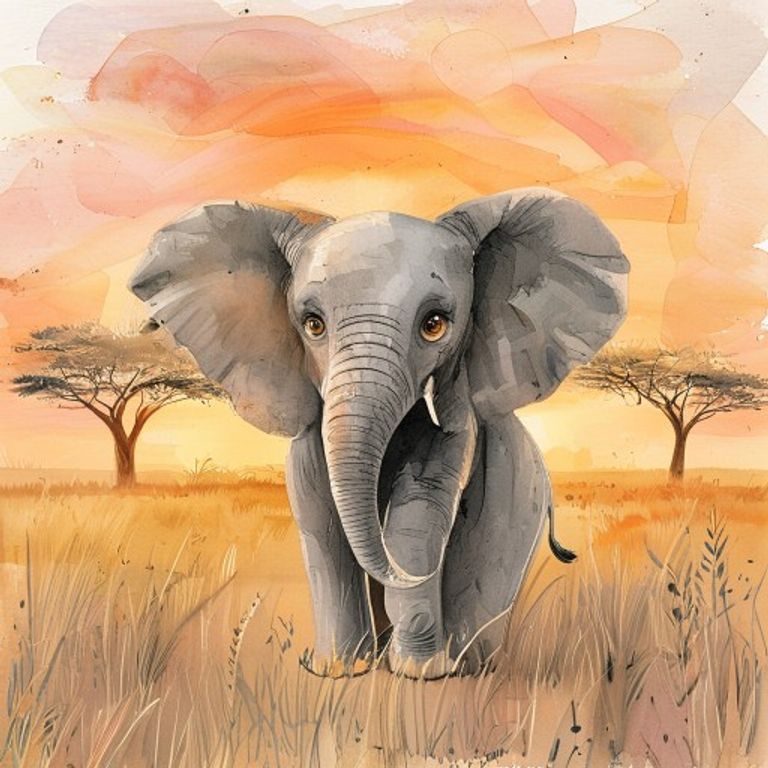
In the heart of the Golden Savanna, where the tall grass swayed like waves in the warm breeze, there lived a gentle elephant named Kavi. He was not the biggest elephant in the herd, nor the strongest, but he had something even more special—enormous ears that could hear the softest sounds from miles away, and a heart so big it seemed to hold all the love in the world.
Kavi's skin was a dusty gray, with wrinkles that held stories of every adventure he had ever experienced. His eyes were warm and wise, the color of honey in sunlight, and when he walked, his heavy footsteps created small pools of water that the other animals would drink from during the dry season. The little creatures of the savanna called him "Big Brother Kavi" because he always listened when they had troubles, no matter how small.
But there was one creature in the Acacia Grove whom no one seemed to notice—a tiny weaver bird named Pipit. She was the smallest bird anyone had ever seen, barely larger than a grasshopper, with feathers that were a soft dusty brown, the color of the earth after rain.
Pipit loved to sing. At least, she tried to sing. But whenever she opened her beak, what came out were strange, warbling sounds that didn't sound like the beautiful melodies of the other birds. The other birds would giggle when Pipit tried to join their morning chorus. "What kind of bird are you?" they would ask. "Birds are supposed to sing beautifully. That's what birds DO."
Pipit would puff up her tiny chest and try again, but her beak would tremble, and the notes would come out all wrong. She began to wake up before dawn, practicing alone in the tall grass where no one could hear her.
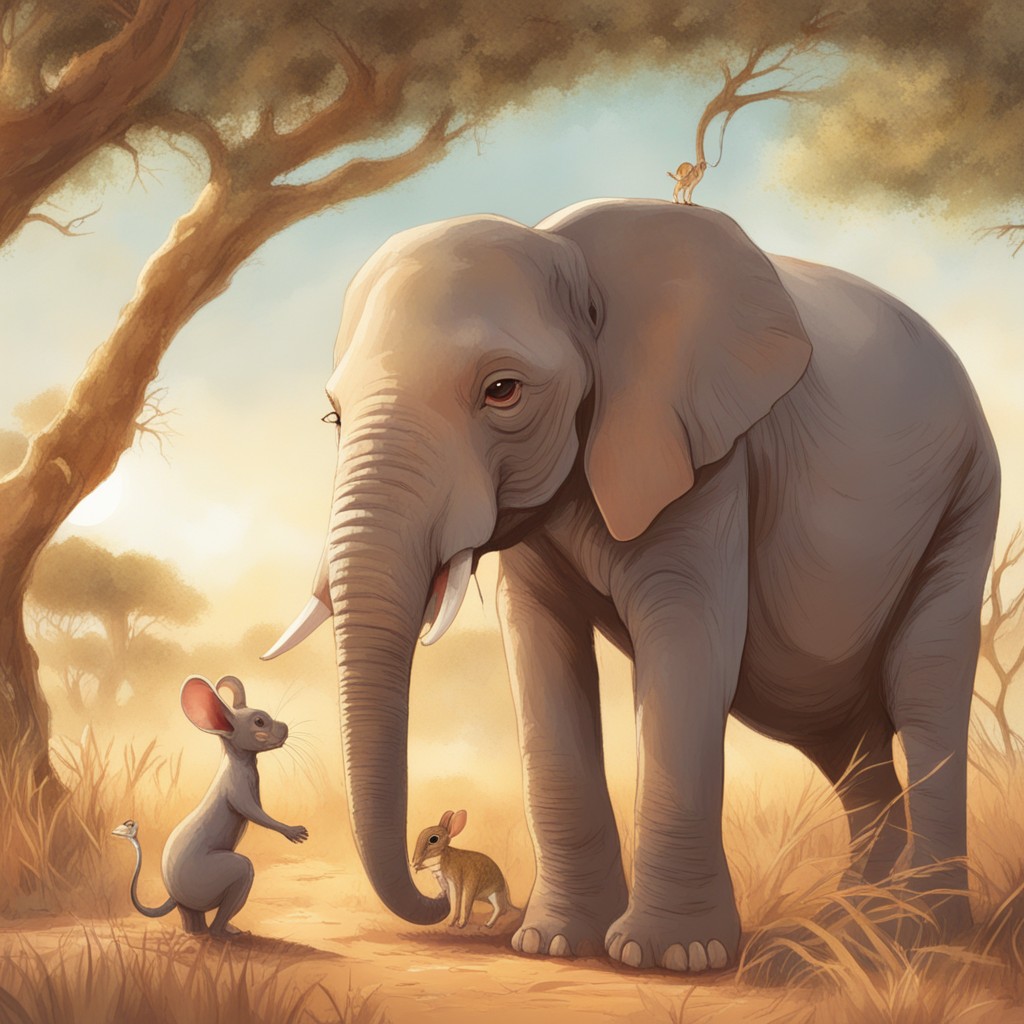
One particularly hot afternoon, when the sun blazed like a giant orange in the sky, Kavi was walking slowly toward the Watering Hole. As he passed a patch of tall elephant grass, he heard something. It was so faint that even his enormous ears almost missed it—a tiny, broken sound, like a music box winding down.
Kavi stopped. He lifted his trunk and curled it toward the sound, his great ears fanning out to catch every vibration. There, hidden in a nest woven from dried grass and spider silk, was Pipit. She was trying so hard to sing, her whole body shaking with effort, but all that emerged were fractured, wispy notes.
Kavi lowered his massive head until his tusks rested gently in the grass, making himself as small as an elephant could possibly be. "Hello, little one," he rumbled, his voice so deep and soft it sounded like distant thunder on a summer evening.
"I think you are feeling very lonely right now," Kavi said gently. "And I think you are feeling like you don't belong. And I think... I think maybe you're also feeling afraid that you'll never be good enough."
Pipit's eyes went wide. How did this enormous elephant understand exactly what was in her tiny heart?
"I feel those things too, sometimes," Kavi admitted. "Even big elephants feel small inside. Even strong animals feel weak. Even animals who seem to have everything figured out sometimes feel lost."
Kavi told Pipit a story about when he was young and couldn't trumpet as loudly as the other elephants. The other elephants pitied him. But during a terrible drought, he heard a baby elephant trapped in a dried-up riverbed. The other elephants, with their big loud voices, couldn't hear her cries over their own noise. But Kavi could. He saved her with his small, gentle voice—exactly what she needed.
"Being different was exactly what was needed," Kavi said. "That day, I learned that having a small voice wasn't a weakness. It was a different kind of strength."
"That's... that's empathy, isn't it?" Pipit asked softly. "Understanding how someone else feels?"
Kavi's whole body seemed to smile. "Yes, little one. That's empathy. It's not just hearing someone's story—it's feeling it with them. It's knowing that their struggles are real, even if you can't see them."
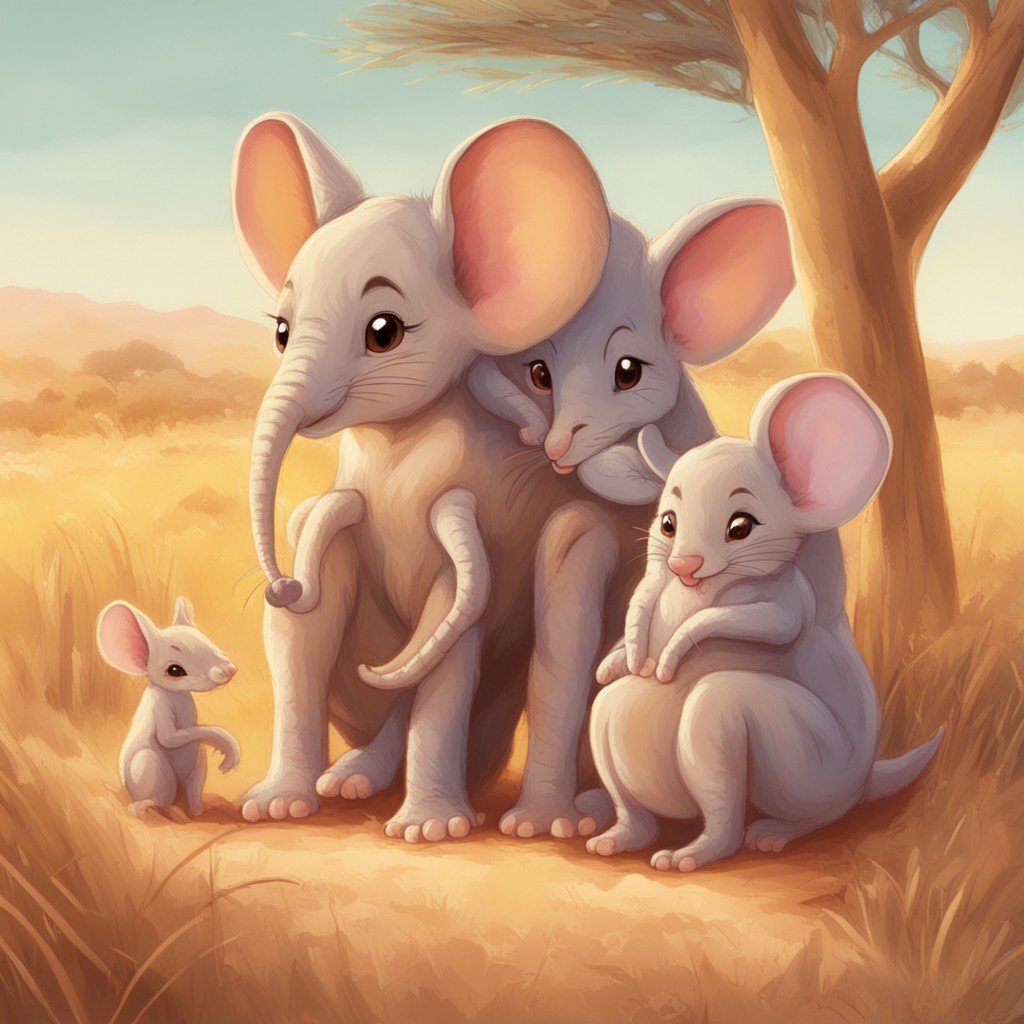
Over the next several days, Kavi and Pipit became the most unlikely of friends. Every afternoon, when the heat of the day made the savanna shimmer like a dream, Kavi would amble to the tall grass where Pipit lived. He was so large that he created a perfect umbrella of shade, and Pipit would perch on his trunk or tusk, feeling safe for the first time in her young life.
Kavi taught Pipit about empathy through gentle lessons. "See that zebra over there?" he would say. "She looks fine, doesn't she? But look closer—her ears are back, and she's standing very still. I think she's worried about something."
Pipit started practicing empathy with the other animals in the Acacia Grove. When she saw a young monkey who had fallen from a branch, she fluttered down beside him and said, "That must have hurt. And it must feel embarrassing too. I've felt embarrassed before."
When she noticed a meerkat standing guard while his family slept, looking tired and homesick, Pipit landed on the mound beside him and said, "You look like you're carrying something heavy. Being the lookout is important work, but it's lonely too."
Word began to spread through the savanna about the little bird who seemed to know exactly how you felt. Animals started seeking Pipit out when they were sad, not because she could fix their problems, but because she made them feel seen.
One evening, as the sun set the clouds on fire with shades of pink and orange, the animals of the savanna gathered at the Watering Hole for their nightly stories. When it was Pipit's turn, she told a story about a time she had felt lonely, and how a kind elephant had helped her understand that feelings are meant to be shared.
Her voice cracked as she spoke. It wobbled and wavered. But every animal at the Watering Hole listened in silence, caught up in the truth of what she was saying.
When she finished, there was a moment of quiet. Then the zebra mare stepped forward. "I lost my sister yesterday," she said, her voice trembling. "I've been pretending I'm fine. But hearing you... I feel like someone finally understands."
One by one, the animals began sharing their true feelings—their fears, their losses, their hopes, their dreams. And Pipit, with her broken voice and her enormous heart, listened to each one, saying simply, "I understand. I'm here with you."
Kavi watched from the edge of the gathering, his eyes misty with pride. He remembered the lonely little bird he had found in the grass. Now she was exactly who she needed to be—a weaver bird who couldn't sing beautifully, but who could weave something even more precious: connection.
That night, as the stars began to twinkle above the African plain, Pipit looked up at the endless sky. "I'm like a star," she said softly. "Small to look at, but burning with something bright inside."
"Yes," Kavi agreed. "And when you share that light—when you use your empathy to warm others—you become part of something infinite. You're not just a bird, Pipit. You're a light-bringer. A heart-hearer. A friend-maker."
🌟 The Moral of the Story 🌟
Empathy is the ability to understand and share the feelings of another person. It's not just hearing someone's words—it's feeling their heart. When we practice empathy, we look beyond the surface to see what others are really experiencing.
Everyone has feelings, even if they look fine on the outside. Sometimes the strongest people are carrying the heaviest burdens. Empathy teaches us to be gentle with each other, to ask, "How are you really doing?" and to listen with our hearts.
Remember: Your struggles give you the power to understand others. Your pain can become your gift of compassion. When you've felt lonely, you can recognize loneliness in others. When you've felt different, you can celebrate difference in others.
Be like Kavi—listen with more than your ears. Be like Pipit—use your understanding to weave connection. And always remember: the world needs your empathy more than it needs your perfection.
So tonight, as you close your eyes, think about someone who might need to feel understood. Send them your empathy like a warm light. And know that your caring heart makes the world a gentler place.
The End
Sweet dreams, little one. 🌙✨