The Girl Who Wore Glasses of Gold: A Story About Empathy
The Girl Who Wore Glasses of Gold: A Story About Empathy
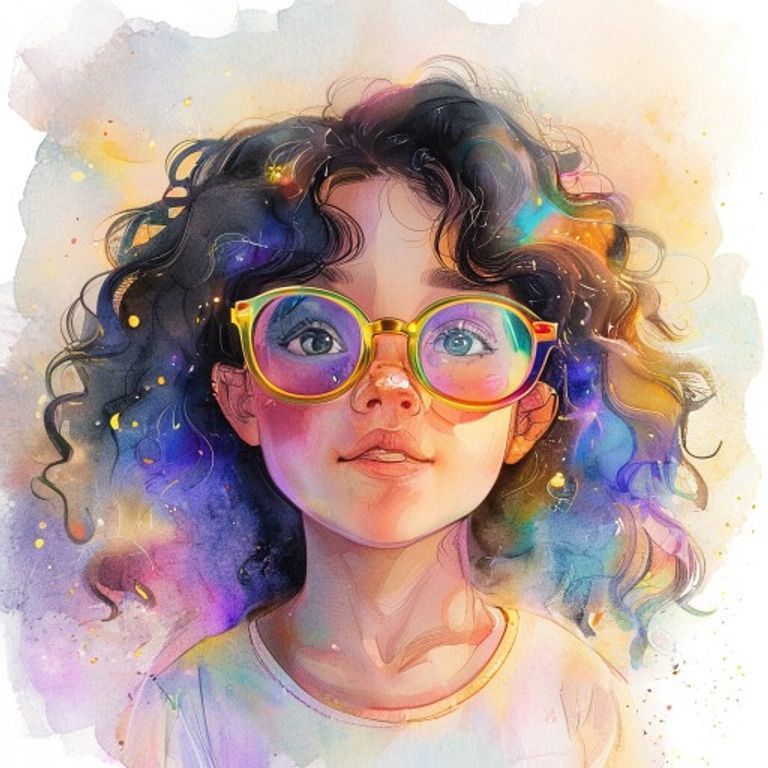
In the village of Stillwater, where the river flowed slow and silver and the willows wept into the water, there lived a girl named Mira. She was ten years old, with dark curls that bounced when she walked and eyes the color of storm clouds before the rain.
Mira was different from other children. She felt things. Not just her own feelings, but the feelings of everyone around her. When her mother was worried, Mira's stomach twisted in knots. When her father was angry, her chest burned like fire. When her best friend Lila was sad, Mira's eyes filled with tears before Lila even spoke a word.
This was Mira's secret gift. She could feel what others felt. But she did not know why. And she did not know how to use it.
One autumn morning, Mira was walking through the village square when she saw an old man sitting alone on a bench. He was bent like a question mark, his hands gnarled like tree roots, his eyes staring at nothing. Mira felt a wave of loneliness so deep, so heavy, that she stopped in her tracks.
"Are you alright?" she asked, sitting beside him.
The old man looked at her, surprised. "No one has asked me that in a very long time, child."
"You seem lonely," Mira said.
The old man's eyes watered. "I miss my wife. She passed last winter. And now the village feels empty. Everyone is busy. Everyone has their own troubles. No one sees an old man on a bench."
Mira took his hand. It was cold and trembling. She squeezed it gently. "I see you," she said. "And I am sorry you are sad."
The old man smiled, the first smile in months. "Thank you, child. That means more than you know."
Mira walked away, her heart heavy but also warm. She had helped, just by understanding. Just by feeling what he felt.
But Stillwater was changing. The village was growing, and with growth came noise and hurry and distance. Neighbors no longer knew each other's names. Shopkeepers no longer asked about families. Children played alone, staring at screens instead of each other's faces.
One day, the village announced a contest. "Whoever can solve the problem of our divided village will win a chest of gold," the mayor declared.
People tried everything. They built bigger parks. They organized festivals. They painted murals on every wall. But nothing worked. The villagers remained strangers to each other, passing like ghosts in the street.
Mira watched all this, her heart aching. She could feel the loneliness of the village. It was a heavy fog, pressing down on everyone, making them tired and irritable and sad.
That night, Mira had a dream.
She stood by the river, and the water began to glow. From the light emerged a woman made of silver mist. She wore robes that shimmered like moonlight, and her eyes held the wisdom of ages.

"Mira," the woman said, her voice like wind chimes. "You have a gift. The gift of empathy. You feel what others feel. But feeling is not enough. You must help others feel too."
"How?" Mira asked. "I am just a child. No one listens to me."
The woman smiled. "Because you have been trying to tell them. Instead, show them." She held out her hands. In them lay a pair of glasses. They were made of gold, with lenses that shimmered like rainbows. "These are the Glasses of Empathy. When someone wears them, they will see the world through another person's eyes. They will feel what that person feels. Not forever. Just long enough to understand."
"But who should wear them?" Mira asked.
"Everyone," the woman said. "But start with those who need it most. The angry. The lonely. The ones who have forgotten how to care."
Mira woke with the glasses in her hands.
They were real. Warm and golden and humming with gentle magic.
The next morning, Mira walked to the village square. She saw Mr. Grimshaw, the baker, shouting at a young boy who had accidentally knocked over a basket of bread.
"You clumsy fool!" Mr. Grimshaw bellowed, his face red. "That bread took me hours to make!"
The boy, no older than seven, trembled, tears streaming down his face. "I am sorry," he whispered. "I did not mean to."
Mira felt the boy's fear like a knife in her heart. She also felt Mr. Grimshaw's anger. But beneath the anger, she felt something else. Exhaustion. Worry. The bakery was struggling, and every loaf mattered. Mr. Grimshaw wasn't really angry at the boy. He was scared.
Mira approached, her heart pounding. "Mr. Grimshaw," she said softly. "I have something to show you."
He turned, still fuming. "What is it, child? I am busy."
"Please," Mira said, holding out the glasses. "Just for a moment. Put these on. And look at the boy."
Mr. Grimshaw huffed, but something in Mira's gentle voice made him pause. He took the glasses and put them on.
Instantly, his face changed.
He gasped. His eyes went wide. He staggered back, clutching his chest.
"I... I am so scared," he whispered. "I am so small. And he is so big. And he is shouting. And I did not mean to. I just wanted to look at the bread. It smelled so good. My family has no money for bread. And I am so hungry."
Mr. Grimshaw ripped off the glasses, tears streaming down his face. He looked at the boy with new eyes. Eyes that understood.
"I am sorry," Mr. Grimshaw said, his voice cracking. "I am so sorry. I did not know. I did not think."
He knelt down and hugged the boy. "Here. Take this bread. Take all the bread you need. And tell your family to come to my bakery every morning. I will make sure no one in this village goes hungry."
The boy's tears turned to laughter. Mr. Grimshaw's anger turned to compassion. And Mira felt a warmth spread through her chest that she had never felt before.
Word spread. The glasses were magic. They let you feel what others felt. And Mira began to share them, one person at a time.
She gave them to Mrs. Hale, the wealthy widow who never smiled. Mrs. Hale looked through the glasses at her maid, a young woman who worked from dawn till dusk for pennies. Mrs. Hale felt the maid's aching back, her empty stomach, her longing to see her own children instead of cleaning someone else's house.
Mrs. Hale took off the glasses and, for the first time in years, she cried. "I had no idea," she said. "I had no idea."
The next day, Mrs. Hale doubled the maid's wages and gave her weekends off. She began visiting the poor, bringing food and blankets. She became the kindest woman in the village.

Mira gave the glasses to the school bully, a boy named Brick who pushed smaller children and broke their toys. Brick looked through the glasses at a girl he had teased that morning. He felt her shame. Her loneliness. Her wish to be invisible so he would not hurt her anymore.
Brick took off the glasses and threw them back at Mira. "Take them!" he shouted. "I do not want to feel that!"
But he could not forget. That night, he could not sleep. The girl's pain echoed in his chest. The next morning, he found her and apologized. He gave her his favorite toy, a wooden soldier his father had carved. And he promised never to hurt anyone again.
One by one, the villagers wore the glasses. One by one, they understood. The angry learned about fear. The greedy learned about need. The lonely learned that everyone felt alone sometimes.
Stillwater changed. Neighbors began to talk. Shopkeepers asked about families. Children played together, sharing and laughing. The village square became a place of music and storytelling, where people gathered to share their joys and their sorrows.
But the glasses were not infinite. Each time someone wore them, they grew a little dimmer. The gold faded. The rainbow lenses clouded. Until one day, Mira held them up to the light, and they were clear glass. The magic was gone.
Mira was sad. The glasses had done so much good. But now they were just glass.
She walked to the river, where the silver mist woman had appeared. "What do I do now?" she asked the water. "The glasses are gone. How do I help people understand each other?"
The river rippled, and the woman emerged, smiling. "The glasses were never the magic, Mira. The magic was in you. The magic was in your willingness to feel what others feel. To sit with the lonely. To comfort the sad. To understand the angry."
"But the glasses helped people see," Mira said.
"And now they have seen," the woman said. "They have felt. And they will remember. Empathy is not a gift you wear. It is a choice you make. Every day. With every person you meet. The glasses showed them the way. Now they must walk it."
She touched Mira's forehead. "And you, dear child, must keep leading. Not with magic glasses. But with your open heart."
Mira understood. The glasses were a beginning. But empathy was a journey.
She returned to the village and began to teach. She taught children to ask "How do you feel?" instead of "What did you get?" She taught adults to listen, really listen, when someone spoke. She taught everyone that behind every face was a story, behind every anger was a hurt, behind every smile was a struggle.
Years passed. Mira grew up. She became a teacher, a healer, a friend to all. And Stillwater became known as the village of empathy, a place where no one was ever truly alone.
And though the Glasses of Empathy were gone, their lesson remained. Etched into the hearts of every villager. A reminder that to understand someone, you must first feel what they feel. And to feel what they feel, you must first open your heart.
Moral of the Story: Empathy means understanding and sharing the feelings of others. Mira had a magical gift - she could feel what others felt. But instead of just feeling, she used the Glasses of Empathy to help others understand each other too. She showed the angry baker how scared a hungry boy felt. She showed the wealthy widow how tired her maid was. She showed the bully how much his words hurt. And slowly, the village changed. Because when we understand how others feel, we cannot help but care. So be like Mira. Listen. Feel. Understand. Because everyone you meet is fighting a battle you know nothing about. And a little empathy can change everything.
Age Range: 4-8 years | Reading Time: ~10 minutes | Core Value: Empathy