The Tree of Fairness: A Story About Justice
The Tree of Fairness: A Story About Justice
In the village of Equinox, where the sun rose and set in perfect balance and the seasons turned like pages in a well-loved book, there stood a tree that was older than memory.
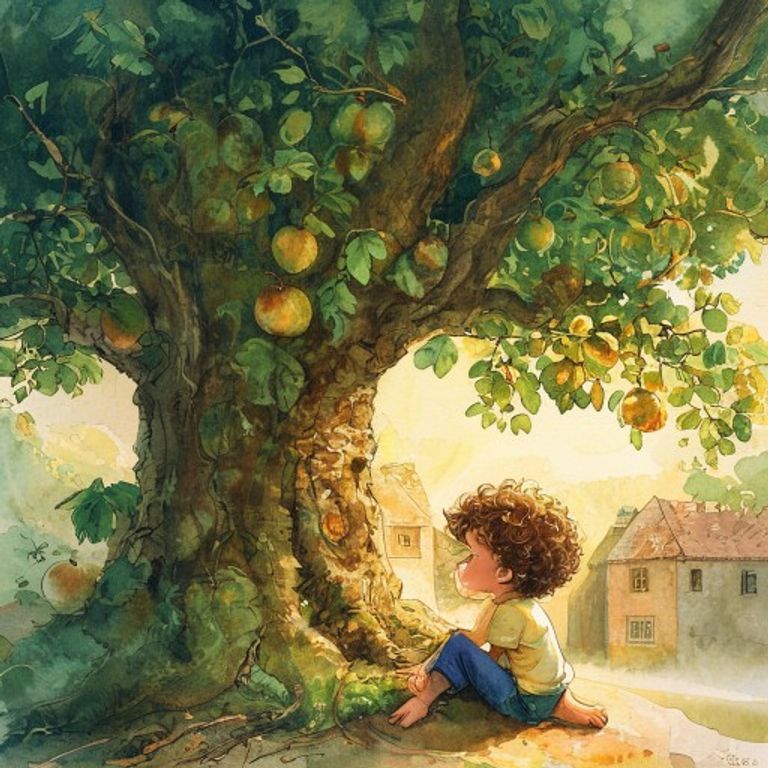
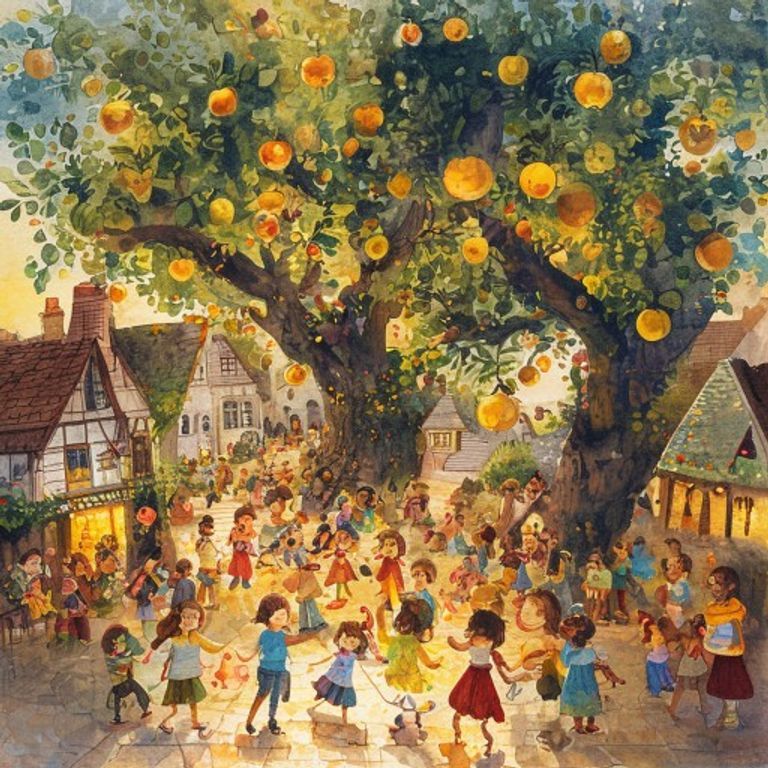
They called it the Justice Tree. It grew in the center of the village square, its trunk as wide as a cottage, its branches reaching out like open arms to embrace the entire village. Its leaves were the color of emeralds, deep and rich, and in the autumn, it bore fruit—golden apples that glowed with a light that came from within, like tiny lanterns hanging among the leaves.
The apples were not for eating. They were for showing. For centuries, the Justice Tree had borne fruit only when the village was fair. When its people treated each other with justice—listening to all sides, sharing equally, making sure no one was left out or left behind—the tree rewarded them with a harvest of golden light. When they failed, when they were selfish or cruel or unfair, the tree withheld its fruit, and the village knew they had work to do.
Eli was seven years old, small for his age, with curly brown hair and eyes the color of hazelnuts. He was a quiet boy, the kind who noticed things that others missed. He noticed the way old Mrs. Pembroke struggled to carry her water bucket, but never complained. He noticed the way the baker gave extra bread to hungry children, but never took credit. He noticed the way the village council sometimes made decisions without asking everyone what they thought.
And he noticed, one morning in early autumn, that the Justice Tree had not bloomed.
The branches were green and healthy. The leaves rustled in the breeze. But there were no flowers, no buds, no promise of fruit. The tree was silent.
"It is too early," said his father, a carpenter who measured twice and cut once. "The fruit will come."
"The tree knows what it is doing," said his mother, a baker who believed that dough rose when it was ready, not when you wanted it to. "We must trust it."
But Eli was not so sure. He sat beneath the tree that afternoon, his back against the ancient bark, and he listened. He had heard that if you sat very still and listened very carefully, the Justice Tree would whisper to you. Not words, exactly. Feelings. Impressions. The sense of what was right and what was wrong.
He sat for an hour. Two hours. The sun moved across the sky. The shadows lengthened. And finally, as the afternoon turned to gold, Eli felt something. A sadness in the bark. A heaviness in the roots. The tree was not angry. The tree was disappointed.
The village had forgotten how to be fair.
Eli opened his eyes. He looked around the square. The children were playing, as they always did. The merchants were selling, as they always did. The elders were sitting on their benches, telling stories, as they always did. Everything looked the same.
But the tree knew better.
Eli decided to find out what the tree knew.
The first clue came from the well.
The village well was in the eastern corner of the square, and every morning, the women came to draw water for their families. There was a system, as old as the village itself. Each family was allowed two buckets. No more, no less. It was fair. It had always been fair.
But Eli noticed something. He noticed that the Miller family—there were six of them, with two great-uncles who drank enough water for three people—always took three buckets. He noticed that Mrs. Blackwood, who lived alone with her cat, only took one bucket and gave the other to the Miller children.
"Why do you do that?" Eli asked her one morning.
Mrs. Blackwood smiled, her face as wrinkled as a dried apple. "Because they need more than I do, child. And I need less than my share. It all balances out."
"But the rule says two buckets per family," Eli said. "Isn't that unfair?"
"Fair is not always equal, young Eli. The Millers have six mouths to feed. I have one. If we both take two buckets, I waste water I do not need, and they thirst for water they do. Fair means giving everyone what they need, not giving everyone the same thing."
Eli thought about this. He sat beneath the Justice Tree that afternoon and turned the idea over in his mind like a smooth stone. Fair is not always equal. The tree seemed to agree. A single leaf drifted down and landed on his shoulder, soft as a whisper.
But if that was true, why had the tree stopped blooming?
The second clue came from the school.
The village school was a small building with a slate roof and a teacher named Mr. Alder, who had taught three generations of Equinox children. He was a good man, patient and kind, but he had one rule that Eli had never questioned until now.
The rule was: the child who finished first got to choose the game at recess.
It seemed fair. Work hard, finish first, get the reward. That was justice, wasn't it?
But Eli noticed something. He noticed that Mira, who was quick with numbers but slow with words, always finished her math first and chose running games, which she loved but which left behind children like Tom, who could not run because his legs were twisted from birth. He noticed that Jasper, who was fast at everything, always finished first and chose games that only the fastest children could enjoy.
And he noticed that Tom never got to choose. Never. Because Tom was never first.
"Mr. Alder," Eli asked one day after class, "why does the first child get to choose?"
"Because it rewards effort," Mr. Alder said, surprised by the question. "It teaches children that hard work brings benefits."
"But Tom works hard," Eli said. "He works harder than anyone, because everything is harder for him. And he never gets to choose."
Mr. Alder opened his mouth. Closed it. Opened it again. "That is... that is just how it has always been."
"But is it fair?" Eli pressed. "If fair means giving everyone what they need, then Tom needs to choose sometimes too. He needs to feel like his effort matters, even if he is not fast."
Mr. Alder was silent for a long time. Then he smiled, a slow, thoughtful smile. "You are a wise child, Eli. Perhaps... perhaps we should try a different way."
The next day, Mr. Alder announced a new rule. Each week, a different child would choose the game. Not the fastest. Not the strongest. Everyone, in turn.
Tom's turn came on Wednesday. He chose a storytelling game, where children sat in a circle and made up tales together. It was the first time Eli had ever seen Tom laugh without holding back, without worrying that he could not keep up.
That afternoon, beneath the Justice Tree, Eli felt something change. A warmth in the bark. A stirring in the roots. The tree was not blooming yet. But it was listening.
The third clue came from the market.
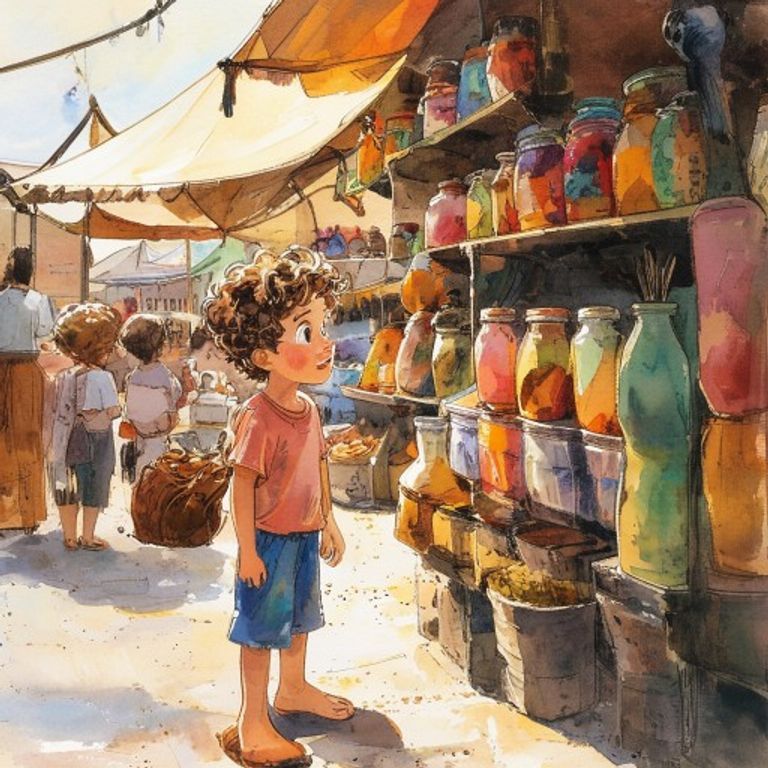
The village market was every Saturday, and it was Eli's favorite day. The colors, the smells, the sounds of bargaining and laughter. But this Saturday, Eli noticed something that made his stomach feel heavy.
The spice merchant, Mr. Faraji, had raised his prices. Not for everyone. Just for the families who lived on the western side of the village, where the poorer families had their homes.
"Why do you charge them more?" Eli asked, his small voice brave in a way that surprised even him.
Mr. Faraji looked down at the boy. "Because they can afford it. The western families have chickens. They sell eggs. They have more money than they pretend."
"But Mrs. Teague has chickens because she works twice as hard as anyone," Eli said. "She wakes before dawn to feed them. She walks twice as far to sell her eggs. And she has three children to feed."
"Business is business," Mr. Faraji said, but his eyes would not meet Eli's.
"Justice is justice," Eli replied. "And the Justice Tree knows the difference."
Mr. Faraji flinched. He looked toward the tree, its emerald leaves rustling in the breeze, and for a moment, he looked afraid. "It is just... it is just how the market works," he said, but his voice was smaller now.
"The market should work for everyone," Eli said. "Not just for those who already have enough."
That night, Eli could not sleep. He sat by his window and looked at the Justice Tree, its branches silver in the moonlight. He thought about all the things he had seen. The water buckets. The school games. The spice prices. Small things, each one. But together, they were a mountain of unfairness.
And then he realized something. The tree was not withholding its fruit because the village was cruel. The village was not cruel. The people were good, mostly. Kind, mostly. Fair, mostly.
But they had stopped paying attention. They had let small unfairnesses grow, like weeds in a garden, because no one had pulled them out. They had assumed that because things had always been a certain way, that way must be fair.
Justice, Eli realized, was not a thing you achieved once and kept forever. It was a thing you had to tend, like a garden. You had to watch for the weeds. You had to pull them out when they were small. You had to keep paying attention, even when it was hard, even when it was uncomfortable, even when it meant changing things that had always been.
The next morning, Eli did something that made his heart beat so hard he could feel it in his ears.
He stood in the village square, beneath the Justice Tree, and he spoke.
"I have noticed things," he said, his voice small but clear. "I have noticed that we are not as fair as we think we are. I have noticed that we have stopped paying attention. And I think the Justice Tree has noticed too."
The villagers gathered. The carpenter and the baker. The spice merchant and the teacher. Mrs. Blackwood and the Miller family. Tom, who stood a little taller than before. Mira, who held Tom's hand.
"Mrs. Blackwood gives her extra water to the Millers," Eli said. "Because they need it. And that is fair, even though it breaks the rule. But Mr. Faraji charges the western families more for spices, and that is not fair, even though it follows the rule."
He turned to Mr. Alder. "Tom never gets to choose the game, even though he works harder than anyone. And that is not fair, even though it has always been that way."
He turned to the village council. "And sometimes, you make decisions without asking everyone what they think. You mean well. But fairness means listening, even when it takes longer."
The square was silent. The Justice Tree rustled its leaves, and for the first time that autumn, Eli saw a bud. Small. Green. Hidden among the leaves. But real.
"I am not angry," Eli said. "I love this village. But I think we forgot that justice is a garden, not a statue. It needs tending. It needs attention. It needs all of us to keep watching, keep listening, keep trying to be fair."
Mr. Faraji stepped forward. His face was red. His hands were shaking. "I... I will lower the prices," he said. "For everyone. The same price. And I will give extra to those who need it."
Mr. Alder stepped forward. "And I will keep the new rule at school. Everyone chooses, in turn. Because Eli is right. Fair is not always equal, but it is always kind."
Mrs. Blackwood stepped forward. "And I will keep sharing my water. But I will ask the council to change the rule, so that families get what they need, not just what the rule says."
One by one, the villagers spoke. Small promises. Small changes. But together, they were a harvest of justice.
And the Justice Tree bloomed.
It did not happen all at once. The buds opened slowly, over days, as the village kept its promises, as the small unfairnesses were weeded out, as the people remembered to pay attention. But by the end of the week, the tree was covered in golden flowers, and by the end of the month, the golden apples hung heavy and bright among the emerald leaves.
The village celebrated. They held a feast in the square. They danced and sang and told stories. But the best moment, the moment Eli would remember forever, was when Tom came to him, his twisted legs carrying him slowly but proudly across the square.
"Thank you," Tom said. "For noticing. For speaking. For making them see."
"I just listened," Eli said. "The tree told me. And I told them."
"Justice is hard," Tom said. "It is easier to look away."
"Yes," Eli agreed. "But looking away is how the weeds grow. And I like apples too much to let the weeds win."
Tom laughed, a sound as bright as the golden fruit above them. "Then we will watch together. We will tend the garden together. And we will make sure the tree never stops blooming."
Eli took his hand. Together, they looked up at the Justice Tree, its branches heavy with light, its roots deep in the fair earth of a village that had remembered how to be just.
Moral of the Story: Justice is not a thing you achieve once and keep forever. It is a garden that needs constant tending. The village of Equinox had good people who had slowly let small unfairnesses grow—extra water charges for poor families, rules that rewarded speed over effort, decisions made without listening. The Justice Tree stopped blooming not because the village was cruel, but because they had stopped paying attention. Eli, a quiet boy who noticed what others missed, spoke up. He showed them that fair is not always equal—sometimes fair means giving more to those who need more. He showed them that rules that have always existed are not necessarily just. And he showed them that justice requires courage—the courage to see, the courage to speak, and the courage to change. The tree bloomed again when the village remembered to tend their garden of fairness. Justice is not about being perfect. It is about being willing to keep trying, to keep listening, to keep weeding out the small unfairnesses before they grow large. It is about understanding that every voice matters, especially the quiet ones. And it is about never, ever looking away.
Age Range: 4-8 years | Reading Time: ~10 minutes | Core Value: Justice