The Bird Who Learned to Whisper: A Story About Respect
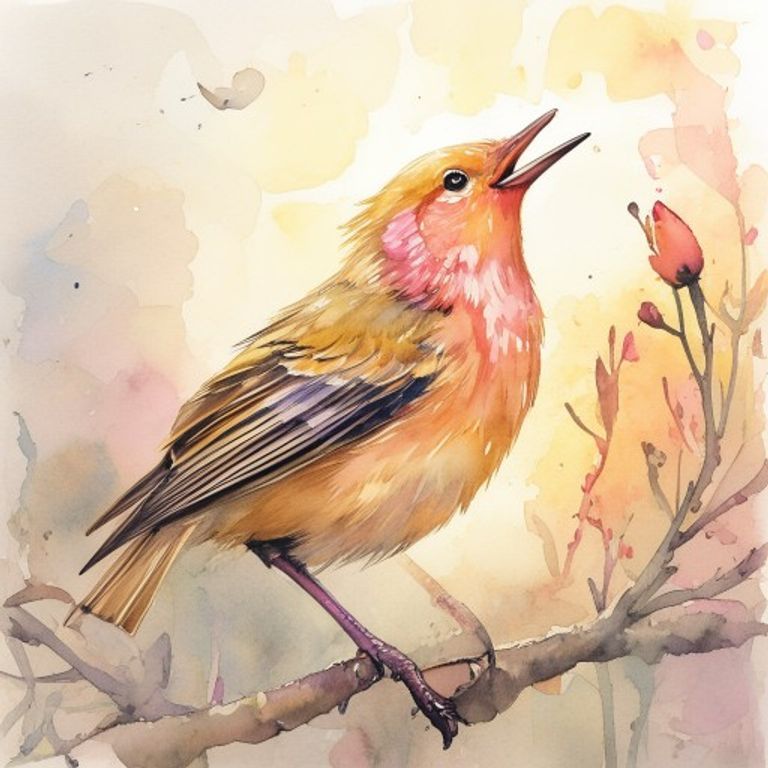
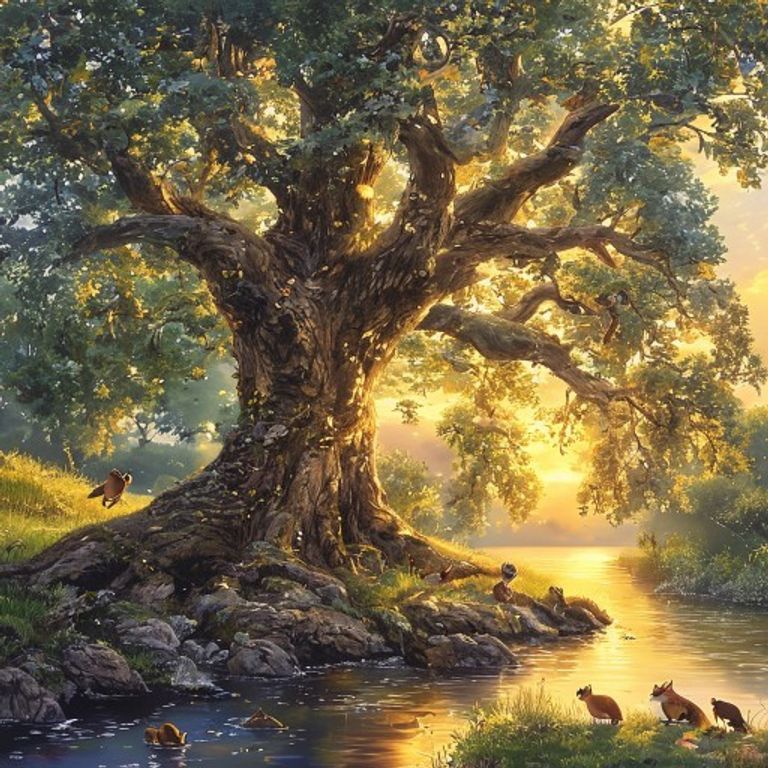
In the Forest of Echoes, where every leaf seemed to hold a sound and every stream carried a melody, there lived a young songbird named Lark. She had feathers the color of sunrise—gold and rose and soft, pale orange—and a voice that could make the flowers open early just to hear her.
Lark loved to sing.
She sang when the first ray of sun touched the treetops. She sang when the dew still clung to the grass like tiny diamonds. She sang so loudly and so beautifully that every creature in the forest woke to her voice.
"Good morning, world!" Lark would trill, her notes tumbling through the branches like sparkling water. "Wake up! The day has begun!"
The day creatures loved her. The squirrels stretched and chattered. The rabbits thumped their feet in rhythm. Even the grumpy old badger would poke his head from his burrow and mutter, "Yes, yes, we are awake."
But there was one creature who did not love Lark's morning song.
His name was Nocturne, and he was an owl.
Not just any owl. Nocturne was the oldest, wisest, most respected owl in the Forest of Echoes. His feathers were the color of shadows and starlight, and his eyes were the color of the moon. He had lived in the forest for more than a hundred years, and he knew things that the younger creatures could not even imagine.
But Nocturne had one problem: he slept during the day.
And Lark sang at dawn.
Every morning, just as Nocturne finally drifted to sleep after a long night of hunting and watching and thinking, Lark's voice would burst through the trees like a trumpet.
WAKE UP! THE DAY HAS BEGUN!
And Nocturne would groan, and cover his head with his wing, and wait for the noise to stop.
He never complained. He never asked her to be quiet. He simply endured, as he had endured for many years.
But Lark noticed his silence.
"Why does the old owl never come to hear me sing?" she asked the sparrows one morning. "Everyone else comes. Even the badger comes. But the owl just hides in his tree."
"He sleeps during the day," said a sparrow. "He is a night creature."
"A night creature?" Lark tilted her head. "What does that mean?"
"It means he lives when the moon is up," the sparrow explained. "He hunts at night. He thinks at night. He is awake when you are asleep."
Lark laughed. "But the night is just... dark. There is nothing to do in the dark except sleep."
The sparrows exchanged glances but said nothing.
That evening, Lark could not sleep.
A storm was coming. The air felt heavy and electric, and her nest was too warm. She tossed and turned, fluffed her feathers, and finally gave up.
"I will just sit on my branch until I get sleepy," she decided.
She hopped to the edge of her nest and looked out at the forest.
And her breath caught.
The forest at night was not dark. Not really.
The moon hung low and full, painting the trees with silver. The stars were so bright and so numerous that the sky looked like a river of diamonds. And the sounds—oh, the sounds were unlike anything she had ever heard.
Crickets sang in rhythmic chorus, their chirps rising and falling like waves on a shore. An owl—maybe Nocturne—hooted softly in the distance, a sound deep and hollow and somehow full of meaning. Moths drifted through the air like pale ghosts, their wings catching the moonlight. Fireflies blinked on and off in patterns that looked like a secret language.
And then she saw Nocturne.
He sat on a high branch, his great wings folded, his moon-colored eyes wide open. He was so still that he might have been a statue. But he was watching. Always watching.
Lark flew to a nearby branch. "Hello?"
Nocturne turned his head slowly. It was the only part of him that moved. "Little Lark. What are you doing awake?"
"I could not sleep," she admitted. "And I... I wanted to see what the night was like."
Nocturne blinked. "The night is not something you see. It is something you listen to."
"Listen?" Lark tilted her head. "But there is no music at night. Not like my morning songs."
Nocturne smiled—a rare thing for an owl. "Come. Sit with me. And listen."
Lark settled on the branch beside him. It was wider than her own, and softer, covered in moss that felt like a pillow.
"Close your eyes," Nocturne said.
Lark closed them.
"Now," the owl said softly, "tell me what you hear."
At first, Lark heard nothing. Or rather, she heard what she always heard at night: silence, or what she thought was silence.
But then, slowly, sounds began to emerge from the dark.
The crickets, yes. But also the wind, moving through the leaves in a whisper so soft it was almost a breath. Water, dripping from a fern somewhere far below. A frog, calling out in a voice like a low drum. The soft flutter of bat wings overhead. And beneath it all, a deep, thrumming sound that Lark could feel in her chest more than hear in her ears.
"What is that last sound?" she asked, her eyes still closed. "The deep one?"
"That is the forest breathing," Nocturne said. "The roots drinking. The trees growing. The earth turning. The night is not empty, little Lark. It is full. It is just full of things that do not shout."
Lark opened her eyes. "I never knew."
"You never tried to know," Nocturne said gently. "You sing so loudly in the morning that you drown out the world. And that is your gift. Your voice is beautiful. But it is not the only voice."
Lark felt a strange feeling in her chest. It was not quite shame. It was more like... realizing you have been looking at a painting with your nose pressed against it, and only just now stepping back to see the whole picture.
"I wake everyone up," she said quietly. "I thought I was giving them a gift."
"You are," Nocturne said. "For the day creatures. But for the night creatures, your gift is a door slamming shut. A clock striking at the wrong hour. We have only a few hours of peace before the sun returns, and your song... well, it is lovely. But it is also very loud."
Lark looked at her feet. "I did not mean to be disrespectful."
"I know," Nocturne said. "That is the thing about respect, little Lark. It is not about meaning well. It is about understanding that other creatures live differently than you do. That their needs are real, even if you do not share them."
The old owl spread his wings—so wide that they blocked out the moon for a moment—and then folded them again.
"The bat needs the dark to hunt. The moth needs the dark to find its mate. The cricket needs the dark to sing its song. None of these things are less important than your morning song. They are just... different."
Lark sat quietly for a long time. The night moved around her like a gentle river. She watched a firefly blink its code to another firefly across the clearing. She watched a spider spin a web that caught the moonlight like a net of silver. She watched Nocturne turn his head and spot a mouse moving thirty trees away—a movement so small that Lark would never have noticed it.
"You see so much," she whispered.
"I see differently," Nocturne corrected. "Not more. Not less. Just differently. And that is what respect is, little Lark. It is understanding that different does not mean wrong."
The next morning, Lark did something she had never done before.
She woke before dawn. She preened her feathers. She stretched her wings. And she waited.
She waited until the sun had fully risen. Waited until the dew had begun to dry. Waited until the day creatures were already stirring, already awake, already ready.
And then, instead of her usual trumpet call, she sang a softer song.
It was still beautiful. Still bright. Still full of joy. But it was gentle. It invited, rather than demanded. It welcomed, rather than woke.
And when she finished, she flew to Nocturne's tree.
The old owl was awake—not deep in sleep, but resting, his eyes half-closed.
"Was that better?" Lark asked.
Nocturne opened one moon-colored eye. "That," he said, "was respectful."
Lark smiled. "I think I like the night."
"And the night," Nocturne said, "likes you."
From that day on, Lark became something rare in the Forest of Echoes: a bird of both day and night. She still sang in the morning, but she learned to sing softly, to leave space for the quiet creatures. And sometimes, when she could not sleep, she would fly to Nocturne's branch and sit with him, listening to the forest breathe.
She learned the names of the crickets. She learned the patterns of the fireflies. She learned that the night was not the absence of day, but a world all its own, full of wisdom and wonder and voices that did not shout.
And one morning, as she sang her soft, welcoming song, a young rabbit asked her, "Why do you not sing as loudly as you used to?"
Lark looked at the sun, rising golden over the trees. Then she looked at Nocturne's tree, where the old owl was finally, peacefully, sleeping.
"Because," she said, "the loudest voice is not always the most important one. And respect means making room for everyone to be heard."
The End