Mochi the Maltipoo: A Story About Responsibility
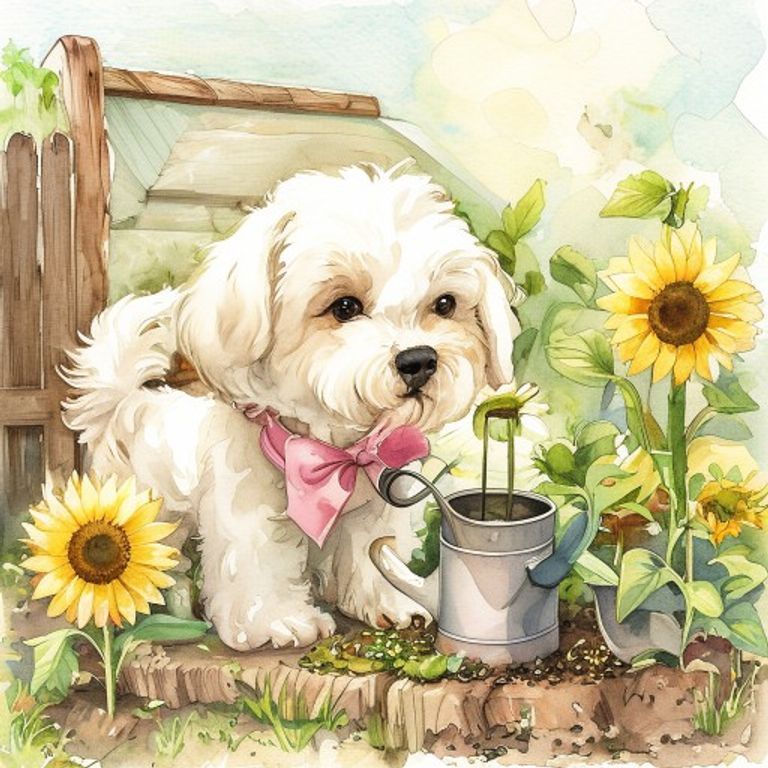
On a quiet street lined with tall maple trees, their leaves whispering secrets to the wind, there lived a small, fluffy white dog named Mochi. Mochi was a Maltipoo, which meant she had the softest curls that bounced like little clouds when she ran, and a bright pink bow that Emma, her best friend, tied carefully behind her left ear every single morning.
Emma was a gentle girl with freckles across her nose and a laugh that sounded like wind chimes. She and Mochi lived in a cozy yellow house on Maple Street, where the porch swing creaked a lullaby each evening and the kitchen always smelled of cinnamon toast. They did everything together—explored the backyard, chased falling leaves, and shared secrets beneath the old oak tree at the end of the garden.
But of all the things they shared, there was one thing that belonged only to Mochi: her very own little garden patch.
Emma's grandmother, Nana Rose, had given Mochi a small corner of the vegetable garden one spring morning. "Every creature big or small needs something to care for," Nana Rose had said, kneeling down in her wide-brimmed hat. "This patch is yours, little one. What will you grow?"
Mochi had wagged her entire body—because when a Maltipoo is happy, it's not just the tail that wags, but the heart behind it—and she had chosen to grow sunflowers. Tall, golden sunflowers that turned their faces to the sky like children looking for rainbows.
Every morning after breakfast, Mochi would trot out to her patch with Emma. She would sniff the soil to check if it was thirsty. She would nudge her little blue watering can with her nose until Emma helped her tip it just so. She would patrol the edges, watching for weeds that crept in like uninvited guests.
"You're a wonderful gardener, Mochi," Emma would say, and Mochi's pink bow would flutter in the breeze, proud and pink.
Then came the week of the big storm.
The sky over Maple Street turned the color of old nickels, and the wind howled like a wolf who had lost its way. Rain lashed against the yellow house, and the maple trees bent so low they seemed to be bowing to the thunder. Emma and Mochi huddled inside, wrapped in a quilt Nana Rose had knitted from scraps of fabric in every color of the rainbow.
"Your poor sunflowers," Emma whispered, stroking Mochi's soft ears. "They must be so frightened."
Mochi's dark eyes grew wide. She thought of her tender green seedlings, no taller than Emma's thumb, standing all alone in the roaring wind. She pictured the rain pounding their fragile leaves, washing away the soil she had so carefully guarded.
She looked up at Emma with eyes that said, We have to help them.
"It's too dangerous to go out now, sweet girl," Emma said softly. "The storm is very angry tonight."
So they waited. They listened to the rain drumming on the roof like a thousand little fingers. They watched lightning scribble across the sky. And Mochi trembled—not for herself, but for her sunflowers.
When morning finally came, the storm had moved on, leaving behind a world that glistened and dripped. Mochi was at the back door before Emma had even tied her shoes, scratching softly with one paw, her pink bob trembling with urgency.
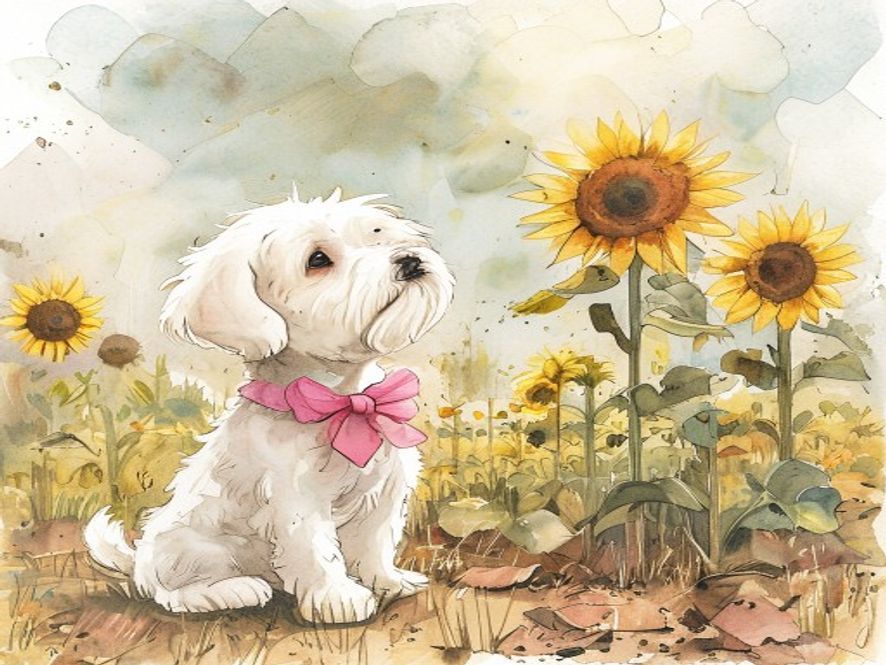
But when they rounded the corner of the house, Mochi stopped so suddenly that her fluffy white paws skidded on the wet grass.
Her garden patch was ruined.
The little fence Emma had built from popsicle sticks lay scattered like matchsticks. The soil had washed into a muddy river that pooled around the roots of the maple tree. And her sunflowers—her brave, hopeful seedlings—lay flat against the earth, their stems bent, their yellow faces pressed into the mud.
Mochi let out a sound that was not quite a bark and not quite a sigh. It was the sound of a small heart breaking.
Emma knelt down in the mud, not even caring that her jeans were getting soaked. "Oh, Mochi. I'm so sorry."
Mochi walked slowly to her patch. She sniffed at a fallen seedling. She nudged another with her nose. Then she looked up at Emma with eyes that held no tears—only determination.
She would not give up on them.
What followed was the busiest week of Mochi's small life.
Every morning, while the dew still clung to the grass like tiny diamonds, Mochi was in her garden. Emma helped her prop up the bent sunflowers with gentle splints made from twigs and soft cloth. Together they cleared away the mud and added fresh soil from Nana Rose's compost bin. Mochi carried small stones in her mouth, one by one, to build a stronger border around her patch.
It was hard work for a little dog. Her jaws ached from carrying stones. Her paws grew muddy and tired. Some of the seedlings were too damaged to save, and when Mochi found them, she would sit very still for a moment, her head bowed, before gently moving them aside and making room for new seeds.
"You don't have to do this all yourself, you know," Emma said one afternoon, watching Mochi dig a new row with her front paws. "I can help more."
But Mochi understood something important. Responsibility didn't mean doing everything alone. It meant seeing something through, even when it was difficult. It meant showing up, day after day, even when your heart felt heavy and your paws felt tired.
She wagged at Emma—not the big, bouncy wag of joy, but the small, steady wag that meant thank you, but I need to do this.
Day by day, the garden changed. New seedlings pushed through the soil, tender and green and brave. The saved sunflowers straightened their stems toward the sun. The stone border held firm when the next rain came, gentle this time, and the little fence stood strong.
And then, one golden morning in late summer, Mochi woke to find her first sunflower in full bloom.
It was taller than Mochi herself, its face a perfect circle of yellow petals around a dark center that seemed to hold all the warmth of every summer day. It turned toward the sun as if singing a song of gratitude.
Mochi sat before it, her pink bow catching the light, and felt something bloom inside her chest too—something brighter than gold, something that grew from showing up, from not giving up, from loving something enough to care for it through the storms.
Emma came and sat beside her, wrapping her arms around Mochi's fluffy neck. "You did this," she whispered. "You saved them."

What Mochi had done was simply this: she had been responsible. She had loved something, and she had proven that love through patience and work and hope.
That night, as crickets sang their lullabies and the maple trees whispered their bedtime secrets, Mochi curled up in her basket by Emma's bed. In her dreams, she walked through a garden of towering sunflowers, each one turning to smile at her as she passed.
And somewhere in the soft darkness of the room, Emma whispered, "Goodnight, Mochi. Thank you for teaching me what it means to be responsible."
Mochi's tail thumped once against her basket, and then she slept—the deep, peaceful sleep of someone who knows they have done their very best.
Related Posts

Mochi the Maltipoo: A Story About Gratitude

Mochi the Maltipoo: A Story About Curiosity