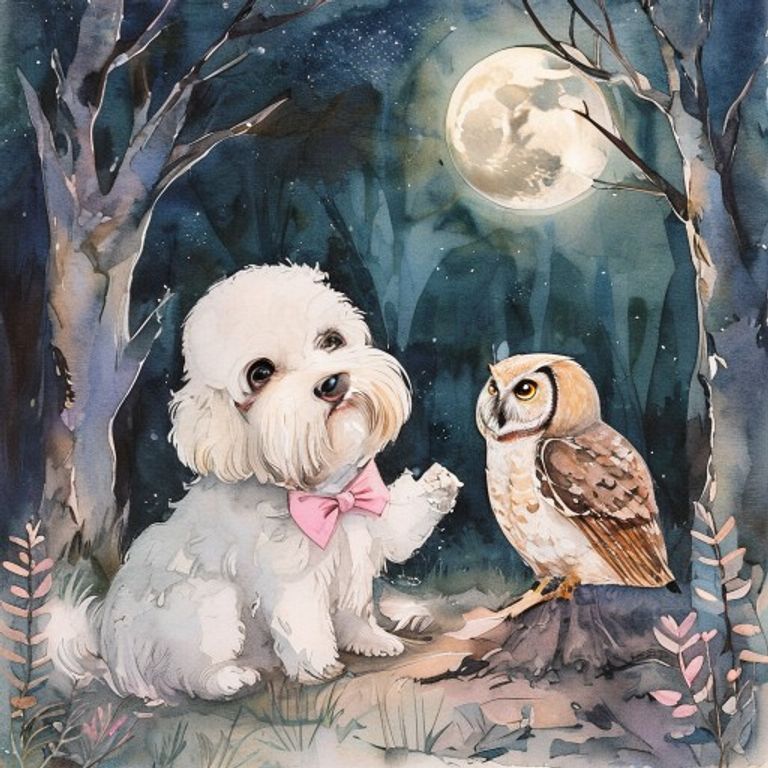
Mochi the Maltipoo: A Story About Respect
The autumn festival on Maple Street was the most magical night of the year.
Every house hung paper lanterns in colors of harvest gold and pumpkin orange. The maple trees, already dressed in their finest reds and yellows, seemed to glow from within as if each leaf held a candle. There was cider warming in slow cookers on front porches, and the smell of cinnamon donuts drifted from Mrs. Henderson's kitchen like an invitation no one could refuse.
Mochi loved the festival more than any other day. She loved how the children laughed as they bobbed for apples. She loved the way the grown-ups told stories around the fire pit at the end of the street, their faces warm and golden in the flickering light. And she especially loved that Emma always made her a special costume—a tiny cape one year, a flower crown another—and walked her through the festivities as if she were the guest of honor.
This year, Mochi's costume was a small pair of felt wings, soft as clouds, attached to her harness with careful stitches. Emma said she looked like a fairy dog, and Mochi walked with extra bounce in her step, her pink bob dancing, her wings fluttering with each step.
But the best part of the festival—the very best part—was the Story Circle.
Every year, the elders of Maple Street sat in a ring of wooden chairs around the great oak tree, and they told stories. Not just any stories, but the stories of Maple Street itself. How the first maple had been planted by a girl not much older than Emma. How the yellow house had once been blue. How the street had come together during the great snowstorm of '98 to share food and warmth when the power failed for a week.
Mochi didn't understand every word, but she understood the music in their voices. She understood the way the stories connected the listeners like invisible threads, weaving everyone into something stronger than any one person alone.
This year, there was a new elder in the Story Circle.
Mr. Kowalski had moved to the empty house at the end of Maple Street only a month before. He was a tall man with silver hair that fell across his forehead like frost on a window, and he walked with a cane carved from dark wood that clicked against the pavement like a metronome. He didn't smile much. He didn't join the other neighbors for morning coffee at the corner café. And when children waved at him, he nodded but rarely waved back.
"He's grumpy," Tommy Miller had declared after trying to show Mr. Kowalski his new skateboard and receiving only a brief nod in response.
"He's just shy," Emma had said, but even she seemed uncertain.
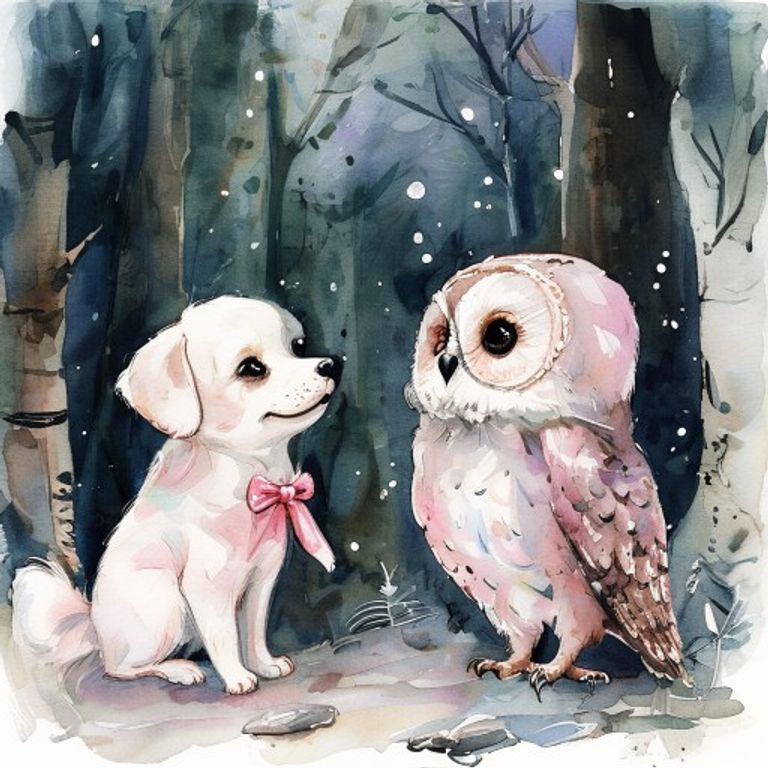
Nana Rose began the storytelling, her voice warm and rich as honey. She told of the time a family of foxes had lived beneath the Hendersons' porch, and how the whole street had protected them until the kits were old enough to venture into the woods. Then Mr. Abernathy spoke of the library fundraiser that had brought the bookmobile to Maple Street every Tuesday for thirty years.
One by one, the elders shared their pieces of Maple Street history, and the young ones listened, munching donuts, leaning against their parents' knees, watching the firelight paint shadows on the old oak's trunk.
Then it was Mr. Kowalski's turn.
The circle went quiet. No one was sure if he would speak. No one was sure if he even knew any stories about Maple Street—after all, he had only just arrived.
Mr. Kowalski sat very still for a long moment. Then he cleared his throat and began.
"I don't have a story about Maple Street," he said, his voice rough and quiet. "Not yet. But I have a story about another street, in another place, where I lived for forty years before I came here."
He told them of a street where the trees were elm instead of maple, but the children were the same—loud and laughing and full of questions. He told them of neighbors who had helped raise his own children, of a woman named Evelyn who had baked the same cinnamon donuts now warming in Mrs. Henderson's kitchen. He told them of snowball fights and summer lemonade stands and the way the whole street had held its breath when Evelyn grew sick, and how they had breathed again together when she recovered.
His voice grew softer as he spoke, and the silver hair fell further across his eyes, and Mochi—watching from Emma's lap—saw something that made her heart squeeze.
A tear, caught in the firelight, sliding down Mr. Kowalski's cheek.
"Evelyn passed last spring," he said, and his voice barely made it past his lips. "And the street without her... it wasn't home anymore. So I came here. To find a new home. To find..." He paused, wiping his cheek with the back of his hand. "To find people who might let an old man belong again."
The circle was absolutely silent.
Then Tommy Miller, who had called Mr. Kowalski grumpy, stood up and walked over to the slightly-separated chair. He didn't say anything. He just moved it—scrape, thump—into the circle, right between Nana Rose and Mrs. Henderson. Then he sat back down at his mother's feet, his face red but his chin high.
Something warm unfurled in Mochi's chest. She understood, in the way dogs understand things that humans sometimes forget, that respect was not about liking someone immediately. It was not about thinking they were fun or friendly or easy. Respect was about seeing someone—all of someone, even the parts that were broken or sad or strange—and making room for them anyway.
She squirmed in Emma's lap until Emma set her down, and then she walked—small and white and winged—across the grass to Mr. Kowalski's feet.
She looked up at him with her dark, gentle eyes. She wagged her tail, slow and steady. And then she did something she had never done for a stranger before: she rested her chin on his shoe, her pink bow touching the leather, and sighed the deep, trusting sigh of a dog who feels safe.
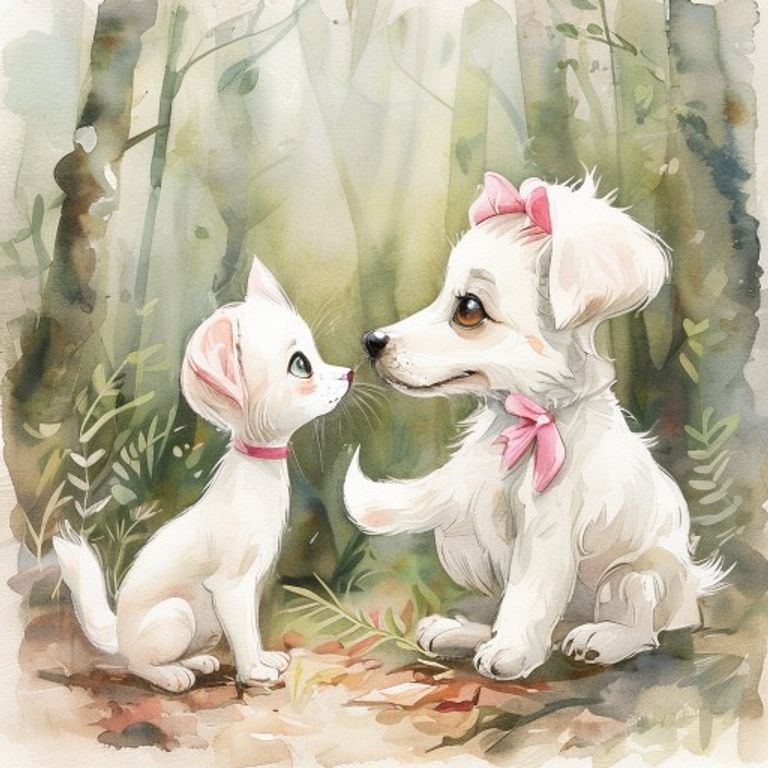
"Hello, little fairy," he whispered.
And he smiled.
It was a small smile, hesitant, as if his face had forgotten how. But it was real, and it transformed him—not into someone different, but into someone fully seen. Someone respected enough to be offered patience, and time, and a place in the circle.
In the days that followed, Maple Street changed in small, sweet ways.
Mrs. Henderson started bringing Mr. Kowalski extra donuts—"I make too many," she'd say, though everyone knew she made exactly the right amount. Tommy Miller began waving at Mr. Kowalski every morning on his way to school, and after a week, Mr. Kowalski waved back, his hand rising slowly as if learning a new language. Nana Rose invited him for tea, and he brought flowers from his new garden, still small and uncertain but chosen with care.
And Mochi? Mochi visited him every afternoon.
She would trot down the sidewalk, her pink bow bright against her white curls, and scratch at his screen door. He would open it with a creak, and she would enter his quiet house—not to play, not to demand attention, but simply to be there. She would lie on the rug by his chair while he read, her presence soft and steady as a heartbeat. Sometimes he would read aloud, and she would listen, her ears perked, her eyes closing in contentment.
"You're a good listener, little fairy," he would say. "Evelyn was a good listener too."
Mochi understood that respect meant listening. It meant being present without needing to be the center. It meant seeing someone's grief and not trying to fix it, but simply keeping them company in it.
One rainy Tuesday, when the maple leaves fell like wet confetti and the sky wept softly, Mr. Kowalski sat in his chair with a photo album open on his lap. Mochi lay beside him, warm and white and patient, as he turned the pages. There was Evelyn, young and laughing in a garden. There were his children, now grown and living far away. There was his old street, the elm trees arching overhead like a green cathedral.
"I miss them," he said, not to Mochi specifically, but to the room, to the world. "I miss them so much."
Mochi stood up. She placed one small paw on his knee, then the other. She was too small to truly hug him, but she pressed her fluffy body against his leg as firmly as she could, her pink bow brushing his hand, and she stayed there. A warm, breathing weight. A reminder that he was not alone, even in his missing.
Mr. Kowalski's hand came to rest on her back, and they sat together as the rain sang against the windows, two creatures from different worlds finding comfort in simple, respectful presence.
By the time the first snow fell, Mr. Kowalski had a new story for the Story Circle.
He spoke of a little white dog with a pink bow who had taught him that new homes were possible. That grief and love could live in the same heart. That respect was a gift you gave before it was earned, and it was the most powerful gift of all.
Mochi sat in Emma's lap, her wings long since put away until next autumn, but her heart still wearing them. She listened to Mr. Kowalski's voice, now strong and certain, telling her story to the circle that had made room for them both.
That night, as snow whispered against the yellow house and the maple trees wore white caps, Mochi dreamed she was walking down a street lined with every kind of tree—maple and elm and oak and pine—and every door was open, and behind every door was someone who had been lonely until someone else chose to respect them anyway.
And in her dream, she was not small at all. She was as tall as the stories she had helped grow, and her pink bow was the color of sunrise, and her heart was full of the quiet, powerful joy of making room.