The Wise Owl of Whispering Woods: A Story About Justice
In the heart of Whispering Woods stood the Great Oak Court, where a magnificent owl named Justice Oliver presided over disputes among the forest creatures. His silver-tipped feathers gleamed in the moonlight, and his golden eyes—magnified behind tiny spectacles perched on his hooked beak—saw not just what happened, but why.
Every creature in the forest knew that if they had a problem they couldn't solve, Justice Oliver would listen. He wouldn't just hear words; he would understand hearts. And somehow, when creatures spoke to him, the truth naturally emerged like water finding its way through stones.
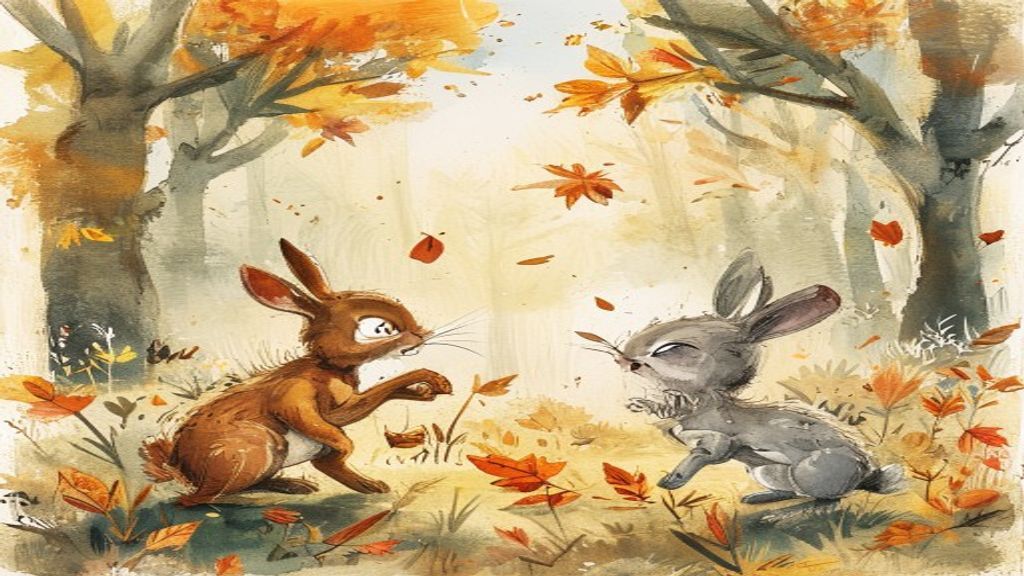
One crisp autumn morning, a young rabbit named Pip and a squirrel named Nutmeg arrived at the Great Oak Court, both chattering angrily about a beautiful hollow log they had discovered. Each claimed they had found it first for their winter home.
"He was digging when I saw it from my tree!" Nutmeg chattered, her tail flicking with frustration.
"But I touched it first!" Pip thumped his foot on the oak branch. "Finder's keepers!"
Other animals gathered around, curious about the commotion. Some sided with Pip, others with Nutmeg. The argument grew louder until Justice Oliver raised one wing, and everyone fell silent.
"Friends," Oliver hooted softly, his voice carrying a calm that settled over the crowd like a warm blanket. "Tell me—not who found the log first, but what do you love about it?"
Pip's ears drooped thoughtfully. "I love how cozy and dry it is inside. It's the perfect size for my family, and the thick walls will keep us warm all winter."
Nutmeg tilted her head. "I love how high it is off the ground, and how the morning sun streams through a small crack, making everything golden and warm."
Justice Oliver's golden eyes twinkled. "Ah," he said. "Now I understand. You see, my friends, this log has two perfect spaces. Pip, the bottom entrance leads to a snug chamber that stays warm and dry—ideal for a rabbit family. Nutmeg, the top has a small hole that catches the morning sun, with branches nearby for easy climbing."
Both animals gasped. In their arguing, neither had noticed the other's perfect space.
"The log is big enough for two families," Oliver continued. "Pip can have the bottom, Nutmeg the top. You'll be neighbors instead of enemies."
Pip and Nutmeg looked at each other, then at the log, then back at each other. Slowly, smiles spread across their faces.
"I could share berries from my winter stores," Pip offered.
"And I could warn you if foxes come near," Nutmeg replied.
Justice Oliver watched them hop off together, already planning how to share their new home. He had taught them something important: fairness doesn't mean one winner and one loser. It means finding the solution where everyone gets what they truly need.
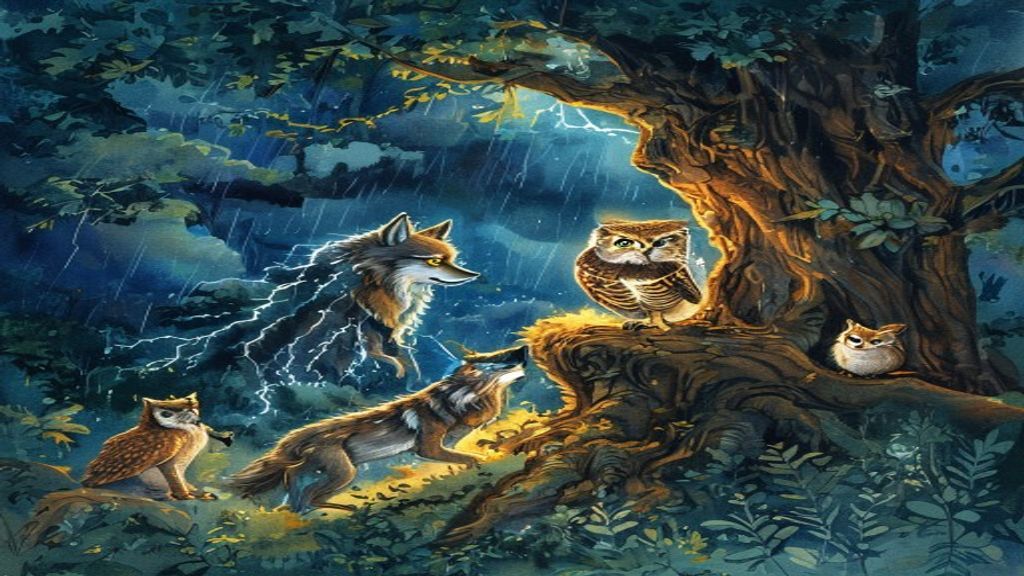
Word spread through Whispering Woods about the wise owl who made things fair. Soon creatures from distant meadows and neighboring valleys began making the journey to the Great Oak Court. They came with disputes over berry patches, water rights, and boundary lines.
But one autumn morning, a dispute arrived that made Oliver's feathers ruffle with concern. It wasn't between two creatures—it involved the entire Meadow Community.
The stream that had flowed through their shared lands for generations had begun to dry up, leaving only a trickle of water.
The beavers who dammed the upstream portion insisted they needed the water for their winter preparations. "We've always stored water for our lodges," explained Elder Birch, his flat tail slapping nervously. "Without our ponds, our kits will freeze."
But downstream, the frogs, ducks, and water voles were desperate. "Our homes are mud now," croaked Croaker, the eldest bullfrog. "Our tadpoles are dying. The herons have no fish to eat. You're killing the whole downstream world!"
The tension in the Great Oak Court was thick enough to taste. Animals who had been friends for years growled and hissed at each other.
Justice Oliver flew to the highest branch, his wings making no sound. "Friends," he called out. "I have heard your words. Now I must see with my own eyes. Tomorrow, meet me at the beaver ponds. All of you."
The next morning, a procession of animals made their way upstream. When they reached the beaver dams, the downstream creatures gasped at the magnificent ponds—clear and deep, surrounded by carefully constructed lodges.
But Oliver led them further, past the dams, following the trickle that remained. The beavers saw what they had never witnessed before—the cracked mud where ponds once thrived, the desperate water voles trying to dig for moisture, the empty heron nests in dead trees.
Elder Birch's whiskers drooped. "We never knew," he whispered. "We never came downstream to see."
Justice Oliver settled on a dry stump. "Now you have seen. And seeing is the beginning of justice."
For three days, Oliver worked with both communities. The beavers agreed to build smaller dams with channels for controlled water flow. The downstream creatures helped dig new irrigation paths. The herons volunteered to fish in different areas. The frogs shared their knowledge of water plants.
On the fourth morning, water flowed again—a gentle, steady stream that reached every corner of the meadow. The two communities had become one, celebrating with berries from upstream forests and sweet reeds from downstream marshes.
Years passed, and Justice Oliver grew old. Young owls came to learn from him. "Justice," he would say, "is not about being right. It's about making things right."
On a golden autumn morning, Oliver gathered his students. "True justice," he told them, "lives in our hearts when we choose fairness over favor, understanding over anger, and community over selfishness."
That winter, Justice Oliver passed quietly in his sleep. But his legacy remained. The Great Oak Court still stands, where young owls trained in Oliver's ways help creatures find fair solutions. And carved into the oak itself are his words: "Be just, little ones. The world needs your light."
The Moral: True justice isn't about deciding who wins and who loses—it's about finding solutions where everyone's needs are considered. Fairness means listening to all sides, understanding different perspectives, and working together to make things right.