The Great Sky School: A Story About Respect
High above the clouds, where the stars sparkled like diamonds scattered across velvet and the moon watched over the world like a gentle guardian, there was a very special place. It was called the Great Sky School, and it was unlike any school on Earth.
This school didn't have walls made of brick or windows made of glass. Instead, it floated on its own fluffy white cloud, drifting gently across the skies of the world. The floors were soft as cotton, the ceilings stretched up to the heavens, and everywhere you looked, there were children from every corner of the world, learning and laughing together.
At the Great Sky School, the teachers weren't ordinary teachers. They were magical cloud teachers—wise beings made of mist and stardust who had traveled the world for thousands of years. They knew every language, every custom, every story that had ever been told. And their most important lesson was always the same: Respect.
"Respect," the Head Teacher Madame Cirrus would say, her voice sounding like gentle wind chimes, "is the magic that makes the world beautiful. When we respect someone, we honor what makes them special. We see their differences not as things that divide us, but as gifts that make the world more wonderful."
On this particular morning, five new students arrived at the Great Sky School. They came from five very different places, and none of them had ever met anyone from the others' lands.
There was Mei-Lin from China, with her shiny black hair in two long braids and a bright red dress embroidered with golden dragons. She spoke Mandarin and loved to practice her calligraphy, painting beautiful characters that seemed to dance on the page.
There was Kwame from Ghana, with his warm brown skin and a colorful kente cloth wrapped around his shoulders. He spoke Twi and loved to drum, his hands creating rhythms that made everyone want to dance.
There was Sofia from Mexico, with her dark curly hair and a flowing white dress with embroidered flowers. She spoke Spanish and loved to cook, creating dishes so delicious they made your taste buds sing with joy.
There was Aarav from India, with his expressive eyes and a kurta in brilliant orange and gold. He spoke Hindi and loved to tell stories, his voice weaving tales that transported listeners to magical kingdoms.
And there was Emma from Norway, with her golden hair in a long braid and a blue wool sweater with white snowflakes. She spoke Norwegian and loved to sing, her voice clear and pure as a mountain stream.
When they first met, standing awkwardly at the entrance of the Great Sky School, they didn't know what to make of each other. They looked different. They dressed differently. They spoke different languages. And each of them felt a little unsure.
"Why does she wear such bright colors?" Emma whispered to herself, looking at Kwame's kente cloth.
"Why does he smell like spices?" Mei-Lin wondered quietly, catching a whiff of Sofia's cooking from her bag.
"Why does she look at me so strangely?" Aarav thought, noticing Emma staring at his traditional clothes.
"I hope they like me," Sofia worried, clutching her recipe book to her chest.
"We're all so different," Kwame realized, looking around at the group. "How will we ever be friends?"
Just then, Madame Cirrus floated toward them, her cloud-form shifting and swirling gracefully. She smiled at each of them, and her smile was like sunlight breaking through clouds.
"Welcome, little ones," she said warmly. "I see you've noticed that you are different from one another. That is wonderful!"
"Wonderful?" Mei-Lin asked doubtfully. "But we're so... different. How can we understand each other?"
"Ah," Madame Cirrus said, her eyes twinkling with ancient wisdom. "That is the first lesson of the Great Sky School. Come, let me show you."
She led them to the center of the cloud-school, where five beautiful chairs sat in a circle. Each chair was different—one was carved from bamboo, one was woven from colorful fabric, one was painted with bright flowers, one was inlaid with intricate patterns, and one was carved from pale wood.
"Sit," Madame Cirrus invited. "Each of you, choose the chair that looks most like home."
The children looked at each other, then slowly moved to the chairs. Mei-Lin chose the bamboo chair. Kwame chose the woven fabric chair. Sofia chose the flower-painted chair. Aarav chose the intricately patterned chair. And Emma chose the pale wooden chair.
"Now," Madame Cirrus said, "look at your chairs. Are they the same?"
"No," the children chorused.
"Are any of them wrong?" she asked.
The children thought about this. "No," they said, more slowly this time.
"Exactly," Madame Cirrus said, her voice gentle but firm. "Each chair is different. Each chair is beautiful in its own way. And each chair is perfect for the person who needs it. The bamboo chair is perfect for Mei-Lin because it reminds her of home. The woven chair is perfect for Kwame because it holds the warmth of his culture. The flower chair is perfect for Sofia because it celebrates the beauty she loves. The patterned chair is perfect for Aarav because it honors the art of his people. And the wooden chair is perfect for Emma because it carries the simplicity and strength of her homeland."
She floated around them, looking into each of their eyes. "People are like chairs, little ones. We are all different. We come from different places. We look different. We speak different languages. We eat different foods. We celebrate different traditions. But just like these chairs, none of us are wrong. We are all perfect in our own way. And when we respect each other's differences, we create something beautiful together."
The children looked at each other with new eyes. They weren't staring anymore—they were seeing.
"But how do we respect each other?" Aarav asked. "What does respect look like?"
Madame Cirrus smiled. "That is your first assignment. Today, you will teach each other something from your culture. And as you teach, you will listen. You will not judge. You will not say 'that's weird' or 'that's strange.' You will say 'that's different from what I know, and that's wonderful.' And you will learn that respect begins with an open heart."
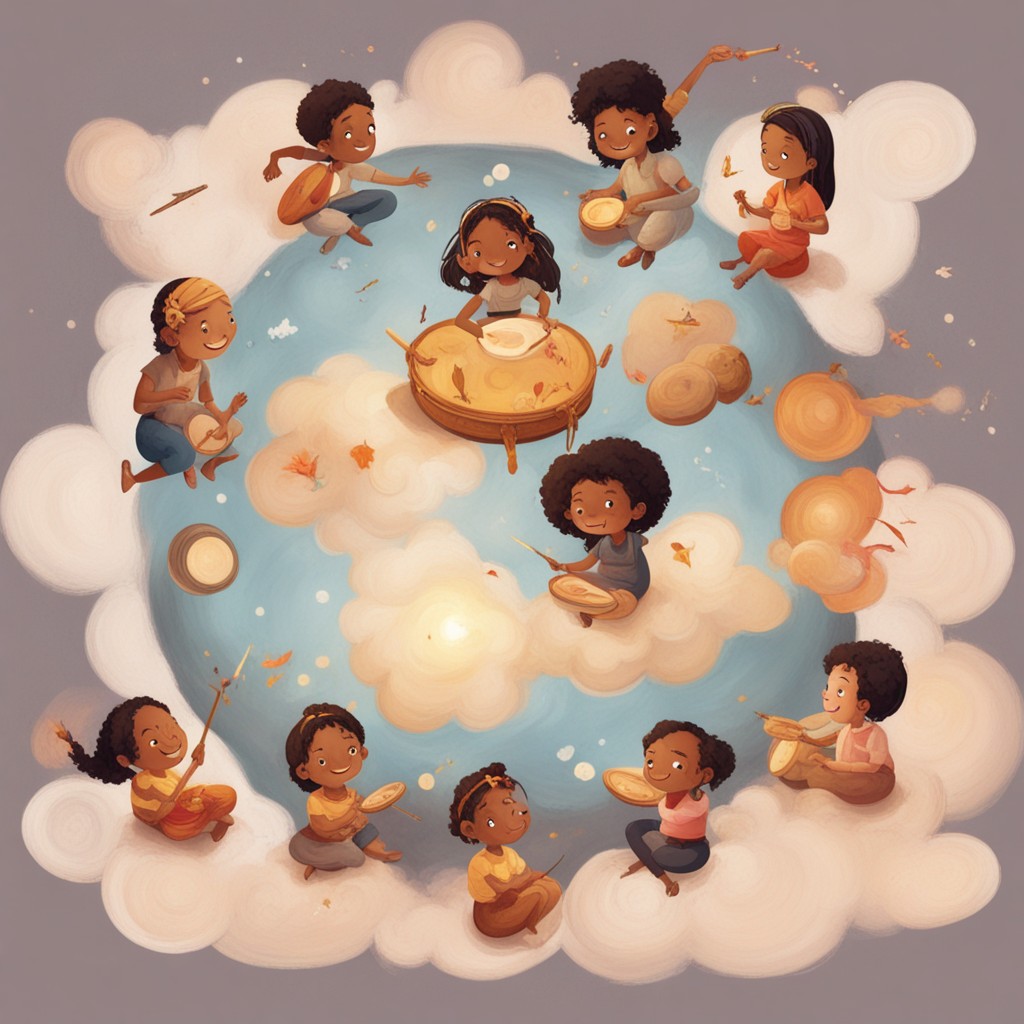
So the five children spent the day together, sharing and learning.
Mei-Lin taught them Chinese calligraphy. She showed them how to hold the brush, how to breathe, how to let the characters flow from their hearts onto the paper. "In my culture," she explained, "we believe that writing is an art. Each character carries meaning and history. When we write with respect, we honor our ancestors."
Kwame taught them African drumming. He brought out a djembe drum and showed them how to create different sounds—bass, tone, and slap. "In my village," he said, "drumming is how we communicate. Different rhythms mean different things. We drum to celebrate, to mourn, to gather. The drum is the heartbeat of our community."
Sofia taught them to make Mexican hot chocolate, grinding the chocolate with cinnamon and adding just a touch of chili. "In Mexico," she explained, "food is love. We spend hours preparing meals for our families. Every recipe tells a story. This hot chocolate recipe has been in my family for five generations."
Aarav told them an Indian story about Prince Rama and his loyal friend Hanuman. He used different voices for each character, his hands painting pictures in the air. "In India," he said, "stories are our treasures. They teach us how to live, how to love, how to be brave. We pass them down from grandparents to grandchildren, keeping our wisdom alive."
And Emma taught them a Norwegian folk song, her voice rising and falling like the northern lights she described. "In Norway," she said, "we sing to celebrate the changing seasons. We sing when the sun returns after the long winter. We sing to honor the mountains and the fjords. Music connects us to the land we love."
As the day went on, something magical happened. The children stopped seeing each other as different and started seeing each other as fascinating. They asked questions—not to judge, but to understand. They listened—not to respond, but to learn.
"Your writing is so beautiful," Emma told Mei-Lin, looking at the character for 'friend' that Mei-Lin had taught her to write. "It looks like art."
"Thank you," Mei-Lin said, smiling. "Your singing is like nothing I've ever heard. It makes me feel like I'm standing on a mountaintop."
"Kwame," Sofia said, her eyes shining, "your drumming makes my heart dance. Can you teach me more rhythms?"
"Of course!" Kwame grinned. "And will you teach me to make that chocolate? I've never tasted anything like it."
"Aarav," Emma said softly, "your story was wonderful. We have stories in Norway too, but yours felt so different. I loved it."
"Thank you, Emma," Aarav replied. "I would love to hear your stories too. Every culture has wisdom to share."
Madame Cirrus watched them, her cloud-form glowing with pride. "Do you see?" she asked, floating closer. "Respect isn't about being the same. It's about honoring what makes us different. When Mei-Lin shares her calligraphy, she isn't saying 'my way is better.' She's saying 'this is my gift, and I want to share it with you.' When Kwame shares his drumming, he isn't saying 'everyone should drum.' He's saying 'this is what brings me joy, and I want you to feel it too.'"
"Respect means listening with an open heart," she continued. "It means asking 'tell me more' instead of 'that's weird.' It means saying 'that's different from what I know' with wonder, not judgment. It means understanding that every person is a whole world, with their own stories, their own dreams, their own way of seeing things."
The five children looked at each other, and this time, they didn't see strangers. They saw friends.
"I have an idea," Sofia said suddenly. "What if we create something together? Something that has a little bit of all of us?"
The others loved the idea. They worked together for the rest of the afternoon, combining their gifts. Mei-Lin wrote beautiful characters on a large scroll. Kwame drummed a rhythm that guided their work. Sofia prepared a feast to sustain them. Aarav told stories that inspired their creation. And Emma sang, her voice weaving through their work like golden thread.
What they created was a masterpiece—a tapestry of cultures, a celebration of differences, a testament to respect. It had Chinese characters flowing like rivers, African patterns dancing like drums, Mexican colors blooming like flowers, Indian symbols telling stories, and Norwegian melodies floating like snowflakes.
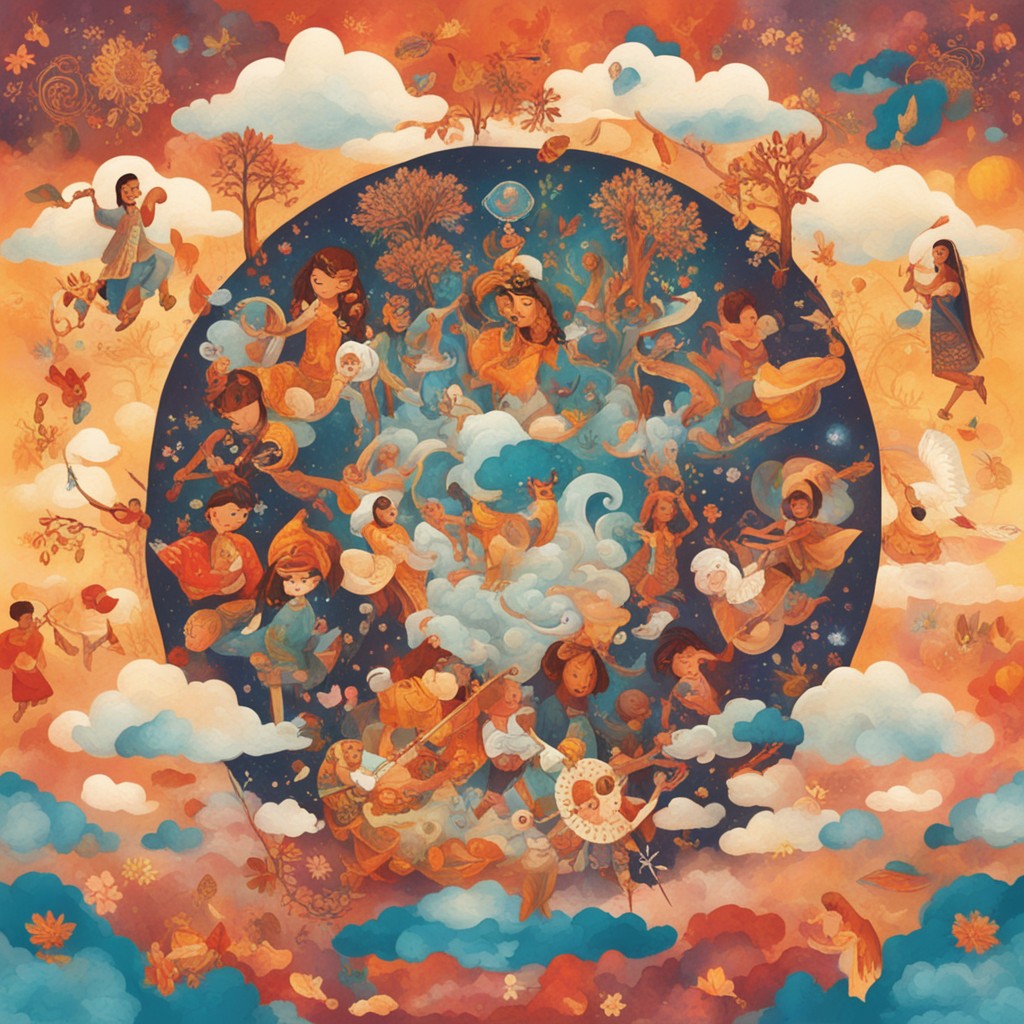
"It's beautiful," Madame Cirrus whispered, her voice thick with emotion. "Do you see what you've done? You've taken five different worlds and woven them together. You've honored each other's differences while creating something new. This is what respect looks like. This is what the world can be when we choose to see the beauty in our differences."
That night, as the five children lay on the soft cloud floor, looking up at the stars, they talked quietly.
"I was afraid of you all at first," Mei-Lin admitted. "You looked so different from me and my friends at home."
"Me too," Kwame agreed. "I thought we wouldn't understand each other."
"But now I see," Sofia said, "that our differences are what make us interesting. If we were all the same, the world would be so boring."
"Respect isn't about pretending we're the same," Aarav said thoughtfully. "It's about celebrating that we're different."
"And learning from each other," Emma added. "I've learned so much today. I want to learn more."
Madame Cirrus floated above them, listening to their words. She smiled, knowing that these children understood the most important lesson of all.
"Remember this, little ones," she said softly. "The world is full of people who are different from you. They will speak different languages, wear different clothes, eat different foods, and believe different things. Some will look different, sound different, live differently. And every single one of them deserves your respect."
"Because respect isn't about agreeing with everyone," she continued. "It's about honoring their right to be who they are. It's about listening even when you don't understand. It's about kindness even when things seem strange. It's about recognizing that every person, no matter how different, carries a heart that loves, hopes, and dreams—just like yours."
The children fell asleep under the stars, their hearts full of new understanding. And as they slept, the Great Sky School drifted across the world, carrying its message of respect to every land below.
Years later, when Mei-Lin, Kwame, Sofia, Aarav, and Emma had grown up, they would remember their time at the Great Sky School. They would carry its lessons into their lives, treating everyone they met with respect and curiosity.
Mei-Lin would become a teacher, helping children understand different cultures through art. Kwame would become a musician, using his drums to bring people together. Sofia would open a restaurant, serving food from around the world. Aarav would become a storyteller, sharing tales that celebrated diversity. And Emma would become a diplomat, helping countries understand each other.
And whenever they faced someone who was different from them—someone who spoke another language, practiced another faith, lived another way—they would remember Madame Cirrus's words: "Respect is the magic that makes the world beautiful."
They would remember that differences aren't things to fear, but gifts to celebrate. They would remember that every person is a whole world, worthy of honor. They would remember that respect begins with an open heart.
And they would pass these lessons on to their own children, and their children's children, until the whole world learned what the five friends had learned on that magical cloud so long ago:
We are all different. We are all beautiful. And when we respect each other, we create something more wonderful than any of us could create alone.
The End