The Owl’s Fair Judgment: A Story About Justice
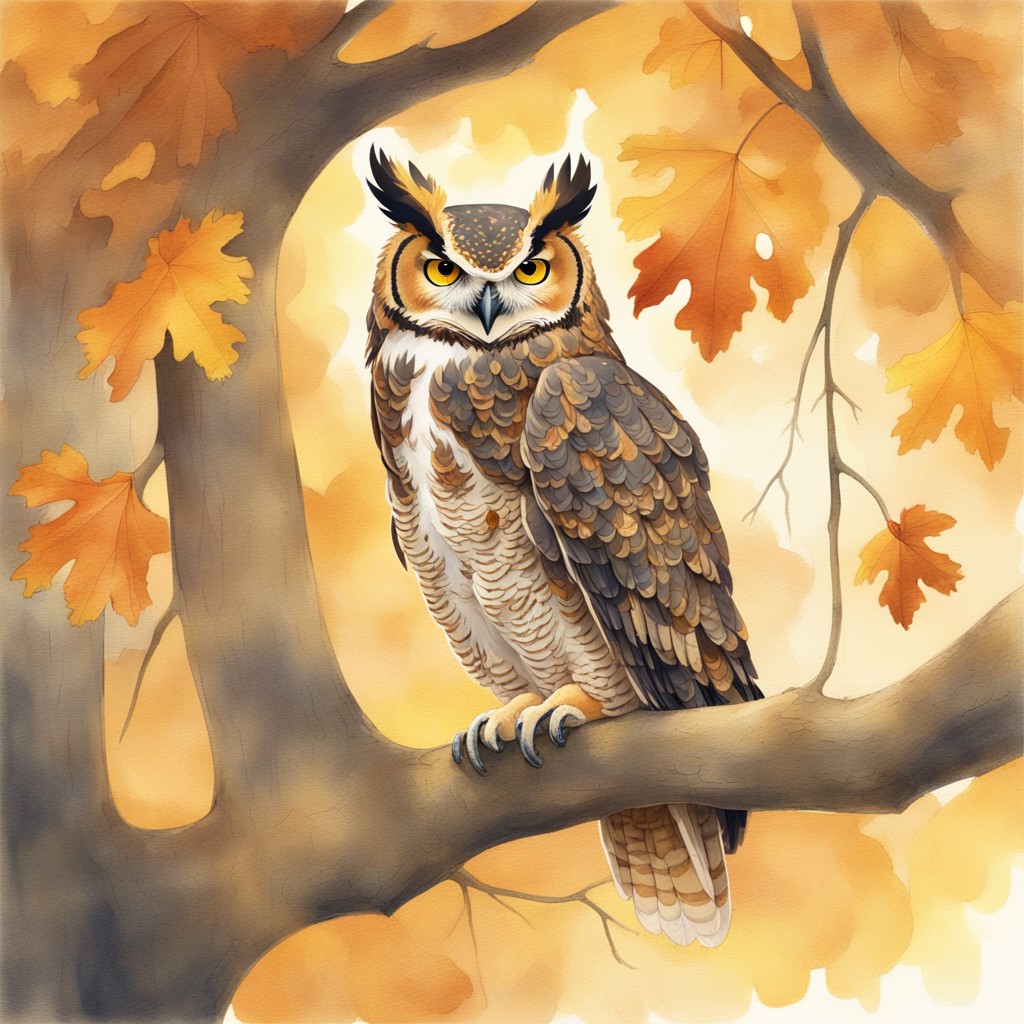
In the oldest part of the Whispering Woods, where the trees grew so tall that their branches touched the clouds and their roots reached deep into the earth's memory, there stood an ancient oak known as the Justice Tree. Its trunk was wider than a cottage, its bark was etched with patterns that looked like ancient writing, and in its highest hollow lived the most respected creature in the entire forest—Judge Orion, a great horned owl with feathers the color of autumn leaves and eyes that gleamed like polished amber.
For as long as any animal could remember, Judge Orion had presided over the Tree Court, a gathering place where disputes were settled, wrongs were righted, and fairness was restored. He didn't use force or fear. He used something far more powerful—wisdom, patience, and an unshakeable commitment to justice.
"Justice," Orion would often say to his young apprentice, a bright-eyed screech owl named Aria, "is not about making everyone happy. It's about making things right. And sometimes, making things right means hearing truths that are uncomfortable and facing realities that are difficult."
Aria, who had only recently begun her training, was still learning this lesson. She wanted everyone to get along, for every dispute to end with hugs and friendship. But Orion taught her that true justice required more than good intentions—it required careful thought, honest listening, and the courage to make hard decisions.
One misty morning, when the forest was wrapped in fog that made every tree look like a ghost, a serious dispute arrived at the Tree Court. It involved the beavers of Ripple Creek and the herons of Stillwater Pond, and it had been building for months.
The beavers, led by a hardworking engineer named Birch, had built a magnificent dam. It created a wide, peaceful pond that provided water for half the forest during the dry summer months. But the herons, led by a graceful elder named Crane, claimed that the dam had flooded their nesting grounds, destroying the reeds where their families had raised chicks for generations.
"Your dam has taken our home!" Crane declared, her long neck arched with indignation. "My grandmothers nested in those reeds. My mother raised me there. And now it's all underwater, buried beneath your sticks and mud!"
Birch, his broad tail slapping the ground with frustration, shot back: "And without our dam, the creek would run dry every summer! The rabbits, the deer, the foxes—they all depend on that water. We're not trying to hurt anyone. We're trying to help everyone!"
"Help?" Crane's voice rose to a shriek. "You've helped yourselves to our home! Where are we supposed to nest now? On your muddy dam?"
The argument had grown so heated that other animals had started taking sides. The rabbits and deer supported the beavers, grateful for the water. The ducks and frogs, who enjoyed the expanded pond, sided with Birch too. But the songbirds and water snakes, who had lived in the reeds, supported the herons.
The forest was divided, and the tension was growing dangerous.
Judge Orion listened to all of this from his perch high in the Justice Tree. He didn't interrupt. He didn't take sides. He simply listened, his amber eyes calm and thoughtful, until every creature had spoken their piece.
"This is a difficult case," Orion finally said, his deep voice carrying across the clearing. "Both sides have valid concerns. Both sides have suffered losses. And both sides believe they are right."
"We are right!" Birch and Crane said simultaneously, then glared at each other.
Orion ruffled his feathers and spread his wings—a gesture that commanded silence. "Perhaps," he said, "you are both right. And perhaps, that is the problem."
He turned to Aria, who sat on a lower branch taking notes. "What do you think, young one? Who is right in this dispute?"
Aria looked nervously from the beavers to the herons. "I... I think they both have good points. The beavers need to build their dam. The herons need their nesting grounds. But... I don't know how to make both things work."
"Exactly," Orion said with a hint of pride. "And that is where justice begins—not with knowing the answer, but with understanding the problem."
He turned back to the crowd. "Birch, tell me—when you built your dam, did you know it would flood the herons' nesting grounds?"
Birch shuffled his webbed feet. "We knew the water would rise, but we didn't know how much. We thought the reeds would survive. We didn't mean to destroy anything."
"And Crane," Orion continued, "did you speak to the beavers before they built the dam? Did you tell them about your nesting grounds?"
Crane's feathers drooped slightly. "We thought they would know. The reeds have always been there. We assumed... we assumed everyone knew they were important."
Orion nodded slowly. "So we have a situation where good intentions led to unintended harm, and assumptions led to missed communication. This is not a case of malice. It is a case of misunderstanding. And misunderstandings can be resolved—but only if both sides are willing to listen."
He descended from his perch, gliding down to a low branch where both sides could see him clearly. "Birch, I want you to walk with me to the dam. Show me what you've built and why. Crane, I want you to show me where your nesting grounds were and what you've lost. And both of you—listen to each other. Not to respond. Not to argue. Just to understand."
The walk to Ripple Creek was quiet at first, filled only with the sounds of the forest and the tension between the two leaders. But as Birch showed Orion the intricate engineering of the dam—the carefully placed sticks, the mud packed tight as stone, the channels that directed water to where it was needed most—Crane began to see something she hadn't noticed before.
"You've put so much work into this," she said quietly, her earlier anger softened by awe. "It's not just a pile of sticks. It's... it's a work of art."
Birch looked surprised. "Thank you. We beavers don't just build dams. We build homes, we create wetlands, we make the forest healthier. But I see now... I see that we were so focused on the good we were doing that we didn't notice the harm we were causing."
When they reached the flooded area, Crane's eyes grew misty. "This is where my mother taught me to fish," she said, her voice breaking. "This is where I met my mate. This is where my first chick took her first flight."
Birch was silent for a long moment. Then he said, "I'm sorry. I truly am. We beavers, we think in terms of water and wood and what's practical. We forgot that some things can't be measured in those ways. We forgot that home is more than shelter—it's memory. It's love."
Orion watched this exchange with quiet satisfaction. Understanding was the first step. Now came the harder part—finding a solution.
Back at the Justice Tree, Orion convened the full court. Animals from both sides gathered, along with many who had no stake in the dispute but wanted to see justice done.
"I have heard both sides," Orion announced. "I have seen the dam, and I have seen the flooded grounds. And I have come to a decision."
The clearing fell silent. Even the wind seemed to hold its breath.
"Birch and the beavers of Ripple Creek built their dam with good intentions. They provided water for many creatures and created a habitat for others. Their work has value, and it will be preserved."
The beavers cheered, but Orion raised a wing.
"However," he continued, "the beavers acted without consulting those who would be affected by their work. They assumed that their good intentions would prevent harm, and they were wrong. The herons' nesting grounds were destroyed, and that loss is real and significant."
Crane and her supporters nodded, some with tears in their eyes.
"Therefore," Orion said, his voice firm but kind, "my judgment is this: The dam will remain, for it serves the greater good of the forest. But the beavers will build a new channel—a spillway—that allows water to flow around the eastern edge of the pond, recreating a wetland area where reeds can grow. They will also build raised platforms of mud and sticks in the shallow areas, providing new nesting sites for the herons."
Birch's eyes widened. "We can do that. It won't be easy, but we can do it."
"And," Orion added, looking at Crane, "the herons will help. They will scout for the best locations for the new nesting grounds, using their knowledge of the area. They will also help plant reed seeds in the new wetland, ensuring it grows quickly."
Crane considered this. "We can do that too. We know where the soil is richest, where the sun hits just right."
"But that's not all," Orion said. "Both sides must agree to a new tradition—the Council of Waters. Before any major changes are made to the creek, the pond, or the surrounding areas, all creatures who depend on that water will meet and discuss it. No more assumptions. No more surprises. Just communication, respect, and shared decision-making."
Aria, watching from her branch, felt her heart swell with understanding. This was justice—not punishment, not victory for one side, but a solution that acknowledged everyone's needs and created a path forward together.

The work began the very next day. Birch and his beavers set to work on the spillway, their powerful tails and sharp teeth making quick work of the new channel. Crane and her herons scouted locations, their sharp eyes finding the perfect spots where reeds would thrive. Other animals joined in—rabbits brought seeds, deer trampled paths, and even the squirrels helped by stripping bark for the beavers to use.
It took two weeks of hard work, but when it was done, something remarkable had been created. The dam still stood, providing water for the forest. But now, a new wetland spread along the eastern edge of the pond, filled with young reeds that swayed in the breeze. And in the shallow waters, platforms of packed mud and sticks rose above the surface—new nesting sites, sturdy and safe.
Crane stood on one of the platforms, testing it with her weight. "It's good," she said, a smile spreading across her beak. "It's better than good. It's perfect."
Birch, standing on the dam with his crew, called out: "And if it ever needs repairs, or if you want changes, just come to us. The Council of Waters meets every new moon, but our door—well, our dam—is always open."
The two leaders looked at each other, and for the first time in months, they didn't see enemies. They saw neighbors. Partners. Friends.
Word of the settlement spread throughout the forest, and soon, other animals began bringing their disputes to the Tree Court. A family of squirrels argued with a woodpecker over a hollow trunk. A fox and a rabbit disagreed about hunting boundaries. Two flocks of birds couldn't decide who had the right to a particular berry bush.
Judge Orion heard them all, and Aria watched and learned. She saw that justice was never about choosing a winner. It was about finding the truth, understanding all sides, and crafting solutions that respected everyone involved.
"Why don't you just punish the ones who are wrong?" Aria asked one evening, as they watched the sunset paint the Justice Tree in shades of gold and crimson.
Orion turned his great head to look at her. "Punishment creates fear, Aria. Fear creates hiding, and hiding creates more misunderstanding. Justice is not about making someone suffer. It's about making things whole again."
"But what if someone does something truly bad?" Aria pressed. "What if they hurt someone on purpose?"
"Then," Orion said, his amber eyes darkening, "we must be firm. We must protect the vulnerable and ensure that wrongs are not repeated. But even then, our goal is not vengeance. It is restoration. We ask: How can we repair the harm? How can we prevent it from happening again? How can we help the one who did wrong to understand why their actions matter?"

As the seasons turned and Aria grew in wisdom, she began to preside over small disputes herself. She wasn't as experienced as Orion, and sometimes she made mistakes. But she always remembered his teaching: justice begins with listening, grows with understanding, and ends with restoration.
One day, a young rabbit came to her, trembling with fear. He had accidentally eaten vegetables from a garden that belonged to a family of groundhogs, and they were demanding that he be punished.
Aria listened to both sides. The groundhogs were angry—their garden was their livelihood, and the rabbit's grazing had destroyed a week's worth of food. The rabbit was remorseful—he hadn't known the garden was claimed, and he was willing to make amends.
"The rabbit will help replant the garden," Aria decided. "He will bring seeds from his own family's stores, and he will work until the garden is restored. And the groundhogs will mark their garden more clearly, so that travelers know it is claimed. And both of you," she added, looking from one to the other, "will share a meal together when the work is done. For justice is not just about fixing what is broken. It is about building something stronger in its place."
The rabbit and the groundhog looked at each other, surprised. Then, slowly, they nodded.
"That seems fair," the groundhog said.
"More than fair," the rabbit agreed. "Thank you, Judge Aria."
When Orion heard about this, his amber eyes glowed with pride. "You are learning, young one. You are learning that justice is not a weapon to be wielded, but a bridge to be built."
And so, in the Whispering Woods, where the ancient trees touched the clouds and the roots reached deep into memory, justice flourished. Not as a force of punishment, but as a promise—a promise that every voice would be heard, every harm would be healed, and every creature, no matter how small or how great, would be treated with fairness, respect, and love.
The end.