The Girl Who Traveled by Starlight: A Story About Respect
The Girl Who Traveled by Starlight: A Story About Respect
In the village of Harmony Hollow, where cobblestone streets wound between cottages like veins of silver and the river sang lullabies to the sleeping willows, there lived a girl named Mira. She was ten years old, with eyes the color of autumn chestnuts and hair that curled like the spirals of a fiddlehead fern.
Mira had never been beyond the hills that cradled her village. She knew every lane, every garden, every face. She knew that Mrs. Baker made the best honey rolls, that Mr. Fletcher's dog barked at exactly six every morning, and that the old well near the square made a wish-granting sound if you listened closely on quiet nights.
But Mira's world, though cozy, was small. And she did not know it was small. She thought every place was like Harmony Hollow. She thought every person ate honey rolls for breakfast, spoke the same words, celebrated the same holidays, and saw the world through the same eyes.
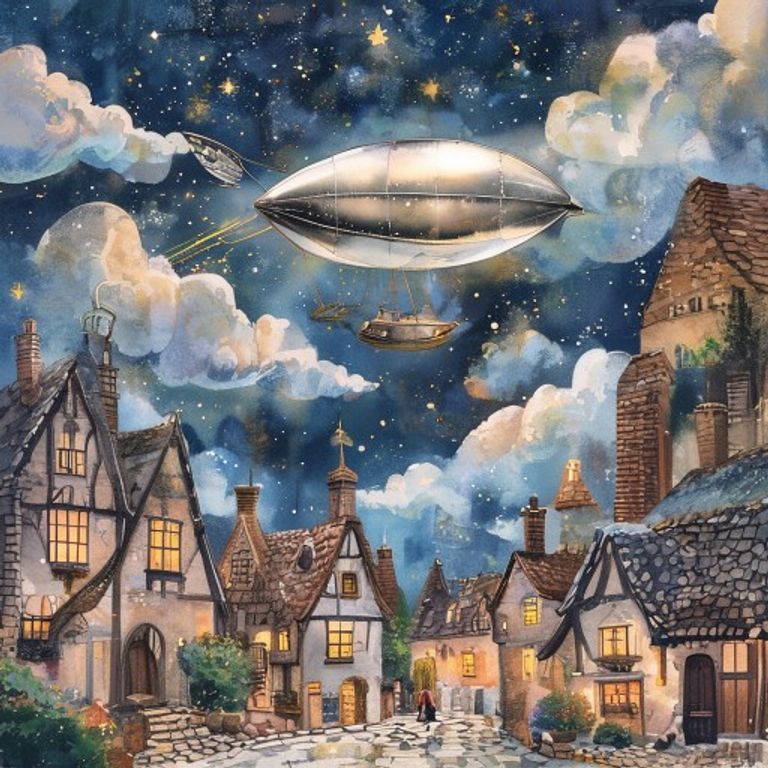
One autumn evening, when the sky was stitched with stars and the air smelled of woodsmoke and apples, something奇妙 happened. A great silver airship descended from the clouds, its hull gleaming like a fallen moon, its sails rippling with starlight.
The villagers gathered in the square, their faces lit with wonder and fear. No one in Harmony Hollow had ever seen such a thing. The oldest elder, who was ninety-three and had seen two wars, whispered that the last airship had come when she was a child, carrying travelers from beyond the Eastern Mountains.
The airship's door opened with a hiss of steam. And from within stepped a boy.
He was about Mira's age, but he looked nothing like anyone she had ever seen. His skin was the deep brown of polished mahogany, where Mira's was the pink-and-gold of sunrise. His hair was braided in intricate patterns, each braid ending in a tiny silver bell that chimed when he moved. He wore a tunic of midnight blue, embroidered with symbols Mira did not recognize—stars within circles, moons cradled by hands, rivers that flowed upward.
"Hello," the boy said, his voice musical and warm. "I am Kael, from the Skylands beyond the Eastern Mountains. Our airship needs repairs. May we stay in your village while we mend it?"
The villagers murmured. Some were welcoming. Some were wary. But the elder stepped forward, her ancient eyes kind.
"You are welcome here," she said. "All travelers are welcome in Harmony Hollow, as long as they come in peace."
"We come in peace," Kael said, bowing deeply. "And we bring gifts of gratitude."
From the airship came other travelers—twelve in all, each one different from the last. There was a woman with golden skin and eyes like emeralds, wearing robes that seemed to shift color with every step. There was a man with pale skin and hair like spun silver, carrying a staff that glowed with inner light. There was a child no older than five, with skin the color of copper and freckles like scattered stardust, who giggled and danced at the sight of fireflies.
Mira watched from behind her mother's skirt. She had never seen such variety. She had never imagined that people could look so different, dress so differently, speak with such different rhythms.
"They are strange," Mira whispered to her mother.
"They are different," her mother corrected gently. "Not strange. Different. And different is not wrong. It is just... different."
Over the next three days, the airship travelers stayed in Harmony Hollow. They slept in the village hall, ate at the communal tables, and shared stories around the evening fires. And Mira, curious and cautious, began to watch them.
She watched Kael, who rose before dawn to greet the sun with a series of movements—slow, deliberate, graceful. He called it "Sun Salutation," a greeting from his people to the source of light and life.
"Why do you do that?" Mira asked one morning, unable to contain her curiosity.
"In the Skylands," Kael explained, "we believe the sun is our oldest relative. It gives us warmth, grows our food, lights our days. This is how we say thank you."
Mira thought about this. In Harmony Hollow, no one greeted the sun. They just... woke up. The idea that the sun could be a relative, something to thank, was new to her.
"That is beautiful," she said, and meant it.
She watched the woman with the color-shifting robes—her name was Lyra—prepare meals in a way Mira had never seen. She did not use fire. She used stones, heated by the sun, placed in special clay pots. The food cooked slowly, gently, and when Mira tasted it, the flavors were deeper, richer, more patient than anything she had known.
"In my land," Lyra said, "we believe rushing is disrespectful to the food. The ingredients gave their lives to nourish us. We honor them by taking time."
Mira thought about how her mother cooked—quickly, efficiently, with three pots going at once. She had never considered that food deserved patience.
"May I learn?" Mira asked.
Lyra smiled, her emerald eyes crinkling. "I would be honored to teach you."
She watched the silver-haired man—Thane—who carried his glowing staff not for magic, as Mira first thought, but for memory. Each glow pattern represented a story from his people, a history passed down through light rather than words.
"Why light?" Mira asked.
"In my homeland," Thane said, "the winters are long and dark. We learned to tell stories with light so that even in the deepest night, our history shines. Words can be forgotten. But light... light reaches everyone, regardless of language."
Mira thought about the stories her grandmother told, and how she sometimes forgot the endings. The idea of stories that could not be forgotten, because they were made of light, filled her with wonder.
But not all of Mira's encounters were easy. Some of the travelers' customs confused her. Some seemed wrong.
The copper-skinned child, Nia, refused to look adults in the eye when speaking. Mira thought this was rude—her mother always said, "Look at people when you talk to them. It shows respect."
But when Mira mentioned this to Kael, he explained, "In Nia's culture, looking directly at an elder is a sign of challenge. It means, 'I am your equal.' Children show respect by looking down, saying, 'I honor your wisdom above my own.'"
Mira was shocked. "But... but in my village, looking down means you are hiding something!"
"And in her village," Kael said gently, "looking up means you think too highly of yourself. Who is right?"
Mira did not know the answer. For the first time, she realized that the rules she had learned—the rules she thought were universal—were just... her village's rules. They were not the only rules. They were not the right rules. They were just one way among many.
This realization made her uncomfortable. It made the ground feel less solid beneath her feet. If her way was not the only way, was it even a good way? If other people did things differently, did that mean they were wrong, or did it mean she was wrong, or did it mean... did it mean neither was wrong?
She found Kael by the river one evening, skipping stones across the silver water.
"I am confused," she admitted, sitting beside him.
"About what?" Kael asked.
"About everything. About right and wrong. About respect. In my village, respect means following our rules. But your rules are different. Lyra's rules are different. Nia's rules are different. How can we all be right?"
Kael was quiet for a long moment. He watched a stone skip—one, two, three, four—across the water before sinking.
"Mira," he said, "do you know what the Skylands believe about respect?"
She shook her head.
"We believe respect is not about everyone following the same rules. It is about everyone being allowed to follow their own rules, as long as those rules do not hurt others. It is about looking at someone who is different from you and saying, 'Your way is not my way, but your way is valid. Your way has wisdom. Your way deserves to exist.'"
Mira thought about this. "But what if someone's way hurts someone?"
"Then we speak up. Then we say, 'Your way is valid, but your way is causing harm. Can we find a way that honors both your customs and everyone's safety?' Respect does not mean accepting everything. It means accepting the person, even while questioning the action."
Mira watched the water ripple where the stone had sunk. "In my village," she said slowly, "we have never met anyone different. I thought our way was the only way. I thought different meant wrong. I am sorry."
"You do not need to be sorry," Kael said. "You need to be curious. You need to be open. And you need to remember that respect is not a destination. It is a practice. Every day, you practice seeing others as fully human, fully worthy, fully real."
On the third evening, the airship was repaired. The travelers prepared to leave. The villagers gathered to say goodbye, and this time, Mira was not hiding behind her mother's skirt. She stood in the front, holding a bundle of honey rolls she had helped Mrs. Baker make.
"For your journey," she said, handing them to Kael.
"Thank you," Kael said. And then, to Mira's surprise, he bowed deeply—deeper than he had bowed to anyone else. "You have given me a greater gift than honey rolls, Mira. You have given me the gift of an open mind. You started with fear and confusion, and you chose curiosity instead. That is the mark of a respectful heart."
Mira felt tears in her eyes. "Will I ever see you again?"
"The world is still wide," Kael said, smiling. "And the stars guide those who travel with respect. If you ever find yourself beyond the Eastern Mountains, ask for the Skylands. And if you ever see another traveler arrive in your village—a traveler who looks different, speaks differently, lives differently—remember what you learned. Welcome them. Learn from them. And let them learn from you."
The airship rose, silver against the stars. Mira watched until it was a speck, then a glint, then nothing but memory.
But the memory stayed. And it grew.
In the years that followed, Mira became the village's bridge to the wider world. When travelers came—and they did, more and more as the world grew smaller—Mira was the first to greet them. She learned phrases in a dozen languages. She tasted foods from distant lands. She danced dances she had never imagined, sang songs in tongues she barely knew, and listened—truly listened—to stories that expanded her heart.
She taught her village, too. She taught them that the way they had always done things was not the only way. She taught them that different did not mean dangerous, that unfamiliar did not mean wrong, that strange was just another word for "not yet understood."
And when the village elder finally passed, at the age of ninety-seven, her last words to Mira were: "You have given Harmony Hollow its true name. You made it a place where harmony is not just a word, but a practice. Where difference is not just tolerated, but celebrated. Where respect is not just given to those who are the same, but to everyone who arrives with an open heart."
Mira grew old herself, eventually. Her chestnut hair turned silver, her eyes grew gentle with wisdom. And on her own ninety-third birthday, as she sat by the old well listening for wish-granting sounds, a great silver airship descended from the clouds.
From it stepped a boy—no, a young man—braids ending in silver bells, skin like polished mahogany, eyes filled with starlight.
"Kael?" Mira whispered.
"You remembered," he said, bowing deeply.
"I remembered everything," Mira said, her voice trembling with joy. "You taught me that respect is the door through which all other values enter. Without respect, there is no kindness. No empathy. No justice. No love. Respect is the foundation. And you laid it in my heart, sixty years ago, beside this very river."
Kael took her hand—her wrinkled, spotted, beautiful hand—and helped her stand.
"The world is still wide," he said. "And there are still so many differences to honor, so many cultures to learn, so many hearts to understand. Will you travel with me once more?"
Mira looked at her village, at the cottages she knew so well, at the river that had sung her lullabies. And then she looked at the airship, at the stars beyond, at the infinite world waiting beyond the hills.
"Yes," she said. "I will travel. And I will listen. And I will respect every soul I meet along the way."
Moral of the Story: Respect means honoring the differences that make each person unique. It means understanding that your way is not the only way, and that different does not mean wrong. When we meet someone who looks different, speaks differently, believes differently, or lives differently, we have a choice: we can fear them, judge them, or ignore them. Or we can be curious. We can listen. We can learn. We can say, "Your way is not my way, but your way is valid. Your way has wisdom. Your way deserves to exist." Respect is the foundation of every other value. Without respect, there is no kindness, no empathy, no justice, no love. So practice respect every day. Look at the people around you—truly look—and see them as fully human, fully worthy, fully real. That is the greatest gift you can give, and the greatest gift you can receive.
Age Range: 4-8 years | Reading Time: ~10 minutes | Core Value: Respect