The Bench by the River: A Story About Love
The Bench by the River: A Story About Love
In the village of Stillwater, where the river moved so slowly it seemed to dream, and the willows trailed their branches like green hair in the water, there was a bench.
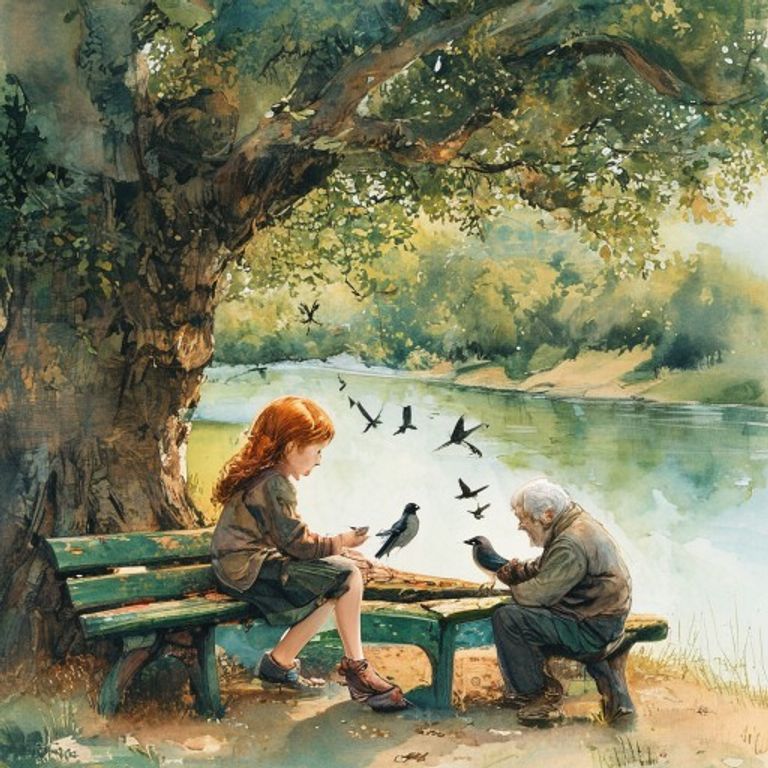
It sat at the edge of the town square, beneath the oldest oak tree, whose trunk was so wide that three children could not wrap their arms around it. The bench was made of iron and wood, painted green once but now faded to the color of moss. It faced the river, and every afternoon, without fail, an old man named Mr. Aldridge would sit upon it.
He would arrive at precisely half past three, carrying a brown paper bag that crinkled when he moved. He would sit in the exact same spot—the left side of the bench, nearest the river—and he would open the bag. Then, with movements as careful and practiced as a priest preparing communion, he would scatter seeds and breadcrumbs upon the ground.
The pigeons came. The sparrows came. The bold blackbirds and the shy finches and once, memorably, a peacock that had escaped from the mayor's estate. They gathered around Mr. Aldridge like children around a storyteller, and he would watch them eat with an expression that was not quite a smile and not quite sadness, but something in between. Something tender.
Maya was seven years old, the daughter of the village clockmaker, a man who believed that every broken thing could be mended if you understood its mechanism. She had copper-colored hair that her mother braided with ribbons, and eyes the color of amber, warm and curious. She noticed things. That was her gift. She noticed the way gears fit together. She noticed the way shadows moved across the floor at different hours. And she noticed Mr. Aldridge.
She noticed that he never smiled, not fully. She noticed that his hands trembled when he scattered the crumbs. She noticed that he always sat on the left side of the bench, leaving the right side empty.
"Why does he leave half the bench empty?" she asked her mother one evening, as they walked home from the market.
Her mother's face changed, the way adult faces do when they are about to tell you something important. "Because, sweet one, that was Mrs. Aldridge's spot."
"Who is Mrs. Aldridge?"
"She was his wife. She died three years ago."
Maya thought about this. "Does he sit there because he misses her?"
"Yes," her mother said. "And because he is still loving her. Love does not stop when someone dies, Maya. It just changes. It becomes memory, and habit, and the empty side of a bench."
Maya did not understand this fully. But she wanted to. So the next afternoon, at half past three, she walked to the old oak tree.
Mr. Aldridge was already there, scattering crumbs from his brown paper bag. The pigeons cooed and fluttered. The sparrows darted in, brave and quick. Maya stood ten feet away, watching.
Mr. Aldridge looked up. His eyes were gray, the color of the river on a cloudy day, and they held a weariness that Maya had never seen in a person's face before. Not sadness, exactly. Sadness was sharp. This was something softer. Something tired.
"Hello," Maya said.
"Hello," Mr. Aldridge replied. His voice was gravelly, unused, like a door that had not been opened in a long time.
"I am Maya. I notice things. And I noticed that you always sit on the left side."
Mr. Aldridge was silent for a moment. Then he said, "The right side was my wife's. Eleanor. She loved the birds."
"Did she die?"
"Yes."
"Do you still love her?"
Mr. Aldridge's hands stopped moving. The crumbs fell to the ground, forgotten. He looked at Maya, and for a moment, his gray eyes were not tired. They were surprised. Surprised that a child would ask such a question. Surprised that the answer was still yes, so powerfully yes, after three years.
"Very much," he said softly.
"My mother says love does not stop when someone dies. It changes."
"Your mother is wise." Mr. Aldridge looked at the empty side of the bench. "It becomes this. Empty spaces. Quiet habits. Feeding birds that she loved, because it is the only way I know to keep loving her."
Maya stepped closer. "May I sit?"
Mr. Aldridge hesitated. Then he nodded. "On the right side. Her side. She would have liked that."
Maya sat. The bench was cold beneath her, even in the afternoon sun. She imagined a woman sitting here, a woman who loved birds, who laughed at pigeons, who named the sparrows. She tried to feel the love that Mr. Aldridge still felt, radiating from the empty space like heat from a stove.
"Tell me about her," Maya said.
And he did.
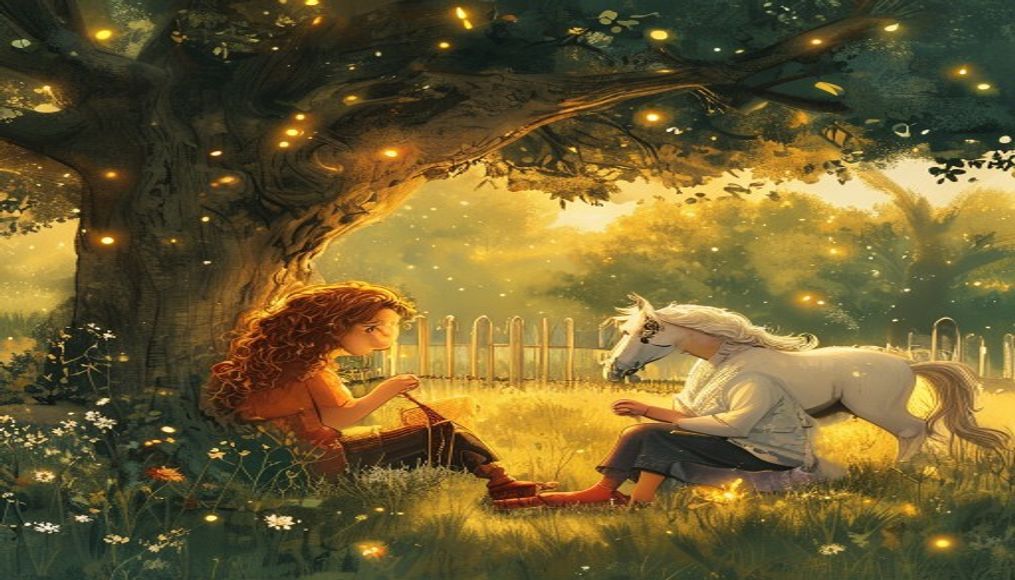
He told Maya that Eleanor had been a seamstress, that her fingers could turn thread into lace, that she had made wedding dresses for half the village. He told her that Eleanor had loved birds because they reminded her of her grandmother, who had kept canaries in a brass cage. He told her that Eleanor had been the one to start feeding the pigeons, thirty years ago, when they had first moved to Stillwater. He told her that Eleanor had never learned to swim, but had sat on this very bench every summer evening, dipping her toes in the river while he fished.
"She said the water talked to her," Mr. Aldridge said, a ghost of a smile crossing his face. "She said it told her stories. I never heard them. But I believed her. Because I loved her, and love means believing things you cannot see or hear."
Maya listened. She did not interrupt. She did not fidget. She simply sat, and heard, and learned what love looked like when it became memory.
When the sun began to set, painting the river in shades of orange and gold, Mr. Aldridge stood. He brushed the crumbs from his coat. He looked at Maya, and then at the empty bench, and then at Maya again.
"Will you come tomorrow?" he asked.
"Yes," Maya said. And she did.
She came the next day, and the next, and the next. She brought her own breadcrumbs, saved from her mother's kitchen. She learned the names Mr. Aldridge had given the birds—Gladys the pigeon with the crooked toe, Bernard the blackbird who sang off-key, Henrietta the bold sparrow who would eat from his hand.
She learned other things too. She learned that Mr. Aldridge had been a carpenter, that his hands had once built chairs and tables and once, a cradle for a baby that never came. She learned that he and Eleanor had been married for forty-seven years. She learned that they had never traveled far, because Eleanor said the best adventures were the ones you had in your own garden, with someone you loved.
"We planted roses," Mr. Aldridge told her one afternoon, as the willows cast long shadows across the grass. "Red ones, because she said they were the color of courage. Yellow ones, because they were the color of joy. And one white rose, because she said it was the color of love that lasts forever."
"Do they still grow?" Maya asked.
"In our garden. But I do not tend them anymore. I cannot bear to."
Maya thought about this. The next morning, she walked past Mr. Aldridge's cottage, a small house with blue shutters and a garden that was overgrown, wild, choked with weeds. But she could see the roses. The red ones, still blooming. The yellow ones, reaching toward the sun. And the white one, hidden in the back, almost lost in the tangle of green.
She went home and asked her father for tools. Her father, the clockmaker, who believed every broken thing could be mended, gave her a small trowel and gardening gloves.
"What are you doing, Maya?" he asked.
"Tending something that needs care," she said. "Because love does not stop. It changes. And sometimes, it becomes a garden that someone is too sad to tend."
Her father knelt beside her. "You are growing up, little one. I see it in your eyes. You are learning what matters."
Maya went to Mr. Aldridge's garden every morning for a week. She pulled weeds. She trimmed the roses. She watered them from the rain barrel, careful not to disturb the white one, which was the most fragile, the most precious, the most loved.
Mr. Aldridge did not know. Not at first. But one afternoon, when he arrived at the bench, he found Maya waiting with a single white rose in her hand.
"What is this?" he asked, his voice trembling.
"It bloomed this morning," Maya said. "In your garden. I tended it. I hope that is alright."
Mr. Aldridge took the rose with hands that shook so badly Maya was afraid he would drop it. He held it to his face, breathing in the scent, and his gray eyes filled with tears.
"You tended her roses," he whispered.
"They needed care. And you needed help. And love does not stop, so someone has to keep it going."
Mr. Aldridge wept then. Not the quiet, controlled sadness that Maya had seen in his eyes before. This was something deeper. Something that had been waiting for permission to surface. He sat on the bench, the white rose cradled in his hands, and he cried for Eleanor, for the forty-seven years, for the empty side of the bench, for the garden he could not face, for the love that had nowhere to go.
Maya sat beside him. She did not speak. She did not pat his shoulder or offer meaningless comfort. She simply sat, the way Eleanor had once sat, and she let him cry.
When he was finished, he wiped his face with a handkerchief that smelled of lavender—Eleanor's scent, still, after three years. He looked at Maya, and for the first time, he smiled. A real smile. Small, tentative, but real.
"Thank you," he said. "Not just for the rose. For listening. For sitting. For giving Eleanor's love somewhere to go."
"Love needs a place to live," Maya said. "It cannot just be memory. It needs action. It needs someone to keep it alive."
Mr. Aldridge laughed, a rusty sound, like a hinge that had not been used in years. "You are seven years old. How do you know these things?"
"I notice things," Maya said. "And I noticed that love is not just a feeling. It is a choice. It is showing up. It is tending roses. It is sitting on a bench. It is keeping someone alive, even after they are gone."
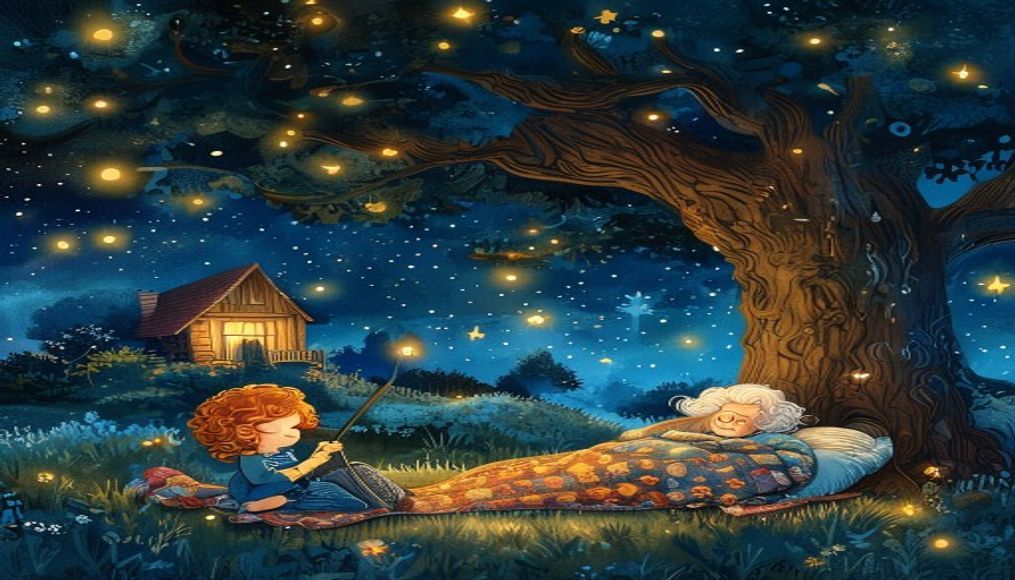
Autumn turned to winter. The river grew sluggish, dreaming deeper dreams. The birds flew south, except for Gladys the pigeon with the crooked toe, who was too old to migrate and instead huddled in the eaves of Mr. Aldridge's cottage.
Maya continued to come. She helped Mr. Aldridge wrap the roses for winter. She helped him clear the garden paths. She helped him sort through Eleanor's sewing things, the lace and thread and buttons, which he donated to the village school for the children's art classes.
"She would have liked that," he said, as they packed the last box. "She loved children. She loved teaching. She would have wanted her things to be used, not stored away to gather dust."
"That is love too," Maya said. "Letting go, so something good can happen."
On the first day of spring, Mr. Aldridge arrived at the bench with two brown paper bags. He sat on the left side, as always. But when Maya arrived, she found the right side occupied—not by a ghost, but by a small stuffed bird that Eleanor had sewn years ago, a bluebird made of silk and button eyes.
"For you," Mr. Aldridge said. "Eleanor made it for our niece, but the niece grew up and forgot it. I think... I think Eleanor would want you to have it."
Maya held the bluebird. It was soft, worn in places, clearly loved. She pressed it to her cheek. "I will take care of it."
"I know you will." Mr. Aldridge looked at the river, at the willows trailing their new green hair, at the world waking up. "Maya, I want to tell you something. When Eleanor died, I thought my love had nowhere to go. I thought it would just... fade. Become nothing. But you showed me that love does not fade. It finds new places. New people. New forms. You are my new form, Maya. You are where my love goes now."
Maya felt her throat tighten, the way it did when she was about to cry but did not want to. "I will keep it safe," she said. "All of it. Eleanor's love. Your love. I will keep it safe."
"I know," Mr. Aldridge said. "Because you are love, Maya. You are what love looks like when it walks around in the world. You are the choice to care, the choice to sit, the choice to tend roses that are not yours. That is the truest love. Not the love that says 'you are mine.' The love that says 'you are worthy, and I will show up, again and again, to prove it.'"
Years later, when Maya was grown and had children of her own, she would sit on that same bench, now repainted green, with the same oak tree above her. She would scatter crumbs for the birds, and she would tell her children about Eleanor and Mr. Aldridge, about the empty side of the bench, about the white rose that bloomed forever.
And her children would ask, "What is love, Mama?"
And Maya would smile, the same small, real smile that Mr. Aldridge had taught her, and she would say:
"Love is the bench. Love is the roses. Love is showing up, day after day, even when it hurts, even when you are tired, even when the person you love is gone. Love is tending something that needs care. Love is listening. Love is sitting in the empty spaces and making them full. Love is not a feeling that happens to you. It is a choice you make, again and again, until it becomes who you are."
Moral of the Story: Love is not just a feeling. It is a choice. It is showing up, day after day, even when it is hard, even when the person you love is gone. Mr. Aldridge loved his wife Eleanor for forty-seven years, and when she died, he thought his love had nowhere to go. So he sat on a bench and fed birds, because it was the only way he knew to keep loving her. Maya, a seven-year-old girl who noticed things others missed, saw his love and chose to help him. She tended Eleanor's roses. She sat on the empty side of the bench. She listened to his stories. She gave his love somewhere new to go. Love does not stop when someone dies. It does not fade when things are hard. It changes. It finds new forms. It becomes memory, and habit, and the care we give to things that matter. The truest love is not the love that says "you are mine." It is the love that says "you are worthy, and I will show up, again and again, to prove it." Love is the bench. Love is the roses. Love is the choice to keep caring, even when no one asks you to. That is the most powerful love of all. Because it is love that chooses to exist, not because it must, but because it wants to.
Age Range: 4-8 years | Reading Time: ~10 minutes | Core Value: Love