The Coral Who Kept Opening: A Story About Perseverance
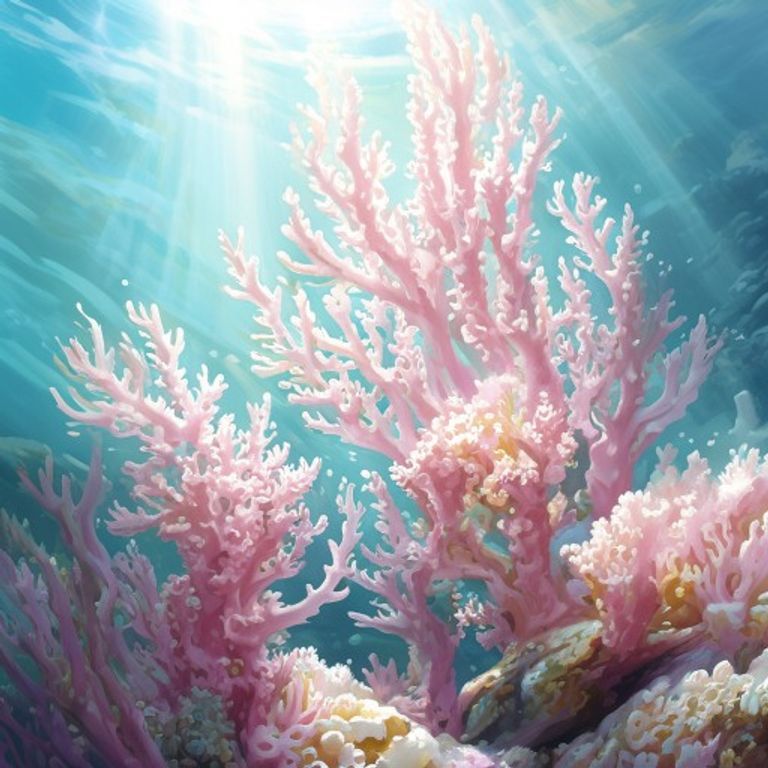
Deep in the warm shallows of the Sapphire Sea, where the water was the color of melted gemstones and the sunlight fell in golden shafts through the surface, there lived a coral polyp. She was smaller than a grain of rice. Her body was soft and pink, no bigger than the pinky nail of a child, and when she opened her tentacles to feed, she looked like a tiny flower made of living glass.
Her name was Poly.
And she was the last one.
The Reef That Forgot How to Bloom
The reef around her had once been magnificent. Poly's grandmother had told her stories — stories passed down through generations of polyps, carried in the chemical whispers of the water, in the shared memory of the calcium skeletons that held them all together. The reef had been a city. A garden. A cathedral of color. Purple fan corals had waved like banners. Blue brain corals had formed mazes where fish played hide-and-seek. Orange tube sponges had hummed with the music of the current. And everywhere, everywhere, there had been life — schools of fish like silver rain, sea turtles like gentle giants, octopuses changing color just for fun.
But then the water grew warm.
Too warm. Warmer than the corals could bear. One by one, the polyps had closed their tentacles and turned white — not dead, but dying, their tiny bodies releasing the colorful algae that had fed them and protected them and given them their brilliant hues. Without the algae, the corals starved. Without the corals, the fish left. Without the fish, the reef fell silent.
Now the reef was a ghost town. The calcium skeletons stood like white bones in the blue water — beautiful in their own way, but beautiful the way a snow-covered battlefield is beautiful. Empty. Still. Waiting for something that might never come.
And Poly was the only polyp still opening.
She did not know why. She did not know what made her different from her sisters and brothers who had closed and never opened again. She only knew that every morning, when the first shaft of sunlight touched her tiny cup of calcium, something inside her — something older than thought, deeper than fear, stronger than despair — whispered: Open.
And so she opened.
The Opening
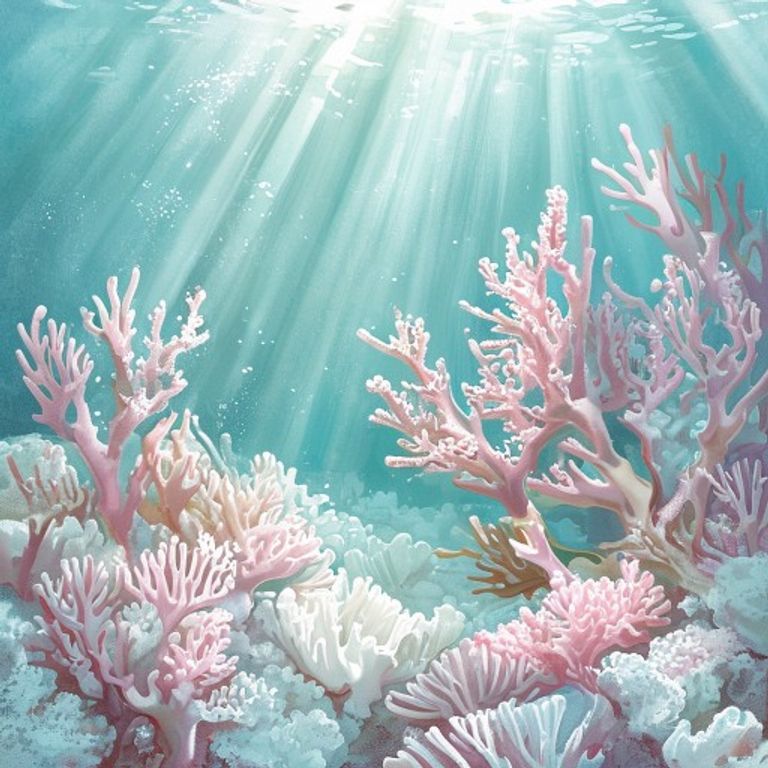
It was not a grand act. It was not brave or dramatic or heroic. It was simply what she did. Her twelve tiny tentacles — each one thinner than a thread of spider silk — would unfurl from her central mouth like the petals of a flower greeting the dawn. She would filter the water. She would catch plankton, microscopic and invisible, drifting past like dust motes in a sunbeam. She would eat. She would grow. She would build her calcium cup one microscopic layer at a time.
Then she would close. Rest. Wait for the next morning. And open again.
Day after day. Week after week. Month after month.
There was no one to watch her. No fish swam by to marvel at her persistence. No sea turtle paused to say, "Well done, little one." No octopus changed color to applaud her. The water around her was empty and blue and vast, and Poly was a single speck of pink in an ocean of white and blue and silence.
Sometimes she wondered if she was foolish. If she was wasting her energy. If she should just close, like the others, and let the white stillness claim her too. It would be easier. It would be quieter. It would be — in a strange way — peaceful.
But every morning, the whisper came: Open.
And every morning, she obeyed.
The Visitor
It happened on a morning in late autumn, when the water had begun to cool and the currents had shifted and the sea tasted different — sharper, cleaner, newer.
A fish came.
Not a school. Not a swarm. Just one fish — a small wrasse, no bigger than a thumb, its scales the color of a sunset that had been dipped in turquoise. It swam slowly, cautiously, weaving between the white calcium skeletons like a child walking through a graveyard. It was looking for shelter. Looking for food. Looking for — perhaps — a reason to stay in a place that had forgotten how to welcome guests.
The wrasse nearly swam past Poly. Nearly missed her entirely. But the morning sun caught Poly's open tentacles at just the right angle, and for a moment, the tiny polyp glowed like a pink star in the white wasteland.
The wrasse stopped. It stared. It circled Poly's tiny calcium cup three times, its fins flickering with disbelief. And then — slowly, wonderingly — it settled beside her.
"You're open," the wrasse said, though fish do not truly speak with words. It sent the thought through the water, through the vibrations of its body, through the shared language of the sea. "You're actually open."
"I am always open," Poly answered, though polyps do not truly speak either. She sent her reply through the chemical signals of her body, through the pulse of the current, through the oldest language of the ocean: I am here. I am alive. I am waiting.
The wrasse stayed. It ate the plankton Poly filtered. It sheltered in her cup when a shadow passed overhead. And when it left, three days later, it carried a story with it — a story about a tiny pink light in a white desert, a single living thing that had not given up.
And that story traveled. From fish to fish. From reef to reef. From the Sapphire Sea to the Coral Triangle to the Great Barrier. The ocean remembered, even when the land forgot. The ocean spoke, even when the air was silent. And slowly, very slowly, fish began to return.
Not many. Not all at once. But one here. Two there. A family of clownfish seeking a new home. A pair of angelfish exploring new territory. A young sea turtle, lost and lonely, who rested its chin on Poly's calcium cup and sighed with relief.
The Building
Poly did not notice the change at first. She was too busy opening. Too busy feeding. Too busy being alive, one day at a time, to measure what was happening around her.
But the fish noticed. The fish brought nutrients in their waste. The nutrients fed the microscopic creatures that lived in the calcium. The microscopic creatures made the calcium softer, more welcoming, more alive. And Poly, feeding better than she had in months, began to grow.
She budded.
It happened on a morning in early spring, when the water was cooler than it had been in years and the sunlight seemed gentler, almost apologetic, as if the sun itself was sorry for the warmth it had sent before. Poly felt a tiny pull inside her, a microscopic division, a splitting of her own cells into two perfect copies.
She became two.
The new polyp — her daughter, her twin, her other self — opened beside her. Smaller. Paler. Younger. But alive. Opening. Feeding. Building.
And then, a week later, Poly budded again.
And again.
And again.
By midsummer, Poly was no longer a single polyp. She was a colony — a tiny city of pink and gold, twelve polyps strong, opening together every morning, filtering together every day, building together every night. Their calcium cups merged into a single branch, a single structure, a single promise made visible.
And then, on a night when the moon was full and the tide was high and the water tasted of change, a larva drifted by.
It was a coral larva — a baby polyp no bigger than a speck of dust, born from a reef far away, carried by currents for weeks, searching for a place to settle. It had passed a hundred white reefs. A thousand empty skeletons. It had almost given up. Almost let the current carry it forever, never landing, never growing, never becoming.
But then it saw Poly's branch.
A tiny glow of pink in the blue. A single living thing on a dead reef. A promise that the water was cool enough, clean enough, welcoming enough.
The larva settled.
And then another.
And another.
And another.
The Reef That Remembered
It took years. Many years. More years than a human child takes to grow from baby to adult. But the reef remembered how to bloom.
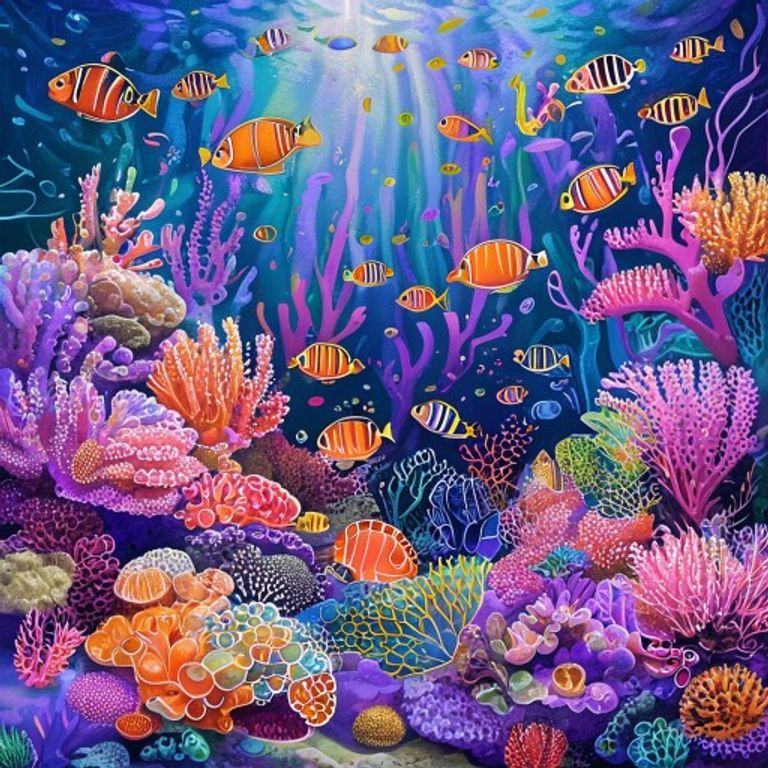
Poly's branch became a bush. The bush became a thicket. The thicket became a forest. New corals settled — brain corals and fan corals and tube sponges and sea anemones — each one adding its own color, its own shape, its own song to the growing chorus of life. Fish returned in schools. Sea turtles grazed on the new sea grass. Octopuses changed color just for fun.
And Poly, now ancient and wise and surrounded by a living city she had built one microscopic layer at a time, sat in the center of it all — still opening every morning, still feeding every day, still building every night. She was no longer a speck of pink in a white wasteland. She was the heart of a world.
But she had not changed.
She still opened. She still closed. She still did what she had always done, even when there was no one to see her, even when there was no reason to hope, even when every sensible voice in the ocean would have told her to close and wait for the end.
And that — she understood now — was the secret of perseverance.
It was not about knowing you would succeed. It was not about being brave or talented or lucky. It was not about having a plan or a guarantee or a promise that tomorrow would be better than today.
It was about opening anyway.
It was about building when there was no blueprint for what you were building. It was about feeding when there was almost nothing to eat. It was about being alive when everything around you was dead, because being alive was itself the victory. Because being alive was itself the hope. Because being alive was the only way the future could begin.
The Moral of the Story: Perseverance is not about being strong enough to win. It is about being stubborn enough to refuse to stop. It is about opening your heart when every reason tells you to close it. It is about building one tiny layer at a time, even when you cannot see what you are building toward. Poly did not know she was rebuilding a reef. She only knew that opening was better than closing. That feeding was better than starving. That being alive was better than being dead. And so she opened. One day. Then another. Then another. Until the day came when she was not alone. And that day came not because she was brave, or talented, or lucky. That day came because she would not close. Perseverance is not about the size of your victory. It is about the size of your refusal to quit. It is not about being the best. It is about being the one who stays. The one who opens. The one who builds. The one who, when everything says "stop," whispers back: "Not yet."