Eva and Mia: The Song That Wouldn’t Come – A Story About Self-Confidence
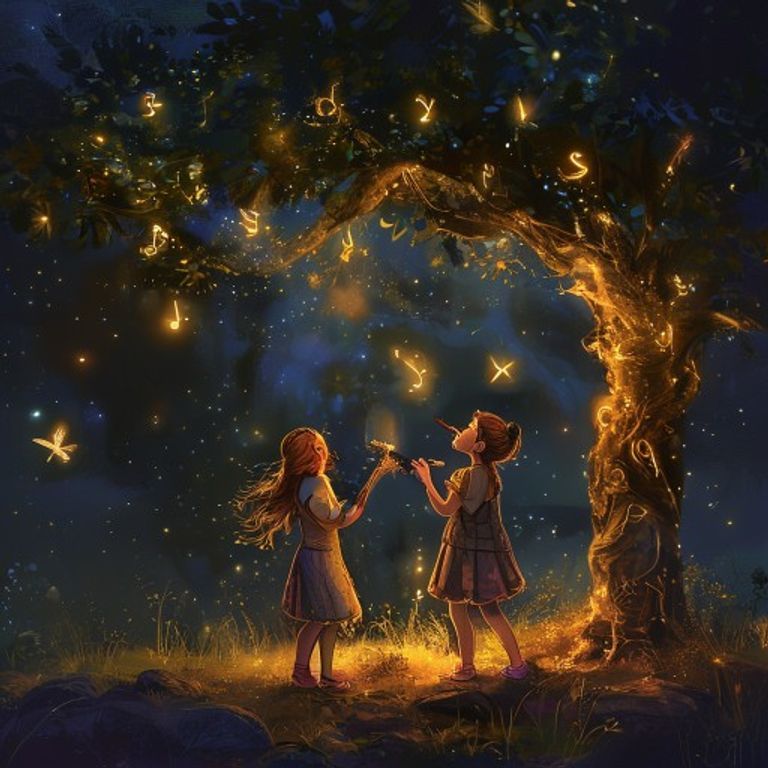
Starlight Hill was full of music. The wind played flutes through the reeds by the river. The rain drummed complicated rhythms on the tin roofs of the village cottages. Even the stones, if you pressed your ear to them on a quiet night, hummed with a low, contented bass note that some said was the hill itself remembering its childhood. But the most famous music in Starlight Hill came from the Song-Tree.
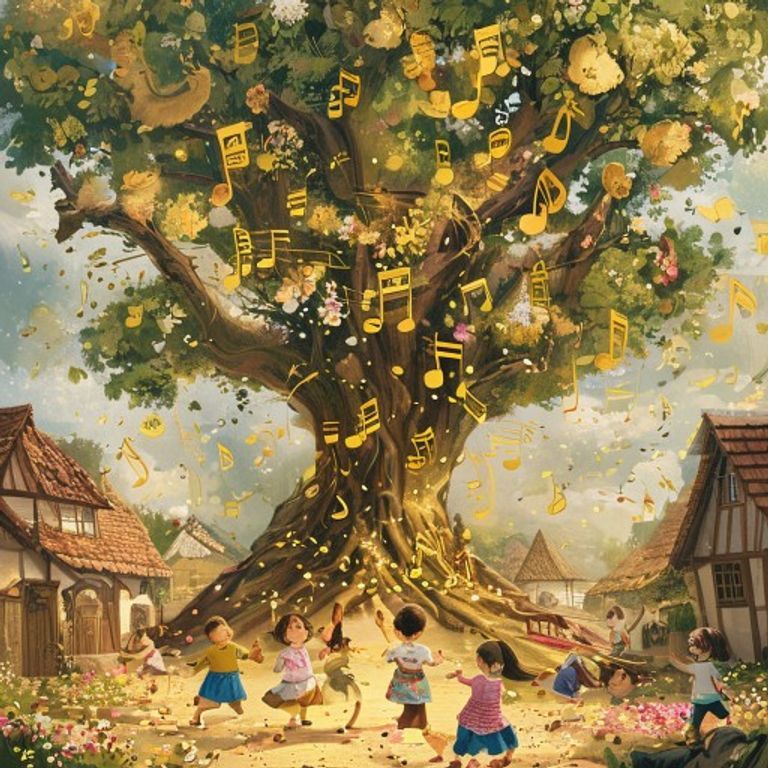
The Song-Tree grew in the very centre of the village, its trunk wider than three children holding hands, its branches spreading overhead like a green cathedral. Every spring, it burst into blossom—not flowers, but notes. Actual musical notes, round and golden, that drifted down and hung in the air for anyone to catch. If you caught a note and held it to your heart, you would hear a melody that belonged only to you. A lullaby, perhaps, or a marching tune, or a waltz so sweet it made you cry. The village children waited all year for the Song-Tree to bloom, and when it did, they danced in the falling music until their bare feet were stained gold.
Mia loved the Song-Tree more than anything. But she never danced in the notes. She never caught them. She stood at the edge of the crowd, her hands pressed to her chest, listening to the other children sing their caught melodies with bold, ringing voices. She wanted to sing too. She felt songs inside her—all the time, in fact, songs for waking up, songs for saying goodbye, songs for rainy afternoons and songs for the moment just before sleep when the world felt tender and possible. But when she opened her mouth, nothing came. Or rather, something came, but it was small and shaky and nothing like the grand, confident songs she heard in her head.
"You have a beautiful voice," Eva would tell her, whenever they sat by the lily pond and Mia would hum, barely audible, into her collarbone. "Really, Mia. I've heard you in the mornings, when you think I'm still asleep. You sound like a bird who knows secrets."
Mia would shake her head, her face burning. "That's different. That's when no one's listening. When people are listening, my throat turns into a fist. I can't... I can't let it out."
Eva understood. She had her own silences—her own fears of being seen, of trying and failing, of discovering that the thing you loved most about yourself was not, in fact, anything special at all. But she also knew that Mia's songs were too precious to stay locked inside. So she waited, and she watched, and she hoped for a moment that might crack the door open.
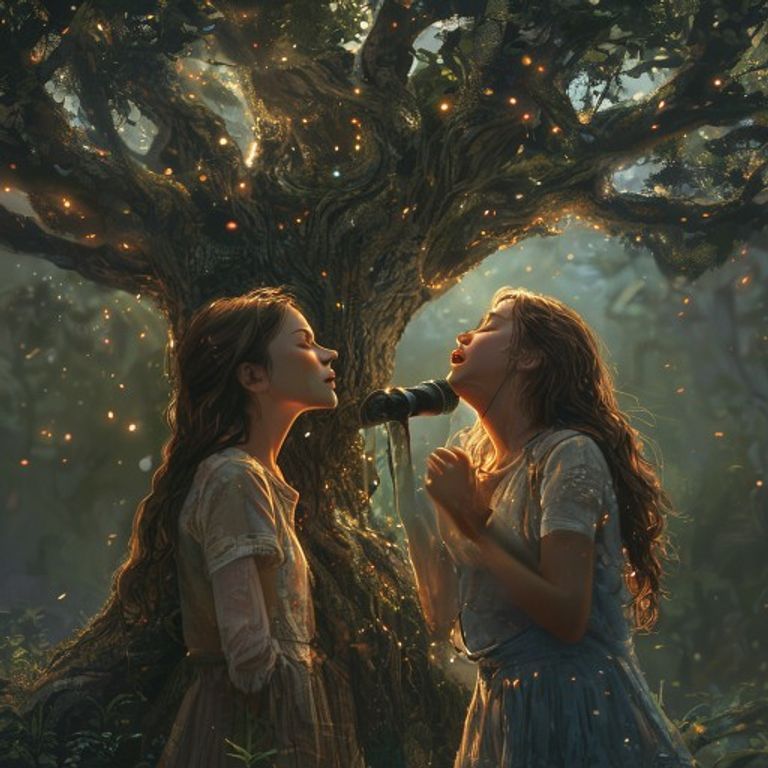
That moment came on the day of the Listening Ceremony, an old tradition in Starlight Hill that happened once every seven years. On that day, every child who had never caught a note from the Song-Tree was invited to stand beneath its branches and sing—not a caught melody, but their own. Their real song. The one that lived inside them, whether it was polished or rough, loud or soft, simple or strange.
Mia was terrified. She tried to hide behind Eva, but Eva gently pushed her forward. "You don't have to be perfect," she whispered. "You just have to be you."
Mia stood beneath the Song-Tree, her knees knocking, her hands sweating. The village watched. The branches swayed. A single golden note drifted down and landed on her shoulder like a firefly. She took a breath. She closed her eyes. And she sang.
It was not grand. It was not bold. It was small and shaky, just as she had feared. But it was also true. It was a song about morning light through curtains. About the smell of rain on warm pavement. About the way Eva's hand felt in hers when they walked through the meadow. About fear and courage and wanting to be seen. It was her song, and no one else in the world could have sung it.
When she finished, there was silence. Then someone sniffled. Then someone clapped. Then the whole village was clapping, not because her song was the best, but because it was hers, and they had been waiting to hear it.
Eva hugged her so hard Mia thought her ribs might crack. "You did it," she said. "You really did it."
Mia wiped her eyes. "It wasn't perfect."
"It was better than perfect," Eva said. "It was real."
And from that day on, Mia sang whenever she felt like singing. Not because she was the best, but because she had learned that self-confidence isn't about being perfect. It's about being brave enough to let your own voice be heard, even when it shakes. Especially when it shakes.