The Boy Who Kept the Light: A Story About Responsibility
The Boy Who Kept the Light: A Story About Responsibility
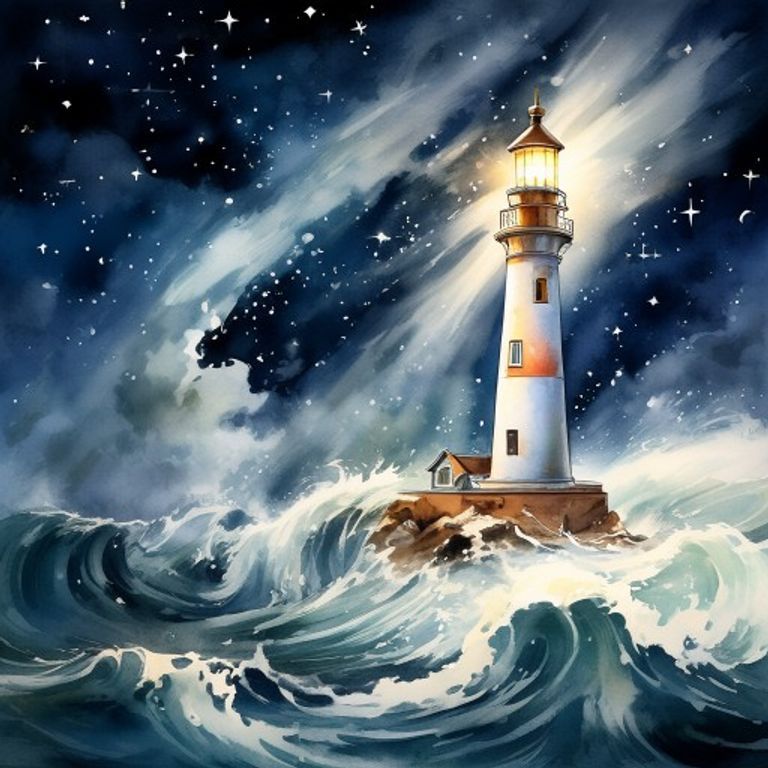
In the harbor town of Seabrook, where the waves crashed against ancient stone walls and the gulls cried like lost souls, there stood a lighthouse. It was not an ordinary lighthouse. Its name was the Starlight Lantern, and its beam did not guide ships through fog. It guided lost souls through darkness.
The lantern had stood for three hundred years, tended by a line of keepers who passed the duty from parent to child like a sacred trust. The light was magical. It shone not with electricity or oil, but with starlight captured in a crystal lens. And it burned every night, without fail, because somewhere in the world, someone was lost and needed to find their way home.
The current keeper was Old Man Tiber, a weathered man with hands like gnarled oak and eyes like storm clouds. He had kept the light for forty years. And he was dying.
"Rowan," Tiber called one autumn evening, his voice thin as spider silk.
Rowan was twelve years old, with freckles like cinnamon splashed across his nose and hair the color of autumn leaves. He was Tiber's apprentice, though he had not chosen the role. His parents had died in a storm when he was six, and Tiber had taken him in. Rowan had spent the last six years cleaning lenses, trimming wicks, and learning the rhythms of the lighthouse.
"Yes, Keeper?" Rowan said, rushing to Tiber's bedside.
"The light," Tiber whispered. "It is yours now."
Rowan's heart stopped. "What? No. I am not ready. I am just a boy."
"You have been ready for a year," Tiber said, a faint smile touching his cracked lips. "You know the rituals. You know the lens. You know the star-charts. But knowing is not enough. Keeping the light is not about skill. It is about responsibility."
"What does that mean?" Rowan asked, tears stinging his eyes.
"It means," Tiber said, his voice fading, "that the light must burn, no matter what. No matter if you are sick. No matter if you are sad. No matter if you are scared. Someone, somewhere, is lost in the dark. And they are depending on you. That is responsibility."
Tiber closed his eyes. He did not open them again.
Rowan stood alone in the lighthouse, the wind howling outside, the sea crashing below. He was twelve years old. And he was responsible for the Starlight Lantern.

The funeral was small. The villagers of Seabrook were kind but distant. They respected the keeper, but they did not understand him. To them, the lighthouse was just a building. They did not know about the lost souls. They did not know about the magic.
Rowan moved into the keeper's quarters, a small room at the base of the tower. He was alone now. Truly alone. And every evening, as the sun sank into the sea, he climbed the spiral stairs to the lantern room, lit the star-crystal, and watched the beam sweep across the dark waters.
For the first month, Rowan was diligent. He climbed the stairs at sunset. He cleaned the lens every morning. He recorded the star-charts in the logbook. He took his responsibility seriously, because Tiber had trusted him.
But then winter came.
The storms of Seabrook were legendary. Winds that could knock a man flat. Waves that could swallow houses. Rain that fell sideways like arrows. And the lighthouse stood at the edge of a cliff, exposed to every fury the sea could summon.
One night in December, the storm of the century hit.
Rowan was in his quarters, huddled by the fire, when the wind began to scream. It sounded like a living thing, angry and hungry. The walls shook. The windows rattled. The tower itself seemed to sway.
Rowan looked at the clock. Sunset was in ten minutes. He needed to light the lantern.
He pulled on his coat and opened the door. The wind hit him like a wall, nearly knocking him down. Rain lashed his face. The path to the tower was slick with ice.
"I can't," Rowan whispered, shivering. "Not in this."
He closed the door and leaned against it, his heart hammering. Tiber's voice echoed in his mind: "The light must burn, no matter what."
"But I am just a boy," Rowan said to the empty room. "I will die out there."
He sat by the fire, pulling his knees to his chest. The storm raged. The wind screamed. And Rowan stayed inside, warm and safe.
But he could not sleep. He kept thinking about the lost souls. The travelers in the dark. The ships on the rocky coast. Without the light, they would wander blindly into danger.
"Someone might die," Rowan whispered. "Because I was scared."
He stood up. His hands shook. His legs felt like jelly. But he pulled on his boots, wrapped a scarf around his neck, and opened the door.
The storm swallowed him.

The wind pushed him back. The rain blinded him. The path was a river of ice and mud. He fell twice, skinning his knees, cutting his palms. But he got up. He kept going.
He reached the tower door and pulled it open. Inside, the wind was a hollow howl, echoing up the spiral stairs. Rowan climbed, his wet boots slipping on the stone, his breath coming in gasps.
The lantern room was worse. The windows were open shutters, and the wind tore through like a tornado. The star-crystal sat in its holder, dark and cold.
Rowan fought his way to the crystal. His fingers were numb. His teeth chattered. He struck the flint, once, twice, three times. Sparks flew. The fourth strike caught the kindling.
The star-crystal blazed to life.
It was not an ordinary flame. It was starlight, captured and concentrated, burning with a light that was silver and gold and blue all at once. It filled the lantern room with warmth. It cut through the storm like a sword.
Rowan adjusted the lens, aiming the beam across the dark sea. And then he saw it.
A ship. A small fishing boat, tossed by the waves, its mast broken, its sails torn. It was heading straight for the rocks.
But the beam caught it. The silver-gold light bathed the deck, and the captain, a bearded man with terror in his eyes, saw the lighthouse. He turned the wheel. The boat shifted, missing the rocks by mere feet.
Rowan watched through the rain-streaked window as the boat limped toward the harbor, safe. He sank to the floor, shivering, crying, laughing.
He had done it. He had kept the light. And he had saved a life.
The storm raged all night. Rowan stayed in the lantern room, feeding the crystal, adjusting the lens, keeping the light burning. He was exhausted. He was frozen. But he did not leave.
When dawn broke, the storm passed. The sea was calm. The sky was clear. And Rowan climbed down the stairs, his body aching, his heart full.
The villagers found him asleep on the lighthouse steps, wrapped in his wet coat, a smile on his face.
From that day on, Rowan understood responsibility. It was not about being old enough, or strong enough, or brave enough. It was about showing up. Every night. No matter what. Because someone, somewhere, was depending on the light.
He kept the lantern for fifty years. He missed birthdays and weddings and holidays. He stood watch through storms and sickness and sorrow. But the light never went out.
And when he was old, and his apprentice - a girl named Sylvie, an orphan like he had been - asked him why he never took a day off, Rowan smiled and said:
"Because responsibility is not a burden. It is a promise. A promise that when the world is dark, someone will keep the light. And that someone is me."
Moral of the Story: Responsibility means doing what needs to be done, even when it is hard. Rowan was just a boy when he became the keeper of the Starlight Lantern. He was scared of storms, lonely in the lighthouse, and tired of the endless nights. But he learned that responsibility is not about being old enough or strong enough. It is about showing up. Every day. No matter what. Because someone, somewhere, is depending on you. So when you have a job to do, do it well. When you make a promise, keep it. When others are counting on you, be there. That is what it means to be responsible.
Age Range: 4-8 years | Reading Time: ~10 minutes | Core Value: Responsibility