The Puzzle of Two Bridges: A Story About Tolerance
The Puzzle of Two Bridges: A Story About Tolerance
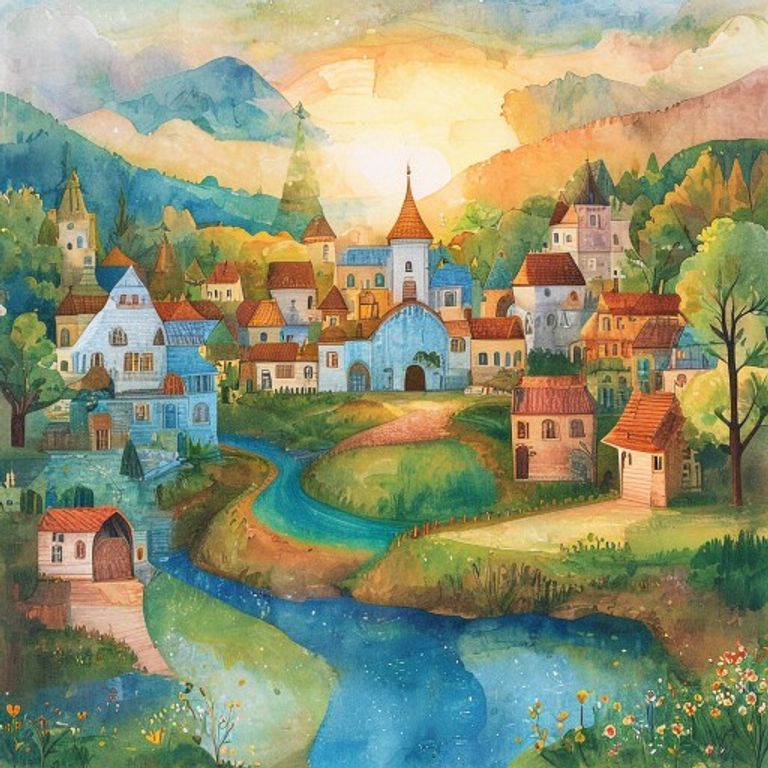
In the village of Two Bridges, where the East River and the West River met in a dance of blue and green, there lived a girl named Mei who loved puzzles.
Not the kind of puzzles that came in boxes with pictures on the front. Mei loved the puzzle of people. The way they fit together, or didn't. The way they clicked into place, or clashed. The way a village was like a thousand-piece puzzle, and every person was a piece with their own shape, their own colors, their own edges that only matched certain other edges.
She was eight years old, with straight black hair that her mother braided every morning and eyes that noticed everything. Her grandmother said she had "watching eyes," eyes that saw not just what was there, but what was trying to be there. What was hidden. What was waiting to be understood.
Two Bridges was not a simple village. It had been two villages once—Eastford and Westmere—separated by the rivers that flowed from different mountains, carried different minerals, and ran different colors. Eastford's water was blue, clear and cold, from the glacier that fed it. Westmere's water was green, warm and rich, from the forests that lined its banks.
For a hundred years, the two villages had been separate. Different customs. Different foods. Different ways of speaking. The Eastford people were fishermen, quiet and patient, who rose before dawn and spoke in short sentences. The Westmere people were farmers, loud and joyful, who worked the land with songs and told stories that lasted hours.
They did not fight. Not exactly. But they did not mix. The bridge between them was crossed only for trade—fish for grain, grain for fish—and even then, the traders spoke little, traded quickly, and returned to their own sides before sunset.
Then, twenty years ago, a great storm had destroyed both villages. The rivers had flooded. The houses had washed away. The people had huddled on the high ground, Eastford and Westmere together, wet and cold and frightened, and they had realized that their differences meant nothing against the power of the water.
They had rebuilt together. One village, not two. They called it Two Bridges, and they built a great hall where the rivers met, and they tried to become one people.
But a hundred years of separation is not undone in twenty. The puzzle did not fit easily. The edges clashed. The colors argued. The Eastford people found the Westmere people too loud, too messy, too emotional. The Westmere people found the Eastford people too quiet, too rigid, too cold.
And so, Two Bridges was a village of two halves. They lived together, but they did not blend. They traded, but they did not share. They spoke, but they did not listen.
Mei, with her watching eyes, saw all of this. She saw the way the Eastford children played on one side of the square, serious games of strategy and skill, while the Westmere children played on the other side, wild games of chase and tag. She saw the way the Eastford women cooked their fish with quiet precision, while the Westmere women cooked their bread with singing laughter. She saw the way the two halves of the village moved around each other like dancers who had forgotten the steps.
She did not understand why they could not fit together. She did not understand why difference was a wall instead of a bridge.
The trouble began—or perhaps the miracle began—when the new boy came.
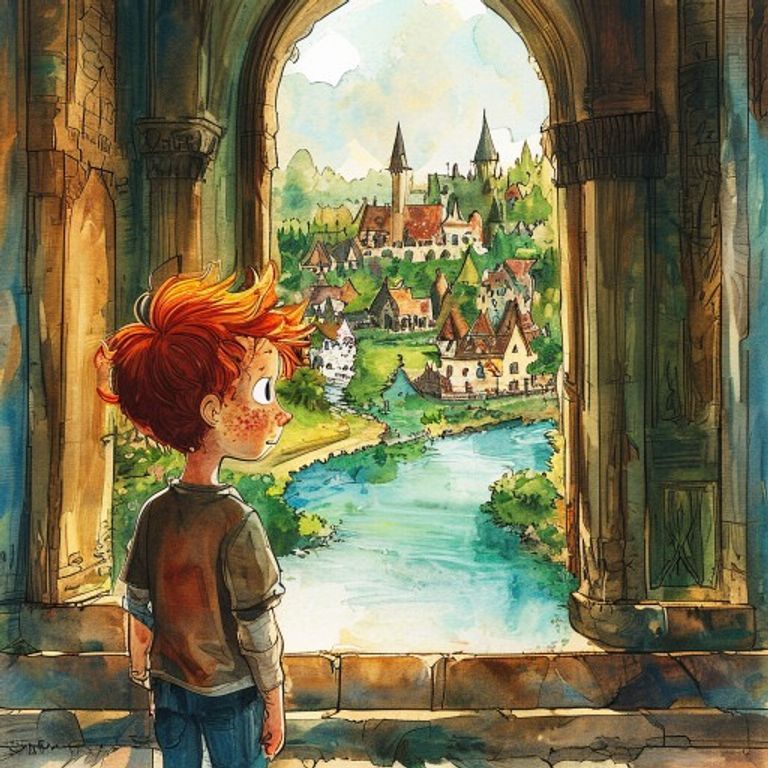
His name was Kael. He was ten years old, tall and thin, with red hair that was unlike anything Two Bridges had ever seen. Red hair, freckled skin, eyes the color of the West River in autumn. He wore clothes that were neither Eastford nor Westmere—strange fabrics, strange cuts, strange colors that belonged to no one and everyone.
His family had come from the far north, beyond the mountains, beyond the glaciers, from a place where the sun barely set in summer and barely rose in winter. They were weavers, his mother and father, and they had heard that Two Bridges needed weavers, needed cloth, needed something new.
Kael did not fit anywhere. He was not Eastford. He was not Westmere. He was something else, something new, something that the village did not have a place for.
The Eastford children found him too loud. His laugh was too big, his gestures too wild, his stories too long. They invited him to play their serious games, but he could not sit still long enough. He moved when he should think. He spoke when he should listen.
The Westmere children found him too quiet. He did not sing while he worked. He did not tell stories during lunch. He watched, with eyes that were neither Eastford nor Westmere, eyes that saw everything and judged nothing. They invited him to play their wild games, but he held back, uncertain, not knowing the rules.
Kael spent his first week in Two Bridges alone. He sat on the steps of the great hall, where the rivers met, and he watched the village move around him. He watched the Eastford fishermen bring in their blue-water catch. He watched the Westmere farmers tend their green-water fields. He watched the two halves avoid each other, and he wondered if he had made a mistake coming here.
Mei watched him. She watched him watching. And one afternoon, she sat beside him on the steps.
"You're the puzzle piece that doesn't fit," she said.
Kael looked at her, surprised. "What?"
"The puzzle," Mei said. "The village is a puzzle. Everyone is a piece. But you... you're a different shape. You're not Eastford. You're not Westmere. You're something else. And they don't know where to put you."
Kael almost smiled. "And you? Where do you fit?"
Mei thought about this. "I don't know," she said. "I watch. I notice. But I don't know if there's a place for watching in a village that only knows doing."
They sat in silence for a while, the two odd pieces, watching the river dance.
"In my old village," Kael said finally, "everyone was different. There were so few of us, we couldn't afford to separate. The fisherman and the farmer and the weaver and the singer—we all lived together because we had to. We didn't have the luxury of choosing who to be with. So we learned to be with everyone."
"That sounds nice," Mei said.
"It was," Kael said. "But it was also hard. Because being with everyone means tolerating everyone. And tolerance is hard. It means accepting things you don't understand. It means letting people be different without trying to change them. It means... it means not being the most important person in the room."
Mei turned this over in her mind. "Is that why Eastford and Westmere don't mix? Because they don't want to tolerate each other?"
"I think," Kael said, "they never learned how. They were separate for so long that difference became danger. They forgot that difference is just... difference. Not better. Not worse. Just different."
Mei stood up. "Come on," she said.
"Where?"
"To make a new puzzle."
The next day, Mei went to the Eastford side of the square, where the children played their serious games. She brought Kael with her.
"This is Kael," she said. "He doesn't know how to play your games. But he wants to learn. Will you teach him?"
The Eastford children looked at Kael's red hair, his strange clothes, his unfamiliar face. They looked at each other. Then Thomas, the oldest, stepped forward.
"We play strategy," Thomas said. "It requires patience. And thinking. And not moving too much. Can you do that?"
Kael looked at Mei. She nodded.
"I can try," Kael said.
They taught him the game. It was slow, and Kael moved too soon, and he laughed at the wrong times, and he lost three times in a row. But he kept trying. And the Eastford children, who valued patience, saw that he had it in his own way. He did not give up. He kept learning. He kept adjusting.
By the fourth game, he won. Not because he was better, but because he had learned to think like them, while still being himself.
"You're not bad," Thomas admitted. "For someone who moves too much."
"And you're not bad," Kael replied. "For someone who thinks too much."
Thomas almost smiled. "Tomorrow?"
"Tomorrow," Kael agreed.
From the Eastford square, Mei took Kael to the Westmere side, where the children played their wild games.
"This is Kael," she said. "He doesn't know how to play your games. But he wants to learn. Will you teach him?"
The Westmere children looked at Kael's careful movements, his quiet watchfulness, his unfamiliar face. They looked at each other. Then Priya, the loudest, stepped forward.
"We play chase!" she shouted. "It requires running! And shouting! And not thinking too much! Can you do that?"
Kael looked at Mei. She nodded.
"I can try," Kael said.
They taught him the game. It was fast, and Kael held back too much, and he thought when he should run, and he was caught every time. But he kept trying. And the Westmere children, who valued joy, saw that he had it in his own way. He did not complain. He kept laughing. He kept playing.
By the fifth game, he caught someone. Not because he was faster, but because he had learned to move like them, while still being himself.
"You're not bad!" Priya shouted. "For someone who thinks too much!"
"And you're not bad!" Kael shouted back, his voice growing louder, his laughter growing bigger. "For someone who moves too much!"
Priya laughed. "Tomorrow?"
"Tomorrow!" Kael agreed.
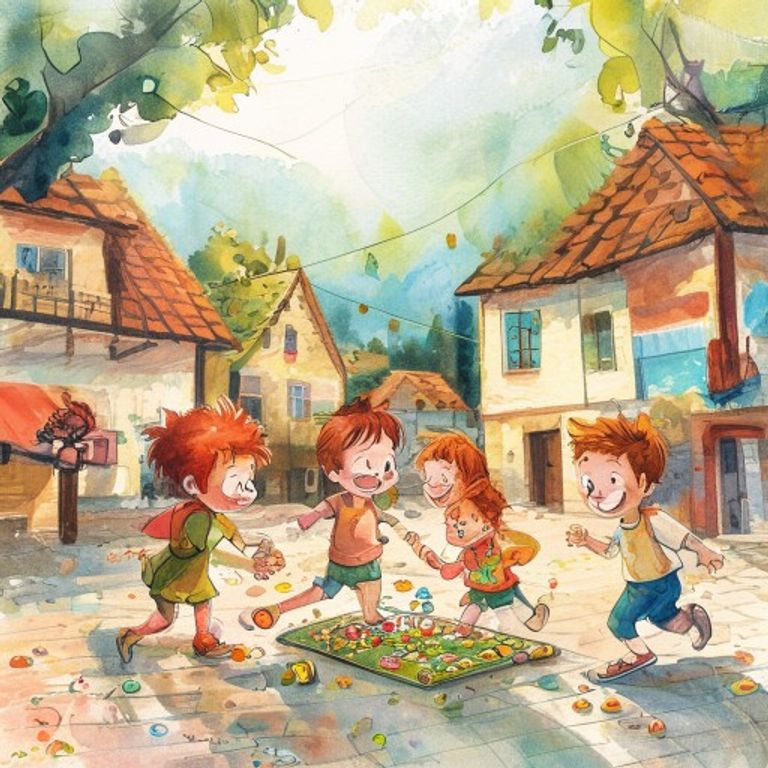
But Mei was not done. She had noticed something, with her watching eyes. She had noticed that the Eastford children and the Westmere children had never played together. Not once. Not in twenty years.
She went to Thomas. "Do you know how to play chase?"
Thomas looked confused. "Chase? That's a Westmere game. It's not serious. It's just... running and shouting."
"But do you know how?" Mei pressed.
"No," Thomas admitted. "We never learned."
She went to Priya. "Do you know how to play strategy?"
Priya looked confused. "Strategy? That's an Eastford game. It's not fun. It's just... sitting and thinking."
"But do you know how?" Mei pressed.
"No," Priya admitted. "We never learned."
Mei smiled. "Then Kael will teach you."
And he did. Kael, the boy who did not fit anywhere, became the bridge between the two halves. He taught the Eastford children to run and shout. He taught the Westmere children to sit and think. He showed them that a person could be both serious and joyful, both patient and wild, both quiet and loud.
And slowly, the children began to play together. The serious games became wilder. The wild games became smarter. The Eastford children learned to laugh while they fished. The Westmere children learned to be quiet while they farmed.
The adults noticed. At first, they were suspicious. The Eastford fishermen watched their children playing tag with Westmere farmers and frowned. The Westmere farmers watched their children playing chess with Eastford fishermen and worried.
But then, something happened. Old Mrs. Lin, who had been Eastford before the storm and Eastford after, found herself laughing at a joke told by Mr. Gao, who had been Westmere before the storm and Westmere after. She did not know why she laughed. The joke was not her kind of joke. But it was funny, and she was surprised to find that she could appreciate a different kind of funny.
And Mr. Gao, who had always found the Eastford people too cold, found himself admiring the precision with which Mrs. Lin mended her nets. He did not know why he admired it. He was a farmer, not a fisherman. But there was beauty in the careful work, and he was surprised to find that he could appreciate a different kind of beauty.
The puzzle was changing. The edges that had clashed were beginning to fit. The colors that had argued were beginning to blend. The village was becoming, not two halves, but one whole.
Years later, when Mei was grown and Kael had become a teacher in the great hall where the rivers met, the village of Two Bridges was famous. People came from far away to see how Eastford and Westmere had become one. They came to see the blue-green water where the rivers danced together. They came to see the children who played games that were both serious and wild. They came to see the puzzle that had learned to fit.
And Mei, who had started it all with her watching eyes and her love of puzzles, stood by the river and remembered.
"Do you know what tolerance is?" she asked her own daughter, a girl with red-streaked black hair who did not fit any category at all.
"It's accepting differences," the girl said, repeating the lesson she had learned in school.
"Yes," Mei said. "But it's more than that. Tolerance is not just accepting. It is understanding that difference is not danger. It is seeing that the person who thinks too much and the person who moves too much are both necessary. It is learning that the blue water and the green water make something more beautiful together than either could make alone."
She touched her daughter's hair, the color of a new puzzle piece, a color that had never existed before.
"Tolerance is hard," she said. "It requires patience. It requires humility. It requires the willingness to be uncomfortable, to not understand, to not be the most important person in the room. But it is also the most rewarding thing in the world. Because when you tolerate—when you truly tolerate, not just endure but embrace—you create space for something new. Something that has never existed before. Something that is better than anything that came before it."
The girl looked at the river, at the blue and green dancing together, at the village that had learned to be one.
"Like me?" she asked.
"Like you," Mei said, smiling. "And like everyone who does not fit the old puzzle. Because the best puzzles are the ones that keep changing. The ones that keep adding new pieces. The ones that never stop becoming something more."
Moral of the Story: Tolerance is not just accepting differences. It is understanding that difference is not danger. Two Bridges was a village of two halves—Eastford, quiet and patient, and Westmere, loud and joyful. For a hundred years, they had been separate, and even after they became one village, they did not blend. They tolerated each other in the way that people tolerate rain—they endured it, but they did not embrace it. But when Kael came, a boy who fit nowhere, he became a bridge. He taught the Eastford children to run and shout. He taught the Westmere children to sit and think. He showed them that a person could be both serious and joyful, both patient and wild. And slowly, the village learned that tolerance is not just about enduring difference. It is about embracing it. It is about seeing that the person who thinks too much and the person who moves too much are both necessary. It is about understanding that the blue water and the green water make something more beautiful together than either could make alone. Tolerance is hard. It requires patience. It requires humility. It requires the willingness to be uncomfortable, to not understand, to not be the most important person in the room. But it is also the most rewarding thing in the world. Because when you truly tolerate—when you not only endure difference but embrace it—you create space for something new. Something that has never existed before. Something that is better than anything that came before it.
Age Range: 4-8 years | Reading Time: ~10 minutes | Core Value: Tolerance