The Starling Who Flew Alone: A Story About Teamwork
In the silver-gray marshes of the North, where the reeds grew taller than a deer and the sky stretched so wide it seemed to have no edges, there lived a young starling named Star. She was smaller than the other fledglings, her feathers not yet fully iridescent, her wings not yet strong enough to hold her steady in a gale. But what Star lacked in size, she made up for in stubbornness.
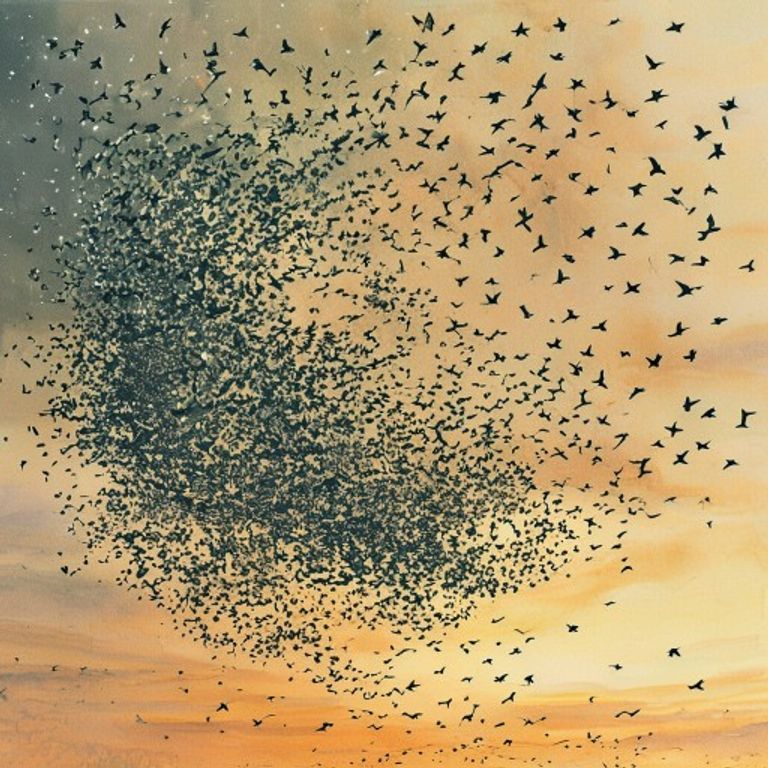
Every evening at dusk, the great flock of starlings would rise from the marshes in a living cloud—thousands of birds moving as one, turning and twisting and folding through the air like a single breathing thing. The humans who lived in the nearby village called it a murmuration, and they would stand in their fields with their mouths open, watching the sky dance.
But Star never watched. She tried to fly in the murmuration, she really did. She would join at the edge, flapping as hard as she could, trying to match the speed and the turns. But she was always half a wingbeat behind. She would bump into the bird ahead of her. She would turn left when the flock turned right. She would fly too high and break the smooth curve of the shape.
"Clumsy!" the other fledglings would chirp.
"Too slow!" the yearlings would call.
Star would tumble out of the formation, feathers ruffled, pride bruised, and land on a reed with her heart pounding. She would watch the murmuration sweep past her—silver and black and iridescent green, perfect and beautiful and utterly beyond her reach.
"I don't need them," she would whisper to the wind. "I can fly alone. I'll be faster that way. I won't have to wait for anyone. I won't have to match their silly rhythm. I'll go my own way."
And she believed it. She really did.
The Last Warm Day
It was the last warm day of October when the elders of the flock began to gather on the highest reeds, their heads turned south, their bodies restless. The migration was coming. Everyone knew it. The air had changed. The insects were gone. The water in the marsh had grown thin and cold.
An old starling named Old Wing—so old that half his tail feathers were white—landed beside Star one morning. He didn't say anything at first. He just groomed his chest feathers and watched the young birds practice their formations in the distance.
"You bump because you look at yourself," Old Wing said finally. "You try to match your own wings to the flock. But murmuration is not about watching yourself. It is about watching the bird beside you."
"I watch the bird beside me," Star said, defensive. "But they fly too fast. They turn too sharp. They don't wait for me."
"They don't wait for anyone," Old Wing said. "That is the point. The flock doesn't wait. It moves. And each bird moves with it. Not because someone is in charge. Not because someone planned the route. Because they trust. They trust that the bird to their left will turn. They trust that the bird above them will slow. They trust that if they fall, someone will notice."
"Trust," Star scoffed. "Trust is just another word for weakness. For needing someone. I don't need anyone."
Old Wing looked at her with his ancient yellow eyes. "Needing someone is not weakness, little one. Flying alone is not strength. A single starling cannot survive a northern winter. That is not opinion. That is biology. The flock is not a choice. It is a truth."
And then he flew away, joining the outer edge of the murmuration as it swept past, and Star was alone on her reed.
The Going
The next morning, the flock took off at dawn. The sky was the color of pale amber, and the air was so cold that each wingbeat left a tiny trail of mist. Star watched them rise—not in a murmuration yet, just a great cloud of birds climbing, climbing, climbing toward the southern horizon.
Star waited. She let them go. She told herself she was being brave. She told herself she was being independent. She told herself she didn't need them.
And then, when the last bird was a speck on the horizon, she took off.
She did not fly south. She flew southwest. Her own route. Her own way. Her own sky.
For the first hour, she felt free. The wind was at her back. The sun was warm on her wings. There were no birds to bump into, no formations to match, no rhythm to follow. She was alone, and the sky was hers.
By the second hour, she was tired. Flying alone means fighting every gust yourself. In a flock, the birds in front break the wind for the birds behind. The shape of the murmuration creates currents that lift the whole group. Alone, Star had no one to break the wind. No one to lift her. Just her own small wings against the vast, indifferent sky.
By the third hour, the fog rolled in.
The Gray
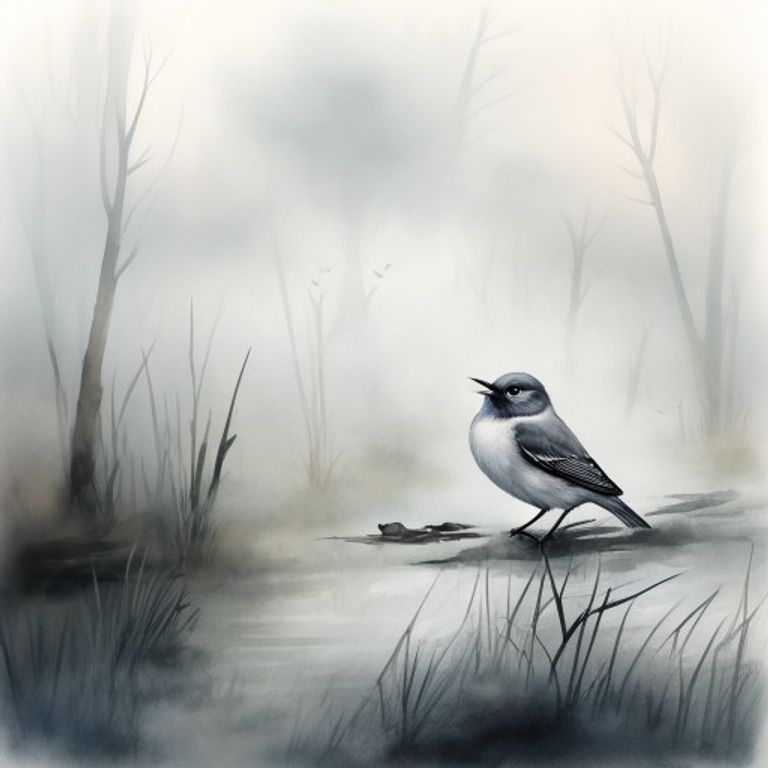
It was not a normal fog. It was a sea fog, thick and wet and endless, rising from the coastal marshes and swallowing the world. Within minutes, Star could not see the ground. She could not see the sky. She could not tell which way was south and which way was north. She could not tell up from down. Everything was gray.
She tried to climb above it, but the fog went higher than she could fly. She tried to descend through it, but the ground was hidden, and she feared crashing into trees or water. She flew in circles, calling out, hoping to hear another bird, hoping to find the flock.
But there was no answer. Just the gray. Just the cold. Just the silence of a world that had forgotten she existed.
She flew for hours. She did not know how many. She did not know if she was going south or north or east or west. She only knew that she was alone, and that the fog was getting colder, and that her wings were getting heavier, and that she had not eaten since morning.
Night fell inside the fog. There was no moon. There were no stars. There was only the gray dark, and the sound of her own breathing, and the slow, desperate beat of her own heart.
She landed on something—she didn't know what, a branch, a wire, a fence post—and she tucked her head under her wing and tried to sleep. But she was too cold. Too hungry. Too frightened.
"I don't need them," she whispered to the fog. But the fog did not answer. The fog had never needed anyone. The fog was not a flock. The fog was alone, and it did not care.
The Sound
On the fourth morning, Star was no longer flying. She was hopping. Her wings would not lift her. She had no strength. She hopped along a hedgerow, pecking at frost-covered berries that tasted like ice, moving only because stopping meant dying.
And then she heard it.
A sound. A distant sound. A sound like rushing water, like applause, like breathing, like the heartbeat of the sky itself. It was faint, so faint that at first she thought she had imagined it. But it grew louder. And louder. And then she felt it—a vibration in the air, a pressure, a warmth that had nothing to do with temperature.
The murmuration.
They had been searching for her. For four days, the flock had flown in a pattern unlike any murmuration they had ever made—a great wide net spread across the sky, each bird scanning, each bird listening, each bird calling. They had heard her cries through the fog. They had felt her absence in the shape. They had noticed that she was gone.
And they had come back.
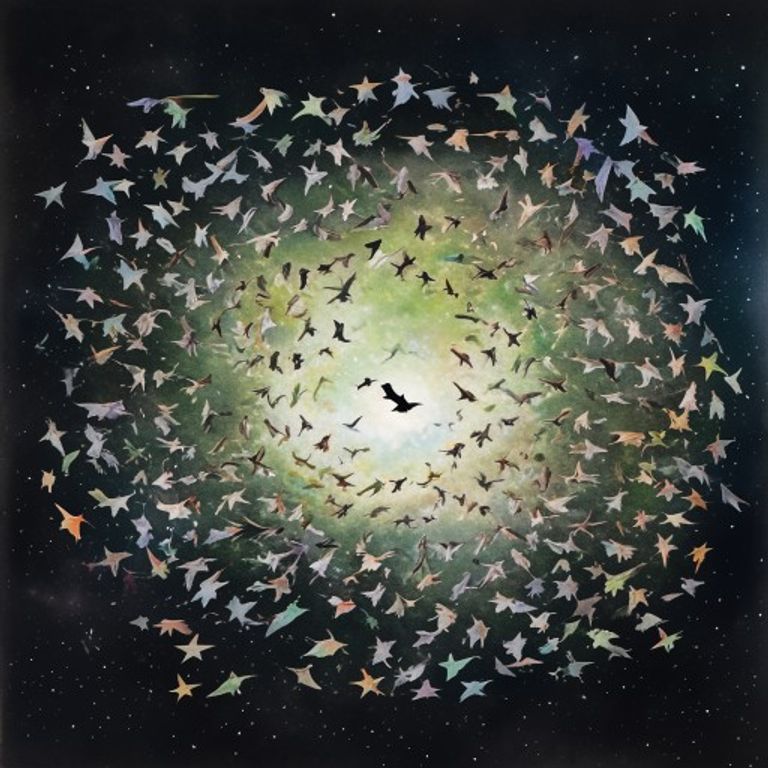
Star looked up. Through a break in the fog, she saw them—thousands of starlings, silver and black and green, moving in a shape she had never seen before. Not a spiral. Not a wave. Not a curtain. A circle. A great, open circle, with a space in the center.
A space for her.
She tried to fly. Her wings would not work. She tried to call. Her voice was too weak.
But the murmuration saw her. The murmuration always saw her. Because in a murmuration, every bird watches every other bird. That is how they move as one. That is how they know when someone is missing. That is how they know when someone needs them.
Two starlings broke from the circle and dove toward her. They did not ask permission. They did not wait for a leader. They simply saw, and they acted. They landed on either side of her, pressing their warm bodies against her cold one. Two more came. Then four. Then eight. Then a dozen starlings were perched on the hedgerow, forming a living wall of feathers around her, sharing their warmth, shielding her from the wind.
Star had never felt anything like it. The warmth. The safety. The presence. She was not alone. She had never been alone. Even when she flew away, even when she tried to be independent, even when she told herself she didn't need them—they had still been there. Still been watching. Still been ready to come back for her.
The Return
They rested for a day in the hedgerow. The starlings brought berries—berries they had found on the migration route, berries they had saved for the journey, berries they gave to Star without being asked. They groomed her feathers. They warmed her feet. They sang to her in the starling way—a soft, complex song that had no words but meant "we are here, we are here, we are here."
And when Star was strong enough to fly, they did not say "we told you so." They did not say "you should have stayed with us." They did not say "you were wrong." They simply rose into the sky, and Star rose with them, and they formed the circle again, and Star was in the center.
The center of a murmuration is the safest place. It is where the youngest birds fly. Where the weakest birds fly. Where the birds who need help the most are protected by the wings of everyone around them. Star had always thought the center was for the unimportant birds. The birds who couldn't keep up. The birds who needed to be carried.
But now she understood. The center was for the birds who were loved. The center was for the birds who were trusted. The center was for the birds who were part of something larger than themselves.
And she was all of those things.
She did not try to fly at the edge anymore. She did not try to show off. She did not try to prove that she was fast or skilled or special. She just flew. In the center. Surrounded by the warmth and the wings and the heartbeat of the flock.
And something miraculous happened. Without trying, without struggling, without bumping into anyone—she matched their rhythm. She turned when they turned. She slowed when they slowed. She rose when they rose. Because she wasn't watching herself anymore. She was watching them. She was trusting them. She was part of them.
The murmuration was not a competition. It was not a test. It was not about being the best. It was about being together. It was about knowing that the bird to your left would turn when you turned. It was about knowing that the bird above you would slow when you slowed. It was about knowing that if you fell, someone would notice. Someone would come. Someone would never leave you behind.
The Spring
Winter passed. The flock reached the southern marshes, warm and green and full of insects. They fed. They rested. They grew strong. And when spring came and it was time to fly north again, Star was no longer the smallest fledgling. She was a yearling now, strong and confident, her feathers fully iridescent, her place in the murmuration as natural as breathing.
But there was a new fledgling. A tiny starling named Bit, smaller than Star had been, clumsier than Star had been, always bumping into the birds beside him, always flying at the wrong speed, always breaking the smooth curve of the shape.
The other yearlings chirped at him. "Clumsy!"
"Too slow!"
Bit tumbled out of the formation and landed on a reed, feathers ruffled, pride bruised, heart pounding. Just like Star had.
Star landed beside him. She did not say "watch the bird beside you." She did not say "trust the flock." She did not say "you need us." She just sat with him. Warmed him with her body. Preened his ruffled feathers. And when the murmuration swept past, she did not push him into it. She simply rose, flew beside him, matched his speed, turned when he turned, and slowly, gently, helped him find the rhythm.
And Bit found it. Not because he was suddenly skilled. Not because he had learned a technique. But because he was not alone. Because someone was beside him. Because someone had noticed he was missing. Because someone had come back.
That is what teamwork is. Not a skill. Not a strategy. Not a plan. It is a promise. A promise that you are not alone. A promise that someone will notice. A promise that someone will come back. A promise that no matter how far you fly, no matter how lost you get, no matter how stubborn you are—there is a flock that will never leave you behind.
The Moral of the Story: Teamwork is not about everyone having a special skill and combining them to achieve a goal. It is not about being the best, the fastest, the strongest, or the most important. It is about trust. It is about knowing that someone will notice when you are gone. It is about moving together even when you are not perfect. The starling who flies alone may feel free, but she also feels lost. The starling who flies with the flock may feel constrained, but she also feels held. True teamwork is not a contract of skills. It is a promise of presence. It is not about what you can do. It is about who you are with. And the most wonderful thing about teamwork is this: when you become part of something larger than yourself, you do not disappear. You finally become who you were meant to be. Because a single starling is just a bird. But a murmuration—a murmuration is magic. A murmuration is a living thing, made of thousands of hearts beating in time, thousands of wings moving as one, thousands of eyes watching, thousands of hearts caring. And when you are part of that—when you trust, when you let yourself be held, when you accept that you need others and others need you—you are no longer just a bird. You are the sky itself. You are the dance. You are the magic. And that, little one, is the truest, most beautiful, most powerful kind of teamwork there is. Not the teamwork of skills. The teamwork of souls. The teamwork of never leaving anyone behind. Fly with the flock. Trust the flock. Be the flock. And you will never be lost again.