The Straight Path: A Story About Integrity
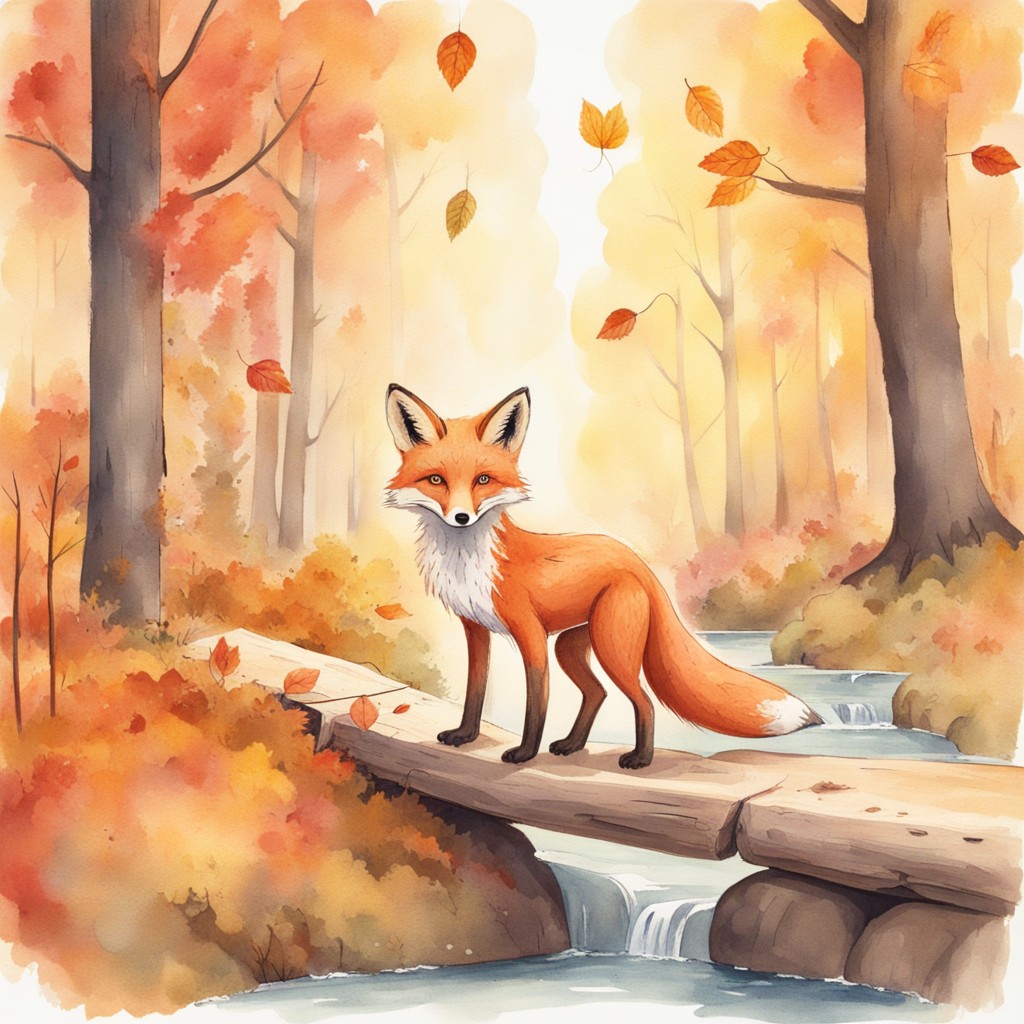
In the sun-dappled forest of Whispering Pines, where the trees stood tall as ancient guardians and the brook sang songs that only the pure of heart could understand, there lived a young fox named Fletcher who was known throughout the woodland for three things: his speed, his determination, and his unwavering honesty.
Fletcher was not the largest fox in the forest. His russet coat was still patchy in places, his tail not yet full and bushy, his paws too big for his lanky frame. But what he lacked in size, he made up for in spirit. When Fletcher set his mind to something, nothing could stop him—not steep hills, not tangled thickets, not even the teasing of older foxes who called him "runt" and "pip-squeak."
He lived in a cozy den beneath the roots of an old elm tree with his mother, his father, and his two younger sisters. The den was warm and safe, lined with soft moss and dry leaves, and it smelled of earth and family and love. Above the entrance, Fletcher's father had carved a simple phrase into the bark: "The straight path is always the right path."
Fletcher didn't fully understand what that meant. Not yet. But he would learn.
The Great Forest Race was the most anticipated event of the season.
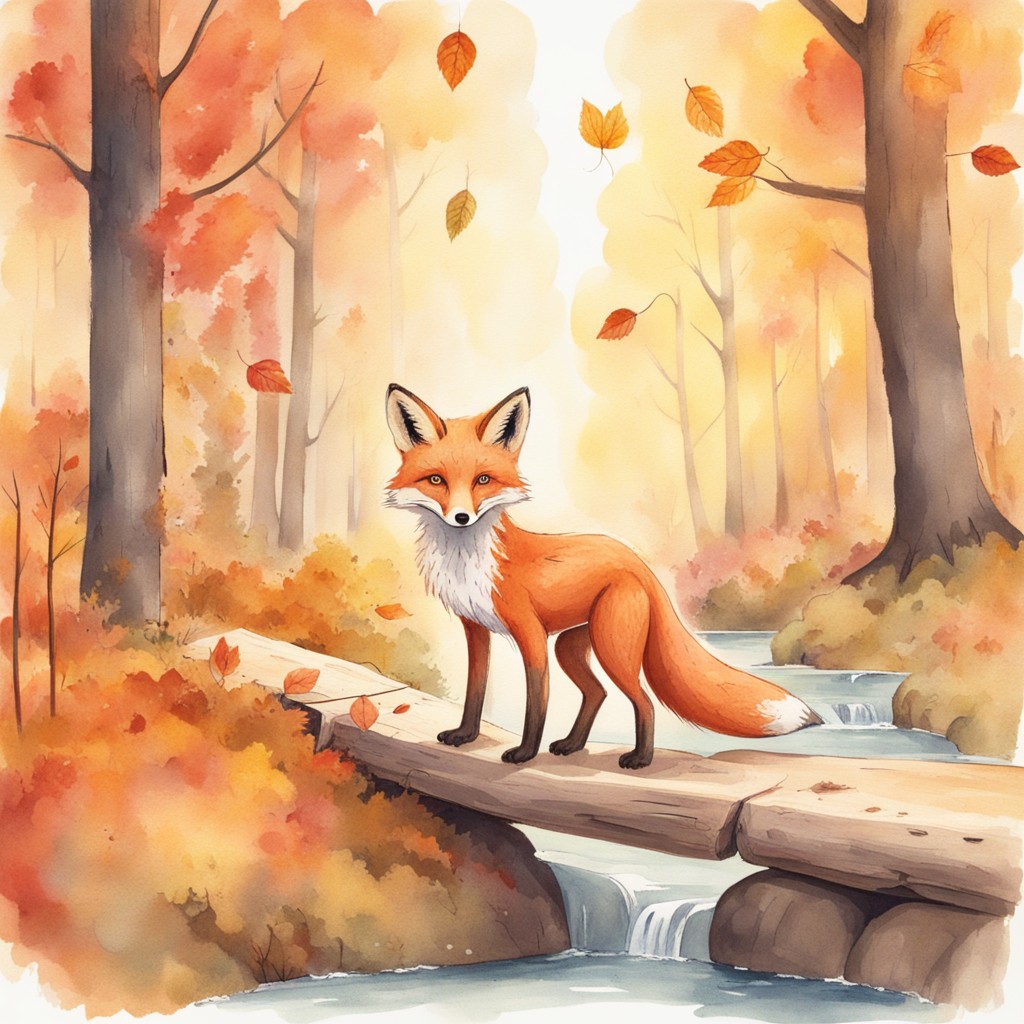
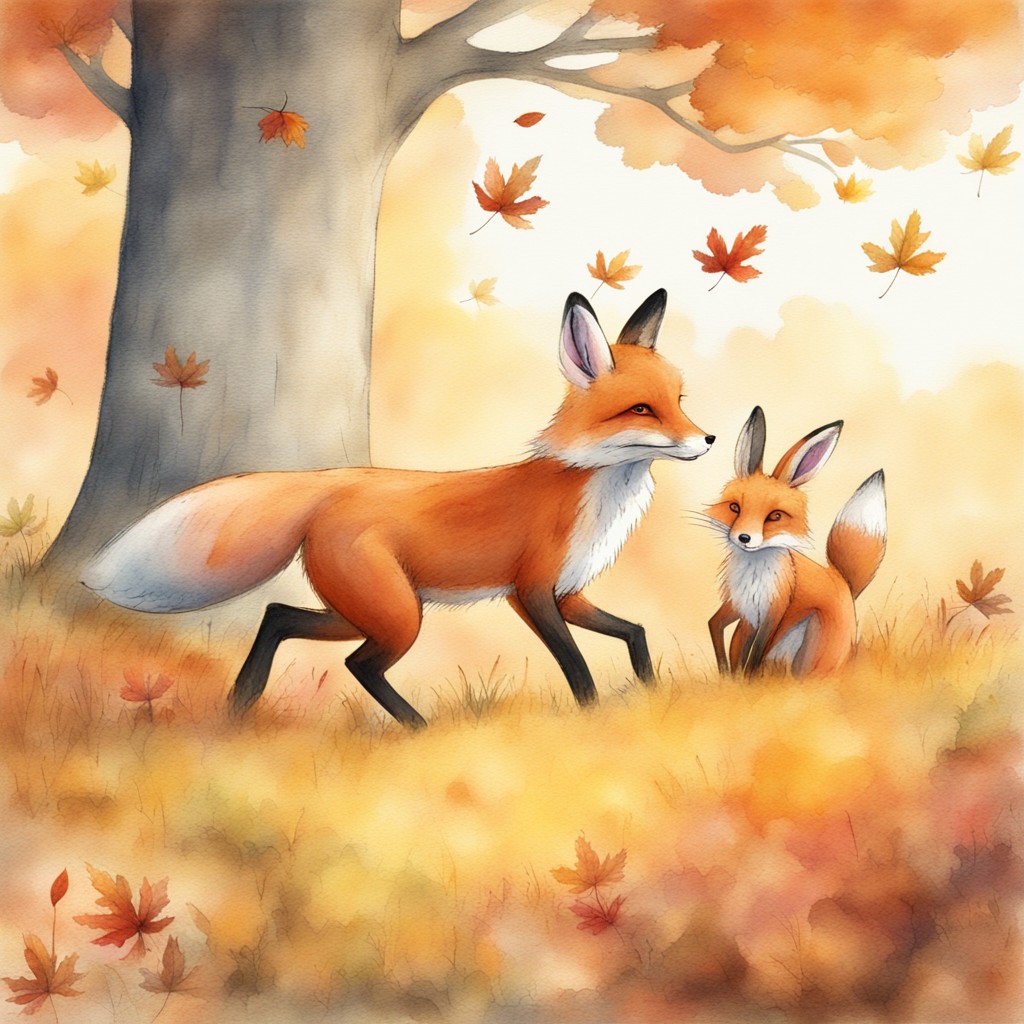
Every autumn, when the leaves turned to flames of gold and crimson and the air carried the crisp promise of winter, the animals of Whispering Pines gathered at the Great Meadow to test their speed, their endurance, and their character. The race was not merely about being the fastest. It was about heart, about perseverance, about pushing yourself to your limits and discovering what you were truly made of.
The course was legendary. It began at the Great Meadow, wound through the Dense Thicket, climbed the steep slopes of Boulder Hill, crossed the slippery stones of the Shallow Ford, and ended at the ancient Lightning Tree—a massive oak that had been split by lightning a hundred years ago but still stood, defiant and proud.
The winner received a crown woven from autumn leaves, a year's supply of the finest berries and nuts, and something far more precious: the respect and admiration of the entire forest.
Fletcher had never run the Great Race before. He was too young, the elders said. Too small. Too inexperienced. But this year, on the eve of his third autumn, Fletcher was finally old enough to compete.
And he was determined to win.
The morning of the race dawned clear and cool. The sun rose over the treetops, painting the forest in shades of amber and rose. The air smelled of fallen leaves and woodsmoke, of preparation and excitement.
Fletcher stood at the starting line, his heart hammering against his ribs, his paws trembling with a mixture of fear and excitement. Around him, the other competitors stretched and paced, their breath visible in the crisp morning air.
There was Bruno, the badger, broad and powerful as a boulder, his claws digging furrows in the soft earth. There was Zephyr, the deer, graceful and swift, her legs like slender pillars of strength. There was Crispin, the hare, whose reputation for speed was known across three counties. And there was Jasper, the older fox, red as autumn fire, sly as a shadow, whose cunning was matched only by his ambition.
"Well, well," Jasper drawled, sidling up to Fletcher with a grin that showed too many teeth. "If it isn't the little runt. What are you doing here, pup? This race is for grown-ups."
"I'm old enough," Fletcher said, trying to keep his voice steady. "And I'm fast."
"Fast?" Jasper laughed, a sharp, barking sound. "You're fast for a kit playing in the meadow, perhaps. But this is the Great Race. This is real. You'll be left in the dust before you reach the Thicket."
"We'll see," Fletcher said.
Jasper leaned closer, his amber eyes gleaming with something that wasn't quite friendly. "Tell you what, little runt. I'll make you a deal. If you somehow manage to finish the race—anywhere, even last—I'll admit I was wrong. I'll even give you my winter store of hazelnuts. How's that for motivation?"
Fletcher's ears perked up. Hazelnuts were precious, especially going into winter. But something in Jasper's tone made him wary. "Why would you do that?"
"Because," Jasper said, his smile widening, "there's no chance you'll finish. You're too small, too weak, too... honest."
He said the word "honest" like it was an insult, and Fletcher felt his fur bristle. But before he could respond, the starting bell rang—a deep, resonant sound from the great copper bell that hung in the oak tree above the meadow.
The race had begun.
The starting rush was chaos.
Twenty competitors surged forward, a flurry of fur and feathers and pounding paws. Fletcher was knocked sideways by Bruno's massive shoulder, stumbled, recovered, and sprinted after the pack. His heart pounded. His lungs burned. His legs pistoned beneath him, eating up the ground.
The meadow fell away behind them. The Dense Thicket loomed ahead—a maze of blackberry brambles and fallen logs and narrow passages where one wrong turn could cost you the race.
Fletcher was small, and that turned out to be an advantage. While the larger animals crashed through the undergrowth, he darted through gaps and squeezed beneath logs. He found paths that didn't exist for badgers and deer. His size, once a weakness, became his strength.
By the time he emerged from the Thicket, he was in fifth place. Ahead of him, he could see Zephyr's white tail flashing through the trees, Crispin's ears bobbing like flags, and Jasper's red coat burning like a flame.
Boulder Hill came next. The climb was steep and treacherous, loose stones shifting beneath every pawstep. Fletcher dug his claws into the earth and pulled himself upward, his muscles screaming, his breath coming in ragged gasps. He passed Crispin, who had twisted a paw on a loose rock. He passed a weasel who had stopped to catch his breath.
At the top of the hill, he was in third place. Ahead, Zephyr and Jasper were neck and neck, their strides long and powerful.
"Not bad, runt!" Jasper called over his shoulder, his voice dripping with mockery. "But you'll never catch us!"
Fletcher didn't answer. He saved his breath for running.
The Shallow Ford was where everything changed.
The stream was wider than usual, swollen by autumn rains. The stepping stones that normally provided safe passage were submerged, leaving only their rounded tops visible above the rushing water. Crossing required careful balance, precise jumps, and steady nerves.
Zephyr crossed first, her slender legs carrying her from stone to stone with balletic grace. Jasper followed, less graceful but just as determined, his claws scrabbling for purchase on the wet rock.
Fletcher reached the ford as Jasper was midway across. He studied the stones, calculated the distances, and began his crossing.
Halfway across, he noticed something.
One of the stones—the largest, the one that served as the central anchor for the crossing—was loose. It wobbled slightly as Fletcher touched it, and he realized with a jolt of fear that it could shift at any moment. If it moved while Jasper or Zephyr was on it, they could fall into the rushing water. The current was strong enough to sweep even a strong swimmer downstream, toward the rapids and the falls beyond.
Fletcher hesitated. He could cross safely, he was sure. The stone was stable enough for his light weight. But what about the others?
Then he saw something else.
Above the ford, half-hidden by overhanging willow branches, there was another way across. A fallen log spanned the stream, thick and moss-covered, invisible from the main path but perfectly positioned for anyone who knew it was there.
A shortcut.
If Fletcher took the log, he could bypass the ford entirely. He could save precious minutes. He could catch Zephyr. He could even win.
But the log wasn't part of the race course. The rules were clear: competitors must follow the marked path. Taking the log would be cheating.
Fletcher stood frozen on the stone, the water rushing beneath him, the choice heavy in his chest.
Win, or do what was right?
He almost took the log.
He really did. The thought of winning—the crown, the berries, the respect, the look on Jasper's face when the "runt" beat him—it was intoxicating. It sang to him like a siren's call, promising glory and vindication and everything he had ever wanted.
But then he remembered his father's words, carved above their den: "The straight path is always the right path."
And he remembered something else. Last winter, when the snows were deep and food was scarce, Jasper had stolen from the communal stores. He had taken nuts that were meant for the elderly and the young, hiding them in his own cache. When confronted, he had lied, blamed others, and ultimately been caught. His punishment was not severe—the forest community believed in forgiveness—but his reputation had never recovered. The other animals still whispered about it. Still looked at him sideways. Still didn't quite trust him.
"Cheating," Fletcher's father had said at the time, "is like poison. It might taste sweet at first, but it destroys you from the inside. Once you compromise your integrity, you can never get it back."
Fletcher looked at the log, then at the wobbling stone, then at the path ahead where Zephyr and Jasper were disappearing into the trees.
He made his choice.
First, he tested the loose stone. Yes, it was definitely unstable. He pushed it gently with his paw, feeling it shift beneath the pressure. It needed to be secured, or someone was going to get hurt.
Working quickly, Fletcher gathered stones from the riverbank—small, heavy ones that he could carry in his jaws. One by one, he wedged them beneath the loose stone, packing them tight, creating a stable foundation. It took time. Precious time. The other competitors were catching up, passing him, staring at him in confusion as he worked.
"What are you doing?" asked a young otter, pausing at the water's edge.
"Fixing the stone," Fletcher panted, his jaws full of rock. "It was loose. Someone could get hurt."
"But the race—"
"The race can wait," Fletcher said. "Safety can't."
When the stone was secure, he crossed the ford properly, following the marked path. By the time he reached the other side, he was in eighth place. The leaders were far ahead, their forms disappearing into the autumn mist.
Fletcher didn't pause to mourn his lost position. He just ran.
The final stretch was the hardest.
Fletcher's legs burned. His lungs felt like they were filled with fire. Every step was an act of will, a defiance of his body's screaming demand to stop. But he kept going. He passed the squirrel who had stopped to catch his breath. He passed the badger who had taken a wrong turn. He passed the hare, Crispin, whose twisted paw had finally forced him to withdraw.
Up ahead, he could see Zephyr. She was slowing, her graceful stride becoming labored, her breath coming in great, heaving gasps. The deer was strong but not built for endurance. The long race was taking its toll.
Fletcher caught her at the base of the Lightning Tree.
"Go," Zephyr gasped, waving him past with her elegant head. "I'm done. I can't... I can't run another step."
"You're almost there," Fletcher said, slowing to trot beside her. "Just a little farther."
"I can't," Zephyr repeated, her legs trembling.
Fletcher looked at the finish line, just visible through the trees. He could win. He could actually win. All he had to do was sprint past Zephyr, past the final marker, and claim the crown.
Instead, he stopped.
"Lean on me," he said.
"What?"
"Lean on me," Fletcher repeated. "We'll walk the last bit together. You don't have to run. Just... just stay upright."
Zephyr stared at him, her dark eyes wide with disbelief. "But... but you'll lose. You'll come in second. Or third. Or—"
"I know," Fletcher said. "But you need help. And I'm not going to leave you behind just to win a race."
So they walked together, the small fox and the exhausted deer, step by careful step, toward the Lightning Tree. The crowd at the finish line fell silent as they approached, watching in astonishment as Fletcher supported Zephyr with his shoulder, his own legs trembling with fatigue, his breath ragged, but his pace steady and determined.
Jasper had already won.
The older fox stood at the finish line, the autumn crown perched jauntily on his head, a smug grin stretching across his face. He had crossed the line ten minutes ago, breaking his own record, basking in the applause and admiration of the crowd.
But as Fletcher and Zephyr approached, something strange happened. The applause for Jasper faded. The crowd turned. And a murmur began to spread—first a whisper, then a rumble, then a roar.
"Look at the fox," someone said. "Helping the deer."
"He stopped to fix the ford," said the otter who had passed him. "I saw it. He wasted five minutes making sure the crossing was safe."
"He could have won," said Crispin, who had limped to the finish line to watch. "I was ahead of him at the ford. I saw the shortcut. He could have taken it and won easily. But he didn't."
The crowd pressed closer, their eyes not on Jasper and his crown, but on Fletcher and his exhausted companion. When they finally crossed the line—technically last, since everyone else had finished—the silence was profound.
Then someone started clapping.
Then another. And another. Until the entire meadow was thundering with applause, not for the winner, but for the fox who had chosen honesty over victory, compassion over competition, integrity over glory.
Jasper was furious.
"This is ridiculous!" he snarled, tearing the autumn crown from his head. "I won! I crossed the line first! I broke the record! And you're all clapping for him? For the runt who came in last?"
"He didn't come in last," said Old Barnaby, the ancient owl who served as the race referee. "He came in first."
Jasper blinked. "What?"
"The rules of the Great Race," Barnaby said, his voice carrying the weight of centuries, "state that the winner is not merely the fastest, but the one who demonstrates the greatest character. Speed is important, yes. But heart matters more."
He turned to Fletcher, who was helping Zephyr to a patch of soft grass where she could rest. "Young fox, you had the opportunity to cheat. You had the opportunity to leave a competitor behind. You had the opportunity to win at any cost. And you chose not to. You chose honesty. You chose compassion. You chose integrity."
Barnaby spread his wings wide, and the crowd fell silent.
"The true winner of the Great Race," he announced, "is Fletcher."
The meadow erupted. Cheers and laughter and cries of joy filled the air. Animals pressed forward to congratulate Fletcher, to touch his fur, to tell him how proud they were.
Fletcher stood stunned, his head spinning, his heart full. "But... but I didn't win. I came in last."
"You came in first where it matters," Barnaby said gently. "In character. In integrity. In heart."
He placed the autumn crown on Fletcher's head—the same crown Jasper had torn off, now restored and more beautiful than before. "Wear this with pride, young fox. You have earned it."
Jasper slunk away, his tail between his legs, his bravado shattered. No one stopped him. No one called after him. They were too busy celebrating Fletcher, too busy congratulating Zephyr, too busy marveling at the small fox who had shown them what the Great Race was truly about.
But Fletcher didn't gloat. He didn't boast. He didn't let the crown go to his head.
Instead, he did something that surprised everyone.
He found Jasper.
The older fox was sitting alone at the edge of the meadow, staring at the ground, his ears flat against his head. When Fletcher approached, he didn't look up.
"Go away," Jasper muttered. "Gloat somewhere else."
"I'm not here to gloat," Fletcher said. "I'm here to talk."
"About what? How you beat me? How everyone loves you now? How I'm nothing but a—"
"About the shortcut," Fletcher interrupted.
Jasper's head snapped up. "What?"
"The log above the ford," Fletcher said. "You knew about it, didn't you? That's how you won so easily. You didn't outrun Zephyr. You cheated."
Jasper's eyes widened, then narrowed. "Prove it."
"I can't," Fletcher admitted. "And I won't. I'm not going to tell anyone."
"Then why—"
"Because," Fletcher said, sitting down beside the older fox, "I want you to know that I know. And I want you to know that it doesn't matter. Not to me. Not anymore."
Jasper stared at him. "You're not angry?"
"I was," Fletcher said. "When I saw the log, I was furious. I wanted to take it. I really did. But then I realized something. Winning by cheating isn't winning at all. It's just... losing slower."
He looked at Jasper, his young eyes steady and calm. "You were faster than me, Jasper. Stronger. More experienced. You could have won honestly, fair and square. But you chose the easy path. And now... now you have to live with that choice."
Jasper was silent for a long time. When he finally spoke, his voice was quiet, barely above a whisper. "How did you know? About the log?"
"I saw it," Fletcher said. "When I was fixing the stone. I looked up, and there it was. Hidden. Perfect. And I thought about taking it. I really did."
"Why didn't you?"
"Because," Fletcher said, standing up and shaking out his fur, "my father always says that integrity is doing the right thing even when no one is watching. Even when it costs you. Even when it's hard. Especially when it's hard."
He turned to leave, then paused. "You can keep the hazelnuts, by the way. I don't want them."
Jasper looked up, confused. "But the bet—"
"Was made by someone who didn't understand what the race was really about," Fletcher said. "And I'm not that person anymore."
He walked away, the autumn crown glinting in the afternoon sun, his head held high, his heart light and free.
That evening, as the sun set over Whispering Pines and the first stars began to twinkle in the darkening sky, Fletcher sat with his family outside their den. His sisters played in the fallen leaves. His mother prepared dinner. His father sat beside him, his tail wrapped around his paws, his eyes full of pride.
"You did well today," his father said.
"I didn't win," Fletcher pointed out. "Not really. I came in last."
"You won," his father corrected gently. "You won because you chose integrity over glory. You chose compassion over competition. You chose to be the kind of fox that other foxes can look up to."
"But Jasper cheated," Fletcher said. "And no one knows. He still has his reputation. He still has... everything."
"Does he?" his father asked. "He knows what he did. He knows that his victory was stolen, not earned. And that knowledge will eat at him, little by little, until he either changes or it destroys him. That's the price of cheating, Fletcher. Not punishment from others, but the prison you build for yourself."
Fletcher thought about this. He thought about Jasper, sitting alone at the edge of the meadow, his stolen victory hollow and bitter. He thought about the log above the ford, hidden and tempting, and how close he had come to taking it.
"Will he ever change?" Fletcher asked.
"Maybe," his father said. "Maybe not. That's not up to us. What's up to us is who we choose to be, regardless of what others do."
He put a paw on Fletcher's shoulder. "You chose well today, son. You chose integrity. And that choice will guide you for the rest of your life, through races and challenges far greater than this one."
Fletcher leaned against his father, feeling the warmth and strength of him, and looked up at the stars. They were bright tonight, brighter than he had ever seen them, and he liked to think that they were shining especially for him—not because he had won a race, but because he had won something far more important.
The battle with himself.
And he had chosen honesty.
THE END
Moral of the Story: Integrity is the quality of being honest and having strong moral principles, even when no one is watching and especially when doing the right thing is difficult. It means choosing the straight path over the shortcut, the truth over the lie, and compassion over selfishness. True integrity is not about seeking recognition or praise—it is about aligning your actions with your values, regardless of the cost. Fletcher's story teaches us that the greatest victories are not always the ones that come with crowns and applause. Sometimes, the greatest victory is the quiet choice to do what is right, even when it means losing. Fletcher could have taken the hidden log and won the race. He could have left Zephyr behind and claimed glory. But he chose honesty over cheating, compassion over competition, and integrity over victory. The world is full of shortcuts, of easy paths, of ways to get ahead without earning it. But every shortcut comes with a cost. When we compromise our integrity, we may win in the short term, but we lose something far more valuable: our self-respect, our reputation, and the trust of those around us. Like Jasper, we may find ourselves standing alone, surrounded by admiration that feels hollow because we know we didn't earn it. Integrity is not about being perfect. Fletcher was tempted by the shortcut. He felt the pull of victory, the desire to prove himself, the anger at Jasper's cheating. But integrity is not the absence of temptation—it is the strength to resist it. It is doing the right thing not because it is easy, but because it is right. In the end, Fletcher discovered that the real prize was not the autumn crown or the berries or the admiration of the crowd. The real prize was the knowledge that he had been true to himself, that he had helped someone in need, and that he could look at his reflection in the stream and see a fox he was proud to be. That is the true meaning of integrity. And it is worth more than any race, any trophy, any victory in the world.