The Garden of True Words: A Story About Honesty
The Garden of True Words: A Story About Honesty
In the village of Veridale, where the houses were painted in colors that matched their owners' truest selves—blues for the calm, reds for the passionate, yellows for the joyful—there was a garden that was different from all the others.
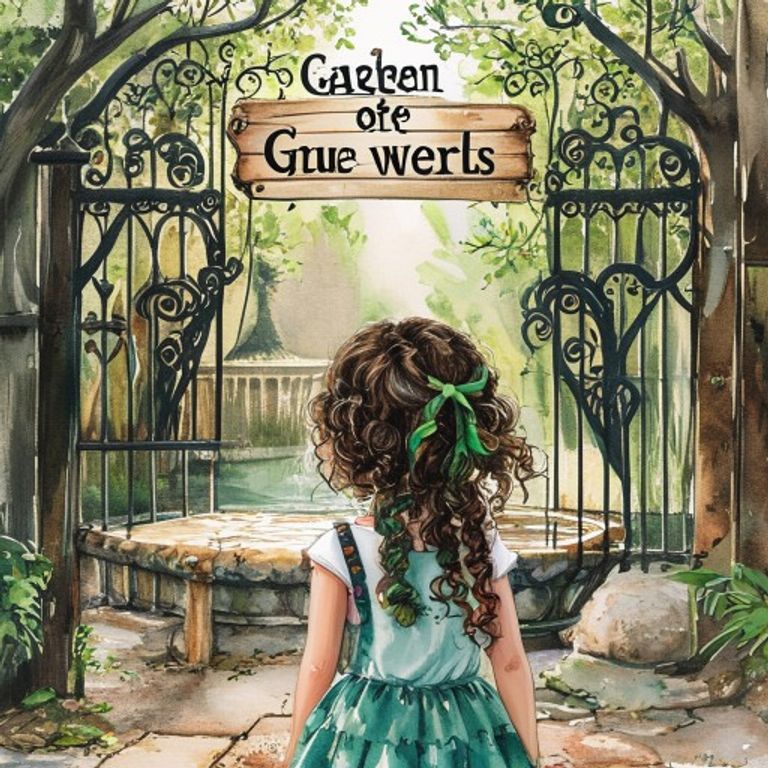
It sat at the edge of the village square, behind a low stone wall that was crumbling in places, covered in moss and ivy. The gate was made of wrought iron, shaped like two trees growing together, their branches intertwined. Above the gate, a wooden sign hung, weathered and gray, bearing words that had been carved long ago:
"The Garden of True Words. Enter only if your heart is light."
The children of Veridale knew the garden well. They knew that if you spoke a lie within its walls, the flowers would wilt. If you spoke the truth, they would bloom. It was not magic, the elders said. It was simply the way of things. Truth made things grow. Lies made things wither.
But no one had seen the garden bloom in years.
Tessa was eight years old, the daughter of the village baker, a man whose bread was famous for being exactly what he claimed—neither more nor less. She had curly brown hair that her mother tied with green ribbons, and eyes the color of hazelnuts, warm and bright. She was small, but she was fast. She ran everywhere, her ribbons flying behind her, her laughter ringing through the streets like a bell.
She was also, her father often said, too honest for her own good.
"Tessa," he would sigh, when she told Mrs. Pemberton that her new hat looked like a upside-down soup bowl. "The truth is a gift. But gifts should be given with kindness, not thrown like stones."
Tessa would frown, confused. "But you always say honesty is the most important thing."
"It is," her father would reply. "But honesty without kindness is just cruelty wearing a truthful mask. The best honesty is the kind that helps, not the kind that hurts."
Tessa thought about this a lot. She thought about it as she ran past the Garden of True Words, which sat silent and gray, its soil bare, its branches empty, its gate locked with a rusted chain.
"Why doesn't anyone go in?" she asked her mother one evening, as they shaped loaves of bread for the morning market.
Her mother's hands paused, flour dusting her fingers like snow. "Because, sweet one, the garden has not bloomed in a very long time. People stopped trying."
"Why did it stop blooming?"
Her mother's face grew sad. "Because the village changed. People started saying things they did not mean. Promises they did not keep. Words that sounded pretty but hid ugly truths. The garden could not grow in such soil. So it went to sleep."
Tessa looked out the window, toward the garden she could not see from here but could feel, like a heart that had stopped beating. "Can it wake up?"
Her mother smiled, small and wistful. "Perhaps. If someone could remind the village what true words sound like."
The trouble began with Mr. Calloway.
He was new to Veridale, arriving in a bright wagon drawn by two black horses, wearing a coat the color of sunset and a smile that was as wide as the river. He called himself a trader, a seller of wonders, a man who could provide anything a heart desired.
He set up his shop in the village square, and on his first day, he made promises that made people's eyes shine.
"This tonic," he said, holding up a bottle of purple liquid, "will make you strong as an ox!"
"These seeds," he said, displaying packets of glittering grain, "will grow crops that never fail!"
"This mirror," he said, revealing a glass framed in gold, "will show you your truest self!"
The villagers bought his wares. They spent their savings, their harvest money, their children's future. They bought because Mr. Calloway spoke with such certainty, such charm, such confidence. He looked them in the eye and smiled, and they believed him.
But the tonic was just colored water. The seeds were just sand. The mirror was just glass.

Within a week, the villagers realized they had been deceived. But Mr. Calloway was clever. When Mrs. Abernathy complained that the tonic had done nothing, he smiled and said, "Ah, but you must drink it under a full moon, dear lady. That was in the fine print."
When Mr. Fletcher found that the seeds would not sprout, Mr. Calloway shook his head and said, "You must plant them facing north, good sir. Everyone knows that."
And when Miss Linnet looked in the mirror and saw only her ordinary face, Mr. Calloway leaned close and whispered, "The mirror shows your truest self, but you must first believe you are beautiful. Your doubt clouds the glass."
He lied. But his lies were wrapped in smiles, in charm, in the appearance of truth. And the villagers, embarrassed and confused, did not know how to argue.
Tessa watched this from her father's bakery, her hazelnut eyes narrow and thoughtful. She saw Mrs. Abernathy drink the tonic under the full moon and find it still useless. She saw Mr. Fletcher plant seeds facing every direction and watch them remain sand. She saw Miss Linnet stare in the mirror until her eyes hurt, trying to believe.
And she saw Mr. Calloway, day after day, selling more lies, growing richer, his smile never faltering.
"He is not honest," Tessa said to her father one evening.
"No," her father agreed. "He is not."
"But he sounds honest. He looks honest."
"That is the danger of dishonesty, Tessa. The best lies look like truth. That is why honesty is so precious. Because in a world full of pretty falsehoods, the plain truth shines like a star."
Tessa thought about this. She thought about the garden, asleep behind its rusted gate. She thought about Mr. Calloway's smile, which was like a flower that looked beautiful but had no scent.
And she made a decision.
The next morning, Tessa went to the garden.
She stood before the wrought-iron gate, the two trees intertwined, the sign above her head. She pulled at the rusted chain. It was loose, old, more for show than security. It fell away in her hands, crumbling like dry bread.
She pushed the gate open. It creaked, a sound like a sigh, like something waking from a long sleep.
The garden inside was bare. The soil was gray. The flower beds were empty. The trees stood leafless, their branches reaching toward the sky like fingers asking for help.
But in the center of the garden, there was a fountain. It was dry, its basin cracked, its spout silent. Above it, words were carved in the stone:
"Speak true, and water will flow. Speak false, and dust remains."
Tessa knelt beside the fountain. She placed her hands on the cold stone. And she spoke.
"My name is Tessa. I am eight years old. I am the daughter of the baker. I have curly hair that my mother ties with green ribbons. I am small, but I am fast. And I am too honest for my own good."
She paused. She thought about the truth, the real truth, the truth that lived beneath the simple facts.
"I am scared," she said, her voice barely a whisper. "I am scared that the village will believe Mr. Calloway forever. I am scared that lies will become the only language people speak. I am scared that the garden will never bloom again, and that truth will be forgotten."
A drop of water fell from the spout. Then another. Then another.
Tessa looked up, her eyes wide. The fountain was dripping. Slow, hesitant, but real. Water was returning to the garden.
She spoke more. "I do not know if I can stop Mr. Calloway. I do not know if one small girl can change a village. But I know that I must try. Because honesty is not just words. It is action. It is showing up, even when you are scared, and saying what is true, even when it is hard."
The water flowed faster now, a thin stream, then a steady trickle, filling the cracked basin with silver liquid that caught the morning light.
Tessa laughed, a sound like birdsong. She ran from the garden, through the square, to her father's bakery.
"Papa!" she cried. "The fountain! It flows! The garden wakes!"
Her father came, wiping flour from his hands. He saw the water, the silver in the basin, and his eyes filled with wonder. "How?"
"I spoke the truth," Tessa said. "The real truth. Not just facts. Feelings. Fears. The truth of who I am. And the garden heard."
Word spread. The villagers came to see the fountain, to touch the water, to marvel that the Garden of True Words was waking after so many years.
But Mr. Calloway saw it too. And he understood, in the way that liars understand truth, that this garden was dangerous to him.
He stood at the gate, his sunset coat bright, his smile wide. "A trick," he said, loudly, so all could hear. "A child's trick. She poured water in the basin herself. There is no magic here. No truth. Just a girl seeking attention."
The villagers murmured. Some believed him. Some did not. Tessa stood in the garden, her green ribbons fluttering, her hazelnut eyes steady.
"It is not a trick," she said. "The fountain flows because I spoke truth. And it will flow for anyone who does the same."
Mr. Calloway laughed, a sound like breaking glass. "Then let me try. Let me speak truth, and we shall see if your fountain obeys."
He stepped into the garden. He stood before the fountain. He cleared his throat, and he spoke.
"I am a good man. I sell fine goods. I help the village. My tonics are powerful, my seeds are fertile, my mirror is true. I am honest, and I am kind, and I deserve the trust of every person here."
The fountain slowed. The water trickled, then dripped, then stopped.
Mr. Calloway stared. "No. This is nonsense. A trick of the plumbing."
He spoke again, louder, more forceful. "I tell the truth! I am honest! My goods are the best in the land!"
The fountain remained silent. The water in the basin grew still, gray, dead.
Tessa stepped forward. "The garden knows," she said softly. "It knows the difference between words that are true and words that only sound true. You spoke beautifully, Mr. Calloway. But your heart spoke louder. And your heart does not know honesty."
Mr. Calloway's face twisted. His smile vanished, replaced by something ugly, something sharp. "You little—" He raised his hand.
But the villagers stepped forward. They had seen. They had watched the fountain flow for Tessa's truth, and die for Mr. Calloway's lies. The evidence was water and stone, clear and undeniable.
"Leave," Mr. Fletcher said, his voice hard. "Leave our village. Your lies are not welcome here."
Mr. Calloway looked at the crowd, at the faces that had once smiled at him and now frowned. He looked at Tessa, small and unafraid, standing in the garden that had judged him.
He left. His wagon rattled out of the square, his horses' hooves echoing on the cobblestones, his sunset coat disappearing down the road.
The villagers cheered. But Tessa did not cheer. She knelt by the fountain, her hand in the still water, and she spoke.
"I am sorry," she said. "I am sorry that I had to show his lies. I am sorry that the garden had to be a judge. I wish he had chosen honesty. I wish he had spoken true words, so the fountain would have flowed for him too. Because honesty is not about catching liars. It is about helping everyone tell the truth."
The fountain stirred. A drop fell. Then another. The water began to flow again, gentle and silver, forgiving and kind.

In the weeks that followed, the Garden of True Words bloomed.
The flower beds filled with color—blue forget-me-nots for promises kept, red poppies for courage spoken, white lilies for apologies offered and accepted. The trees grew leaves, green and vibrant, rustling in the wind like whispered truths. The grass grew thick and soft, and children played there, learning that honesty could be gentle, that truth could be kind.
Tessa became the garden's keeper. Not because she was special, but because she had shown the village that honesty was not a burden. It was a gift. A gift that made things grow.
She taught the children to speak their truths softly, to wrap their honesty in kindness, to tell the real truth—the truth of feelings and fears, not just facts.
"Honesty is not about being loud," she told them, as they sat among the flowers. "It is about being real. It is about saying 'I am scared' when you are scared. It is about saying 'I am sorry' when you have hurt someone. It is about saying 'I love you' when you love someone. These are the truest words. And they make the garden bloom."
Years later, when Tessa was grown and had children of her own, the Garden of True Words was the heart of Veridale. People came from other villages, other towns, other lands, to sit by the fountain and speak their truths. Some found forgiveness. Some found courage. Some found love.
And above the gate, where the weathered sign had once hung, there was a new sign, carved by Tessa's father, painted by her mother, glowing with the colors of truth:
"The Garden of True Words. Enter freely. Speak gently. Grow together."
Because Tessa had learned, and taught, that honesty was not a weapon. It was water. It was sunlight. It was the thing that made everything else possible.
And in Veridale, where the houses matched their owners' truest selves, the garden bloomed forever, proof that truth, once planted, could never truly die.
Moral of the Story: Honesty is not just about telling the truth. It is about being true—in your words, in your heart, in your actions. Mr. Calloway spoke beautiful words, but they were false. The Garden of True Words could sense the difference between words that sounded true and words that were true. Tessa discovered that honesty was not just facts. It was feelings. It was fears. It was the courage to say "I am scared" or "I am sorry" or "I love you." These are the truest words, and they have the most power. But Tessa also learned that honesty must be kind. Her father taught her that truth without kindness is cruelty wearing a mask. The best honesty helps. It does not hurt. It builds. It does not destroy. When Tessa spoke her truth to the fountain—her fears, her hopes, her real self—the water flowed. When Mr. Calloway spoke his lies, the water stopped. The garden showed the village that truth is not about volume or cleverness. It is about authenticity. It is about matching your inside to your outside. It is about being the same person when no one is watching as you are when everyone is watching. Honesty is the foundation of trust. Without it, relationships crumble. Without it, communities fail. Without it, gardens wither. But with honesty—gentle, kind, courageous honesty—anything can grow. Any wound can heal. Any heart can bloom. Tessa saved her village not by catching a liar, but by showing them what truth looked like. She showed them that honesty was not a burden. It was a gift. A gift that made flowers bloom, fountains flow, and people whole. And that is the most powerful magic of all.
Age Range: 4-8 years | Reading Time: ~10 minutes | Core Value: Honesty