The Girl Who Left Gifts: A Story About Kindness
The Girl Who Left Gifts: A Story About Kindness
In the seaside village of Saltmere, where the wind carried the smell of fish and the cry of gulls, there lived a girl named Sora who had just moved there with her family. She was ten years old, with straight black hair that she wore in a messy bun and eyes the color of sea glass, pale and green and uncertain. She missed her old home desperately. She missed her friends, her school, her bedroom with the window that looked out at a maple tree instead of an ocean she found cold and strange.
Everything in Saltmere felt unfamiliar. The streets curved in ways she did not understand. The children at school spoke in rhythms that felt foreign. The teachers called on her by name, and she felt her face burn, because she was not yet ready to be seen.
She felt invisible. Not in a magical way, but in the ordinary way that children feel when they are new. She walked through the village like a ghost, passing through conversations, through groups, through moments where she did not belong. She was not unkind. She was simply unseen.
And then, one gray Tuesday, she found the box.
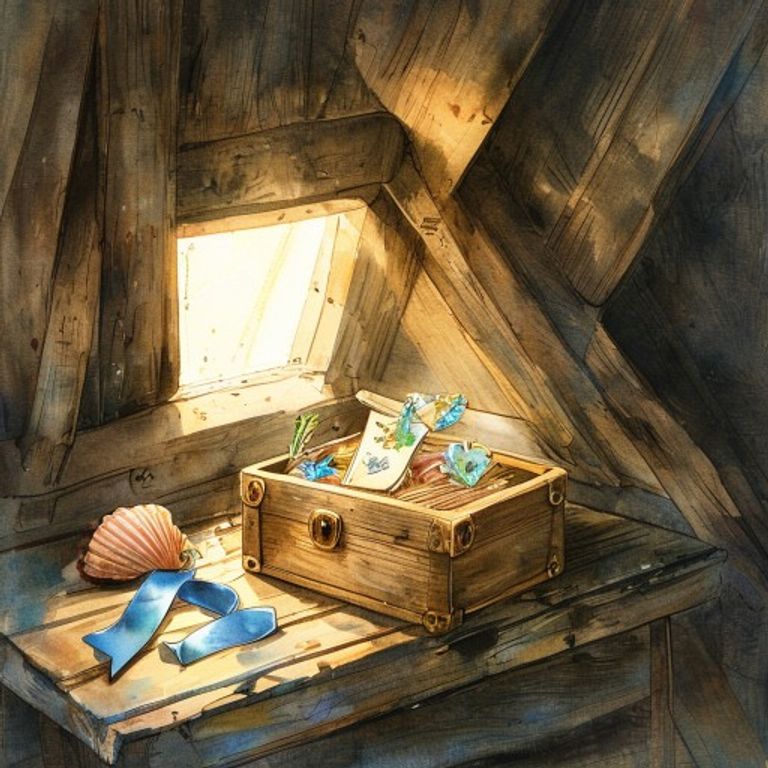
It was in the corner of the attic of their new house, behind a trunk of yellowed linens and a stack of forgotten books. A small wooden box, no bigger than a shoebox, with a brass latch that clicked open like a secret.
Inside were tiny things. A hand-drawn card with a sun on it. A shell with a hole in it, perfect for threading. A pressed flower, still faintly purple. A piece of ribbon, blue and silver. A note, written in childish handwriting: "For someone who needs a smile."
Sora held the note for a long time. She did not know who had written it, or when, or why it had been left in this house. But she felt something shift in her chest, a small warmth, like a candle being lit in a dark room.
She decided to continue the tradition.
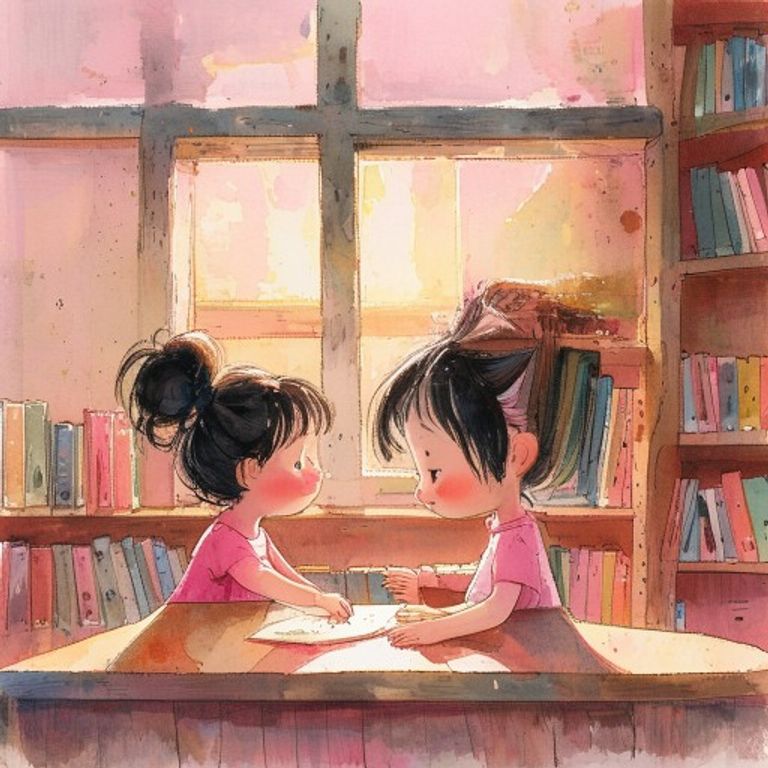
The first gift was for Mrs. Calloway, the librarian, who always looked tired, whose glasses slid down her nose, whose smile at the checkout desk seemed heavy, like a thing she had to carry.
Sora drew a picture of a cat reading a book. She was not a great artist, but she tried. She made the cat orange, like the cat she had seen sleeping in the library window. She wrote, "Thank you for keeping the stories safe." She signed it, "From a friend."
She left it on the librarian's desk early in the morning, before the library opened, when the sun was still pink and the streets were quiet.
She did not see Mrs. Calloway find it. But that afternoon, when Sora returned a book, the librarian's smile was different. It reached her eyes. It crinkled the corners. She did not say anything about the note, but she said, "You know, I think today is going to be a good day."
Sora felt a warmth spread through her, brighter than she expected.
The second gift was for the baker, Mr. Finch, whose hands were dusted with flour and whose face was dusted with worry. His wife had died the year before, and though he still baked bread that smelled like heaven, his shoulders sagged like dough that would not rise.
Sora baked cookies. She was not a good baker. Her mother helped. They were lopsided, some too brown, some too pale. But she wrapped them in paper and left them outside the bakery door with a note: "Your bread makes the village happy. I hope these cookies make you happy too. From a friend."
The next morning, Mr. Finch stood outside his bakery, offering free rolls to anyone who passed. His smile was shy, uncertain, but real. "Someone reminded me," he said, when people asked, "that joy is something you can share."
Sora walked past, invisible as always, but inside, she glowed.
The third gift was for Mei, a girl at school who sat alone at lunch, who read books during recess, who seemed to shrink whenever anyone looked at her. Sora knew that feeling. She knew it in her bones.
She left a bookmark on Mei's desk. It was made of pressed flowers, arranged in a pattern that looked like a garden. The note said, "I think you have a beautiful smile. I hope I see it someday. From a friend."
Mei found it at lunchtime. Sora watched from across the room, pretending to read. Mei's face changed. Her eyes widened. Her hand went to her mouth. And then, slowly, like the sun coming out from behind clouds, she smiled. Not at anyone. Just at the bookmark. Just at the kindness of it.
The next day, Mei sat next to Sora at lunch. "Did you..." she started, then stopped, blushing.
Sora said nothing. She just smiled.
And Mei smiled back, and they ate their sandwiches together, and Sora did not feel invisible anymore.
But the hardest gift was for Old Man Tiber.
Old Man Tiber lived in the house next door, a house painted the color of storms, with a fence that was falling down and a garden that had grown wild. He was known in the village for being grumpy. He shouted at children who came too close to his fence. He complained about noise. He never came to village gatherings. The children called him names, and the adults whispered that he had been different once, before his son went away, before his wife died, before the light went out of his life.
Sora was afraid of him. But she also saw something in him that she recognized. Loneliness. The loneliness of someone who had forgotten how to be seen. The loneliness of someone who had built walls so high that no one could climb them, not even the people who wanted to.
She did not know what to give him. A drawing seemed too small. Cookies seemed too simple. A note seemed too weak for someone who had been hurt so deeply.
So she decided to give him time.
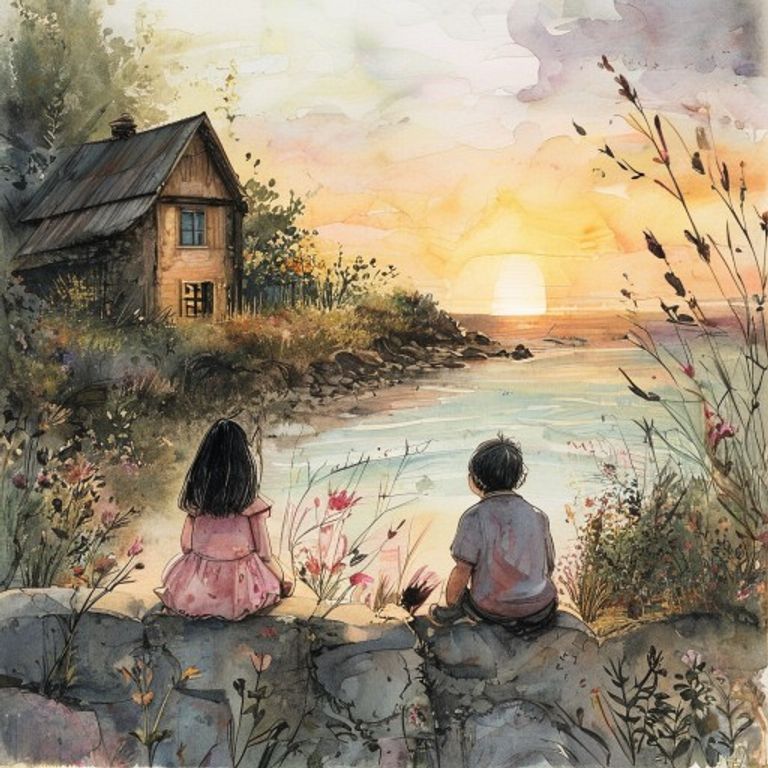
Every day, she sat on the low wall between their houses, just outside his fence. She did not knock. She did not call out. She simply sat there, reading her book, or drawing, or watching the birds. At first, Old Man Tiber ignored her. He walked past without looking. He slammed his door. He muttered under his breath.
But Sora kept coming.
On the third day, he stopped and looked at her. "What do you want?" he demanded, his voice like gravel.
"Nothing," Sora said, not looking up from her book. "I just like sitting here. The light is good."
He stared at her for a long moment. Then he went inside, slamming the door.
On the fifth day, he said, "You're going to get cold, sitting there."
"I'm okay," Sora said. "I have a sweater."
He muttered something and went inside.
On the seventh day, he came out with two cups of tea. He did not look at her. He simply set one cup on the wall, next to her, and took his own to his porch, where he sat, staring at the ocean.
Sora picked up the tea. It was hot, and sweet, and tasted like something precious. She said, "Thank you."
He did not respond. But he did not go inside either.
The gifts continued, but now they were not anonymous. Now they were conversations. Small ones, halting ones, carried on the wind between two people who were learning to see each other.
Old Man Tiber told her about his son, who lived in a city far away, who called once a month, who sent money but not time. He told her about his wife, who had loved gardening, who had turned their wild yard into a paradise. He told her about his fear, that everyone in the village had forgotten him, that he had become a ghost before he had died.
Sora told him about her old home, her maple tree, her friends who felt farther away every day. She told him about feeling invisible. She told him about the box in the attic, about the note that said, "For someone who needs a smile."
"Kindness is strange," Old Man Tiber said one day, as they watched the sun set over the ocean, painting the water gold and pink. "You give it away, and somehow you end up with more."
Sora smiled. "That's because kindness is not a thing you can run out of. The more you give, the more you have."
He looked at her, really looked at her, and for the first time since she had met him, he smiled back. It was a small smile, rusty from disuse, but it was real. "Who taught you that?"
"A box in the attic," Sora said. "And a librarian. And a baker. And a girl with a beautiful smile. And an old man who makes good tea."
Word spread through Saltmere about the girl who left gifts. No one knew it was Sora, not at first. But people started finding notes, drawings, small treasures left on doorsteps and desks and windowsills. A teacher found a jar of wildflowers on her car. A fisherman found a drawing of his boat, carefully rendered. A mother found a hand-sewn pouch of lavender for her sick child.
And slowly, the village changed. Not in big ways. In small ways. In the way Mrs. Calloway started reading stories aloud to children on Saturday mornings. In the way Mr. Finch started a bread-sharing tradition, leaving loaves on doorsteps for anyone who needed them. In the way Mei started a club for shy kids, a place where they could be quiet together. In the way Old Man Tiber started tending his garden again, planting flowers his wife had loved, opening his gate to let children see the butterflies.
The village became warmer. Not because the weather changed, but because the people did. They started seeing each other. They started being kind.
And Sora, who had once felt invisible, found that she was seen. Not because she demanded it. Not because she performed. But because she had given, quietly and consistently, without expectation of return.
On the last day of summer, Sora opened the wooden box again. She added her own note, written in her best handwriting: "Kindness is not a gift you give once. It is a garden you tend every day. Plant something beautiful. Watch it grow. From a friend."
She placed the box back in the attic, behind the trunk, waiting for the next person who needed to find it. Waiting for the next invisible child who would discover that the way to be seen is not to shout, but to reach out. Not to demand, but to give. Not to wait for kindness, but to create it.
As she walked down the attic stairs, she passed Old Man Tiber's house. He was in the garden, watering the flowers, his face turned to the sun. He saw her and waved, a small gesture, but full of warmth.
Sora waved back, and she thought about the box, about the notes, about the cookies and the bookmarks and the tea. She thought about how kindness had started with a stranger she would never meet, someone who had left a box in an attic for someone who needed it. She thought about how that kindness had traveled through time, through her, through the village, growing stronger with every hand that touched it.
She understood now. Kindness was not a single act. It was a chain, unbroken, stretching back through generations, forward through time. It was the most powerful magic in the world, because it multiplied. It grew. It lasted.
And all it took was one person, one small act, one moment of reaching out, to keep the chain alive.
Moral of the Story: Kindness is not a gift you give once. It is a garden you tend every day. Sora felt invisible when she moved to Saltmere. She felt alone, unseen, forgotten. But instead of waiting for someone to notice her, she decided to notice others. She left small gifts, anonymous notes, tiny acts of care. And in doing so, she discovered the secret of kindness: it connects. It builds bridges. It turns strangers into friends, loneliness into belonging, invisibility into being seen. When Sora reached out to Mrs. Calloway, the librarian smiled more. When she baked cookies for Mr. Finch, the baker started sharing his bread. When she left a bookmark for Mei, a shy girl found a friend. When she sat outside Old Man Tiber's fence, day after day, a lonely man remembered that he was still part of the world. Kindness is not about grand gestures. It is about small, consistent acts of care. A note. A cookie. A conversation. A presence. These small things ripple outward, touching lives in ways we cannot predict or control. The beauty of kindness is that it multiplies. When you give it away, you do not lose it. You create more of it. The village of Saltmere became warmer not because of one big change, but because of many small ones. Because one girl decided that being invisible was not a reason to hide, but a reason to reach out. Because she understood that the way to be seen is not to demand attention, but to give it. That the way to find friends is not to wait for them, but to be one. That the way to heal loneliness is not to wait for someone to notice you, but to notice someone else. Kindness is the most powerful force in the world because it transforms not just the receiver, but the giver. Sora did not just change Saltmere. She changed herself. She became braver, kinder, more connected. She became someone who could see others, because she had practiced seeing. She became someone who could love others, because she had practiced loving. And in the end, she found what she had been looking for all along: a place to belong. Not because she demanded it. But because she created it, one small act of kindness at a time.
Age Range: 4-8 years | Reading Time: ~10 minutes | Core Value: Kindness