The Moonbloom Gardener: A Story About Patience
The Moonbloom Gardener: A Story About Patience
In the village of Stillwater, where the river moved so slowly that it seemed to be thinking, there lived a girl named Mira who was nine years old, with hair the color of dark earth and eyes like spring leaves, bright and eager. She was quick in everything she did—quick to speak, quick to run, quick to want. When she was hungry, she wanted food immediately. When she was curious, she wanted answers immediately. When she wished for something, she wanted it to appear immediately, as if the world were a store and she could simply point and receive.
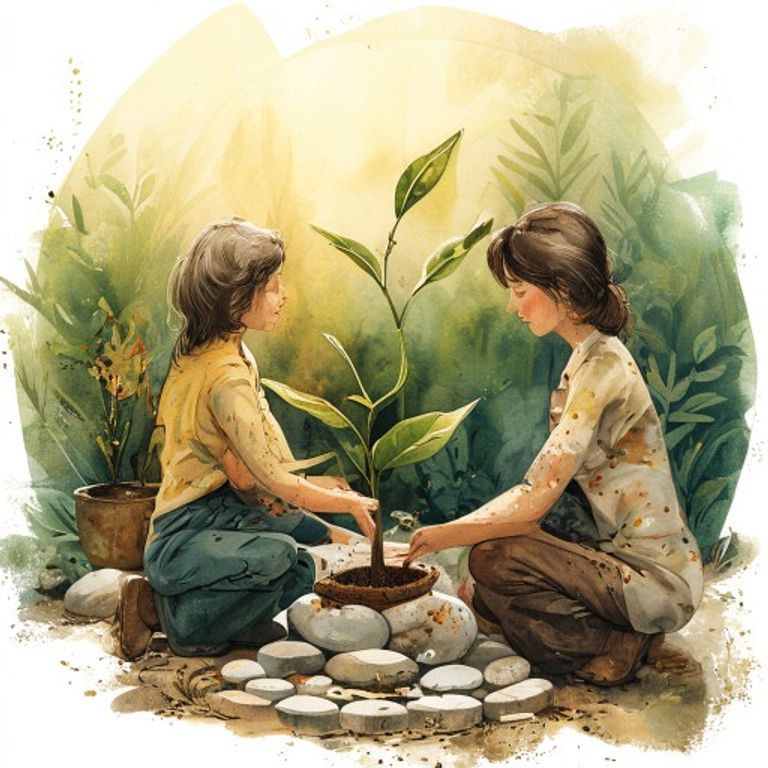
Her grandmother, Nana Elara, was the opposite. She was the keeper of the village gardens, a woman whose hands were permanently stained with soil, whose movements were slow and deliberate, whose words came carefully, like drops of honey from a jar. She moved at the speed of growing things, which is to say, she moved at the speed of patience.
"Nana," Mira would say, tugging at her grandmother's sleeve, "when will the tomatoes be ripe?"
"When they are ready," Nana Elara would reply, never looking up from her weeding.
"But when is that?"
"When the sun has kissed them enough. When the rain has fed them enough. When the earth has held them enough." Nana Elara would smile, her weathered face crinkling. "Plants do not follow clocks, little one. They follow their own time. And good things always take time."
Mira did not understand this. She thought time was an enemy, a wall between her and what she wanted. She had not yet learned that patience was not passive waiting. It was active trust.
The Moonbloom was the rarest flower in the world.
It grew in only one place: the center of Nana Elara's oldest garden, in a circle of white stones that had been placed there by Mira's great-great-grandmother. The Moonbloom looked unremarkable most of the time—a slender green stem, a few modest leaves, a bud that stayed tightly closed, year after year, as if keeping a secret.
But once every ten years, on the night of the blue moon—the second full moon in a single month—the Moonbloom would open.
And when it opened, it was said to be the most beautiful sight in the world.
The petals were silver-white, like moonlight made solid. They glowed with a soft, inner light that turned the garden into a place of dreams. The scent was unlike anything else—sweet but not cloying, fresh but not sharp, a smell that made people remember their happiest moments, their deepest loves, their truest selves.
Mira had heard stories of the Moonbloom since she was a baby. Her mother had seen it open once, when she was Mira's age. Her grandmother had seen it three times in her long life. The village elders spoke of it in whispers, as if it were a holy thing, a gift from the earth itself.
Mira wanted to see it more than she had ever wanted anything.
"When will it bloom again?" she asked Nana Elara, every day, sometimes several times a day.
"In ten years," her grandmother would say. "The last blooming was two years ago. So you have eight years to wait."
"Eight years!" Mira would cry, throwing her hands up. "That's forever! I'll be old by then! I'll be seventeen!"
Nana Elara would laugh, a sound like dry leaves rustling. "Seventeen is not old, little one. And eight years is not forever. It is simply... time."
But to Mira, it was forever. She could not imagine waiting eight years for anything. She wanted to see the Moonbloom now. She wanted to smell its magical scent now. She wanted to glow in its silver light now.
She tried everything to make it bloom faster.
She watered it every hour, until Nana Elara stopped her, explaining that too much water would drown the roots. She sang to it, day and night, until her voice grew hoarse. She tried to pry the bud open with her fingers, gently at first, then more forcefully, until Nana Elara caught her and scolded her, explaining that forcing the bud would kill the flower forever.
"You cannot rush a Moonbloom," Nana Elara said firmly, her usually gentle eyes hard. "You cannot rush anything that is truly worth having. The Moonbloom blooms when it is ready. Not when you are ready. That is the lesson of patience."
Mira sulked. She did not want lessons. She wanted flowers.
The years passed, as years do, whether we wish them to or not.
Mira grew. She grew from nine to ten, from ten to eleven, from eleven to twelve. She grew taller, her dark earth hair growing longer, her spring leaf eyes learning to see more than just what she wanted.
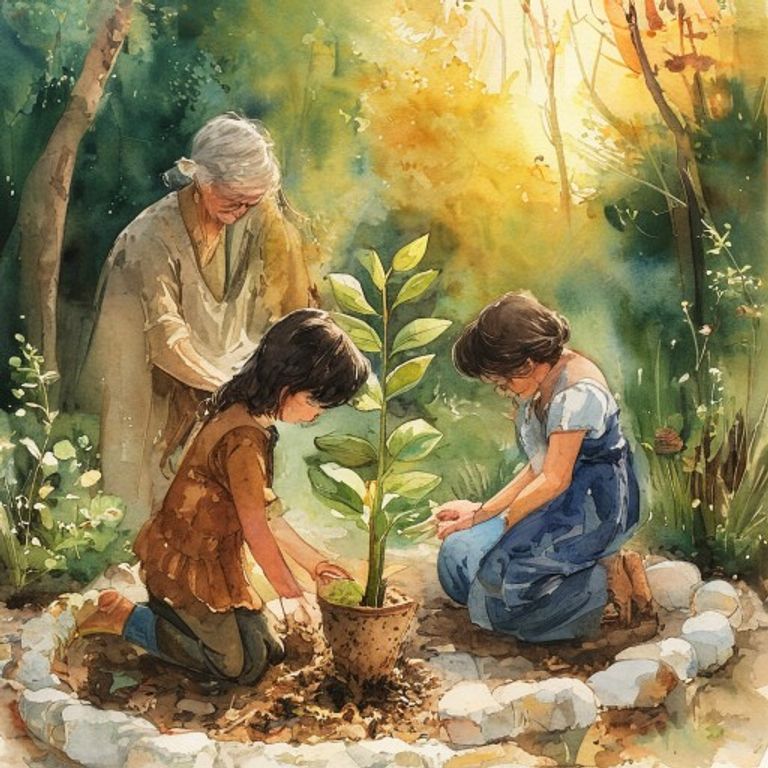
She still visited the Moonbloom every day. At first, she visited to complain. Then she visited to plead. Then she visited simply to sit, because Nana Elara had taught her that sitting quietly was a kind of prayer.
"The flower is not just waiting," Nana Elara explained, as they weeded the garden together. "It is working. Every day, it grows stronger. Every day, its roots go deeper. Every day, it prepares for the moment when it will open. Waiting is not empty. Waiting is full."
Mira began to understand. She began to notice things she had not noticed before—the way the Moonbloom's leaves turned toward the sun, the way its stem thickened slowly, almost imperceptibly, the way the bud, still closed, seemed to hum with potential energy, like a held breath.
She began to notice other things too. The way the garden changed with the seasons. The way the tomatoes went from green to gold. The way the beans climbed the poles, inch by inch, day by day. The way the apple tree in the corner produced fruit only after five years of growing, and how that fruit, when it finally came, was sweeter than anything Mira had ever tasted.
She began to understand that patience was not passive. It was not sitting still, doing nothing, waiting for the world to happen to you. Patience was active. It was showing up every day. It was tending. It was trusting. It was believing that something was happening even when you could not see it.
"But how do you know it's working?" Mira asked one afternoon, as she and Nana Elara sat by the Moonbloom, sharing bread and cheese.
"You don't," Nana Elara said simply. "That is the trust part. You do the work, and you trust the process. You cannot see the roots growing underground. You cannot see the flower preparing to open. But you trust that they are. And that trust is patience."
By the time Mira was sixteen, she was a different person.
She was still quick, still eager, still full of energy. But she had learned to channel that energy. She had learned that some things could not be rushed. She had learned that the journey was as important as the destination, that the waiting was as valuable as the reward.
She had become Nana Elara's apprentice, learning the ways of the garden. She knew which plants needed sun and which needed shade. She knew when to water and when to let the earth rest. She knew that compost took months to become soil, that fruit trees took years to bear fruit, that some seeds would not sprout at all, and that was okay too.
She had learned, most importantly, that patience was not about getting what you wanted. It was about becoming someone who could appreciate what you wanted when it finally came.
"The person who rushes to the flower," Nana Elara told her, "sees only the flower. The person who waits for the flower sees the garden. They see the soil, the rain, the sun, the years of care. They see everything that made the flower possible. And so when the flower finally opens, they do not just see beauty. They see meaning."
Mira understood this now. She understood that the eight years of waiting had not been empty. They had been full of learning, of growing, of becoming. She was not the same girl who had tugged at her grandmother's sleeve, demanding immediate tomatoes. She was someone who understood that good things take time, and that the time they take is part of what makes them good.
The blue moon came on a warm night in late summer.
Mira was seventeen. She had waited eight years.
The village gathered in Nana Elara's garden, sitting on blankets, speaking in soft voices, watching the white stone circle where the Moonbloom stood. The bud was larger than it had ever been, swollen with potential, trembling slightly in the evening breeze.
Mira sat closest, her dark earth hair loose around her shoulders, her spring leaf eyes fixed on the flower. She was not impatient. She was not demanding. She was simply present, simply watching, simply grateful for the moment.
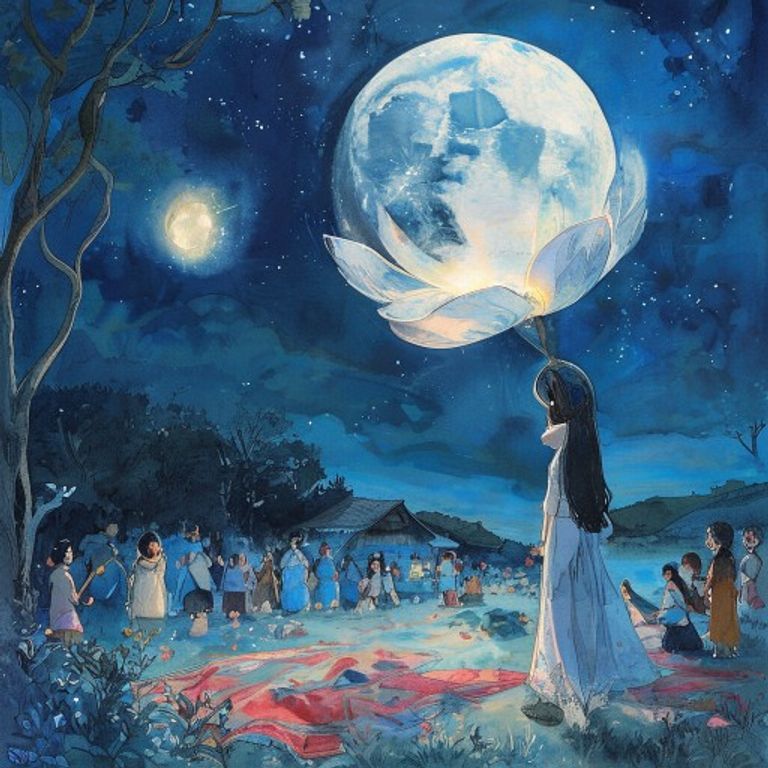
The moon rose, silver and full, the second full moon of the month. Its light bathed the garden, turning everything blue and white and magical.
And then, slowly, so slowly that if you blinked you might miss it, the Moonbloom began to open.
The petals unfurled like a dancer stretching after a long sleep. They were silver-white, just as the stories had promised, glowing with an inner light that seemed to come from the flower itself. The scent filled the garden—sweet, fresh, a smell that made Mira remember her mother's lullabies, her father's laughter, Nana Elara's gentle hands in the soil.
The villagers gasped. Some wept. Some simply sat in silence, overwhelmed by the beauty.
But Mira did not cry. She smiled. She smiled because she understood, finally, why the Moonbloom made them wait. It did not make them wait to be cruel. It made them wait to teach them. To teach them that the best things in life cannot be rushed. That they must be earned, not with money or force, but with time. With trust. With patience.
She reached out and touched a petal. It was soft, impossibly soft, like the wing of a butterfly or the cheek of a newborn. And it was warm, warmer than it should be, as if the flower had stored the heat of eight years of sun.
"Thank you," she whispered. Not to the flower, but to the waiting. To the years. To the lessons. To patience itself.
Nana Elara came and sat beside her, taking her hand. "You are not the same girl who wanted to pry the bud open," she said softly.
"No," Mira agreed. "I am not."
"What did patience teach you?"
Mira thought. "It taught me that the flower is not the point. The point is the garden. The point is the growing. The point is who I became while I waited."
Nana Elara squeezed her hand. "Yes. That is the secret of patience. It does not just give you what you want. It gives you what you need."
The Moonbloom stayed open for one night only. By morning, the petals had closed, and the flower returned to its modest green stem, its secret kept, its next blooming ten years away.
But Mira carried the memory with her forever. Not just the memory of the flower, but the memory of the waiting. Of the eight years of showing up, of tending, of trusting, of growing.
Years later, when Mira was old, older than Nana Elara had been, she became the keeper of the gardens. She taught children the way Nana Elara had taught her. She taught them that tomatoes do not follow clocks. That plants grow at their own speed. That forcing a bud would kill the flower.
And every ten years, when the blue moon rose and the Moonbloom opened, she would sit with the children and watch, and she would tell them: "This flower made me wait eight years. And those eight years were the greatest gift I ever received. Because they taught me that patience is not the time before the flower. Patience is the flower itself."
And the children would look at her, not understanding yet, but one day they would. One day, they would learn that the best things in life take time. That trust is stronger than force. That waiting, when done with an open heart, is not empty. It is full. It is growing. It is becoming.
And one day, they too would touch a Moonbloom petal, and they would understand that the wait was worth it. Not because the flower was beautiful, but because they had become beautiful in the waiting.
Moral of the Story: Patience is not passive waiting. It is not sitting still, doing nothing, hoping the world will happen to you. Patience is active. It is showing up every day. It is tending. It is trusting. It is believing that something is happening even when you cannot see it. Mira wanted the Moonbloom to open immediately. She tried to force it, to rush it, to make it happen on her schedule. But Nana Elara taught her that good things cannot be rushed. The Moonbloom bloomed once every ten years, not to be cruel, but to teach. To teach that the best things in life take time. That they must be earned, not with force, but with trust. That the waiting is as valuable as the reward. Through eight years of waiting, Mira did not just wait for a flower. She grew. She learned. She became someone who could appreciate the flower when it finally came. She learned that patience is not about getting what you want. It is about becoming someone who can appreciate what you want when it finally arrives. The person who rushes to the flower sees only the flower. The person who waits for the flower sees the garden. They see the soil, the rain, the sun, the years of care. They see everything that made the flower possible. And so when the flower finally opens, they do not just see beauty. They see meaning. Patience is the greatest gift we can give ourselves. It teaches us to trust. It teaches us to tend. It teaches us that we are growing, even when we cannot see it. And when the thing we have waited for finally arrives, we do not just receive it. We receive it as someone who has earned it. Someone who has become worthy of it. That is the magic of patience. It does not just give us what we want. It gives us what we need.
Age Range: 4-8 years | Reading Time: ~10 minutes | Core Value: Patience