The Otter Who Made the River Sing: A Story About Creativity
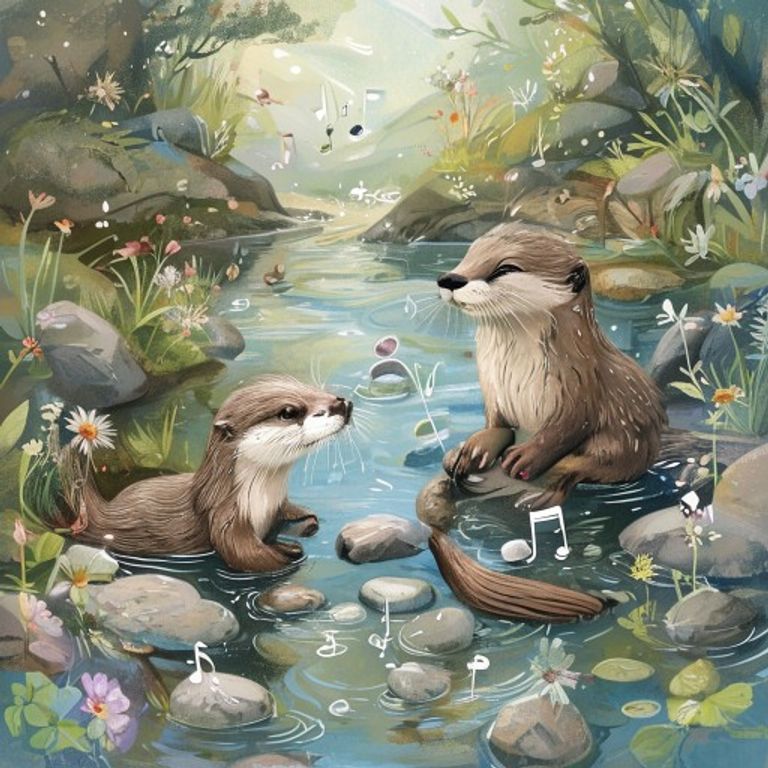
In the Valley of Silver Streams, where rivers sang lullabies to the stones and willows dipped their hair into the water like ladies at a mirror, there lived a young otter named Ripple. She was small for her age, with fur the color of wet sand and eyes like polished river pebbles. While the other otters spent their days sliding down mud banks and chasing minnows, Ripple had discovered something that made her heart beat faster than any game.
She had found that stones could sing.
Not with voices, of course. Stones do not have throats or lungs or tongues. But Ripple had noticed, quite by accident one drizzly morning, that when she placed certain stones in the shallow water of the Singing Brook, the current flowing over them made sounds. Not random clatters or dull thuds. Musical sounds. Notes. Tones. A flat river stone might hum a low, steady drone. A round pebble might plink a bright, clear ping. A jagged rock might create a bubbling, rolling rhythm, like tiny drums.
At first, Ripple thought she was imagining it. She was young, after all, and young creatures often hear things that are not there. But when she moved the flat stone closer to the round pebble, the drone and the ping blended into something new. Something like... harmony.
She spent weeks collecting stones. Not pretty stones. Not special stones. Just ordinary stones, the kind that every otter swam past a thousand times without noticing. She arranged them in the brook in different patterns—circles, spirals, lines, clusters. She moved them a whisker-width left, a tail-length right, and listened to how the music changed. She discovered that the water's speed mattered. The stone's angle mattered. The depth of the water mattered. Everything mattered.
And slowly, painstakingly, Ripple began to compose.
The Quiet Music
Ripple's mother, a practical otter named Sable, did not understand her daughter's obsession. "Stones are for building dams," she would say, nudging Ripple away from her arrangements. "Or for cracking shells. They are not for... whatever it is you are doing."
Ripple's brother, Splash, was worse. He was the fastest swimmer in the valley, the best fisher, the most popular otter in their holt. He would swim past Ripple's stone arrangements and deliberately knock them over with his powerful tail, laughing as the notes dissolved into chaos. "That's not music," he would sneer. "That's just water making noise. You're playing with rocks like a kit. Grow up."
The other otters agreed. They did not say it to Ripple's face—otters are not cruel, exactly—but she saw it in their whiskers. The way they glanced at her stone circles and then quickly away, as if embarrassed for her. The way they whispered when she passed. The way they invited Splash to their games but never Ripple.
So Ripple worked alone. She found a quiet bend in the Singing Brook, far from the holt, where the willows grew thick and the water ran clear and shallow. There, she built her stone arrangements in secret. She composed lullabies for the fish, who would gather in curious clusters to listen. She composed dances for the dragonflies, who would hover above the water in synchronized spirals, their wings catching the mist. She composed songs for herself, on the days when the loneliness felt heavier than water.
And she dreamed.
She dreamed of something she had never told anyone. She dreamed of building not just a song, but a symphony. Not in a quiet bend of the brook, but in the Great River itself—the wide, powerful river that ran through the heart of the valley, where all the streams and brooks and creeks came together. She dreamed of arranging stones across the riverbed so that the entire current, from bank to bank, became one enormous instrument. She dreamed of music so vast and beautiful that it would rise from the water like mist and wrap around the whole valley.
It was impossible, of course. The Great River was deep and swift and dangerous. No otter could place stones precisely in that current. No otter could hold still long enough to hear if the notes were right. No otter could breathe underwater for the hours it would take to build such a thing.
But Ripple dreamed it anyway.
The Drought
It was the hottest summer anyone could remember.
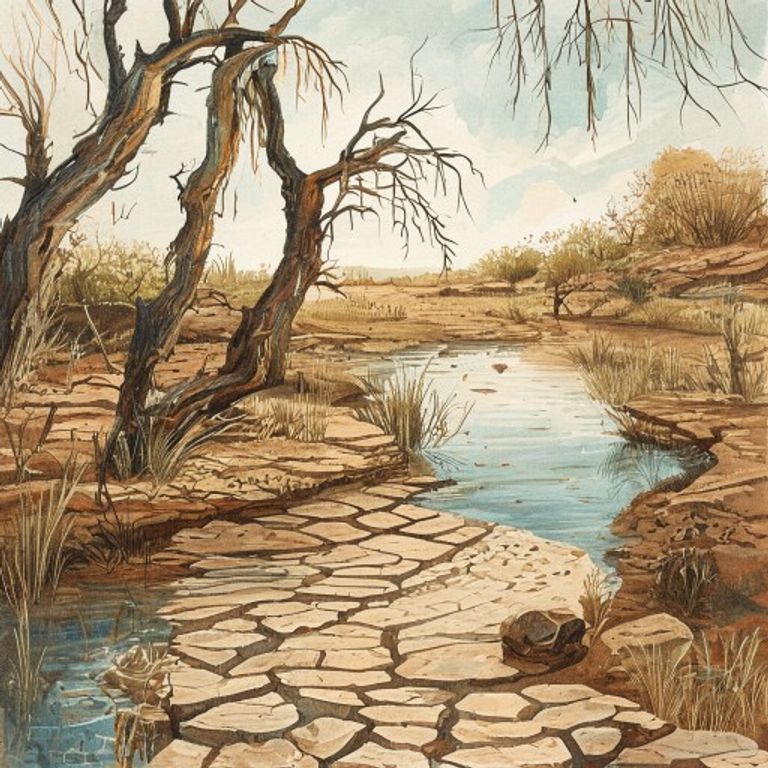
The Valley of Silver Streams had always been green and wet, a place of endless water and eternal spring. But that summer, the sun burned like a furnace. The smaller brooks dried up first—their stones cracking in the heat, their fish gasping in shrinking pools. Then the creeks slowed to trickles, then to mud, then to dust. The willows drooped. The flowers wilted. The animals grew quiet, conserving their energy, waiting for rain that did not come.
And then the Great River began to shrink.
It happened so gradually that at first, no one noticed. The water was simply... lower. The banks that had been hidden for decades emerged, cracked and pale, like old bones. The current, which had roared with the voice of a giant, softened to a murmur, then to a whisper. The deepest parts of the river, where the ancient fish lived and the secret currents swirled, grew shallow enough to wade through.
The otters were frightened. Water was their life, their home, their everything. Without the river, they were not otters. They were just animals, hot and helpless and afraid.
Sable called a meeting of the holt. "We must leave," she said, her voice trembling. "The river is dying. We must find a new home, before it is too late."
The otters murmured their agreement. They were practical creatures. They did not fight the impossible. When the river dried, otters moved. It was the way of things.
But Ripple stood up. She was small, and young, and her voice was not loud. But when she spoke, the otters fell silent. They had never heard her speak at a meeting before.
"What if," she said, her voice steady despite her pounding heart, "the river is not dying? What if it is just... tired? What if it needs to be reminded why it flows?"
Splash laughed. "Reminded? Rivers don't have ears, little sister. They don't need songs. They need rain."
"But what if," Ripple persisted, "what if the river is connected to everything? What if the water that rises as mist in the morning becomes the clouds that become the rain? What if... what if music could call the rain?"
The otters stared at her. Then they laughed. Not unkindly, but honestly. It was a ridiculous idea. Music calling rain? A little otter's stone songs bringing storms? It was the kind of thing kits believed, before they learned how the world really worked.
Only Sable did not laugh. She looked at her daughter—really looked at her—for the first time in months. She saw the stones in Ripple's paws, worn smooth from endless arranging. She saw the calluses on Ripple's pads, the water-wrinkled skin, the focused, faraway look in her daughter's eyes. She saw not a kit playing with rocks, but an artist with a vision.
"Show me," Sable said quietly.
The Great Arrangement
The river was so low now that Ripple could walk across it in places. The current, which had once been a roaring giant, was now a gentle murmur. The riverbed, which had been hidden for generations, lay exposed—an entire world of stones that no living otter had ever seen.
Ripple worked for three days and three nights. She did not sleep. She did not eat, except what Sable brought her. She arranged stones in the riverbed with a precision that amazed even herself. Flat stones for drones. Round pebbles for pings. Jagged rocks for rhythms. She placed them in spirals and circles and waves. She created patterns that flowed with the current, patterns that redirected the water into new channels, new speeds, new depths.
And the river began to sing.
At first, it was just a note. A single, clear tone that rose from the water like a bubble of air. Then another. Then another. The notes blended into chords, the chords into melodies, the melodies into something that had never existed before.
The music was not loud. The drought had stolen the river's voice. But it was pure. It was beautiful. It was the sound of water remembering that it was water, of stones remembering that they were instruments, of the valley remembering that it was alive.
The otters came to watch. At first, just Sable. Then Splash, drawn by curiosity he could not name. Then the others, one by one, until the entire holt lined the banks of the Great River, listening to the song that Ripple had composed from stone and water and desperate hope.
And then something happened that no one expected.
The mist began to rise.
It started at the edges of Ripple's stone arrangement, thin tendrils of water vapor climbing into the air like the breath of a sleeping giant. As the music played, the mist grew thicker, rising higher, wrapping around the willows, climbing the hillsides, reaching toward the cloudless sky.
"It's working," Ripple whispered, her voice breaking. "It's actually working."
The mist rose all that day and into the night. The otters did not sleep. They sat on the banks and listened and watched as the valley filled with fog, as the stars disappeared behind a blanket of white, as the air grew thick and heavy with moisture.
And at dawn, it began to rain.
Not a storm. Not a deluge. A gentle, steady rain that fell like a blessing, soaking the cracked earth, filling the dry brooks, swelling the shrunken creeks. The river, hearing the rain on its surface, seemed to sigh with relief. Its current strengthened. Its voice deepened. Its waters rose.
Ripple stood in the rain, her stone arrangement singing around her, and wept. Not from sadness. From wonder. From the overwhelming, impossible, beautiful truth that creativity was not just about making things. It was about believing in things that did not yet exist. It was about arranging stones in a dying river and trusting that the music would call the rain.
The Valley Remembers
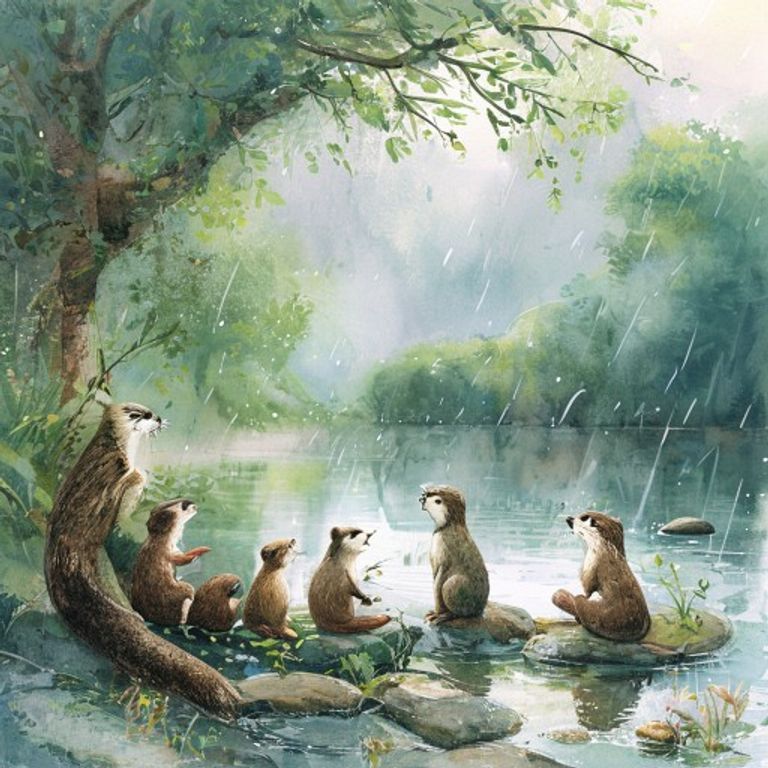
The Valley of Silver Streams recovered. The brooks flowed again. The creeks sang. The Great River returned to its full, roaring glory. And Ripple's stone arrangement, now hidden beneath the deeper water, continued to sing—a secret song that only those who listened carefully could hear.
But the valley was changed. The otters no longer saw stones as just stones. They saw them as possibilities. The beavers began building dams with intentional curves, creating waterfalls that made their own music. The herons arranged reeds in patterns that caught the wind like flutes. The frogs, inspired by Ripple, discovered that different-sized lily pads made different sounds when raindrops struck them, and they began composing their own rainy-day symphonies.
And Ripple? Ripple became the Valley's Composer. Not because she was the most talented musician—though she was talented. Not because she was the most intelligent otter—though she was clever. She became the Composer because she had proven something that the valley had forgotten: that creativity is not about having the right tools or the right materials or the right approval. It is about having the courage to arrange your stones, even when everyone says they are just rocks.
Splash, who had once knocked over her arrangements, became her first student. He was not musical—his paws were too big, his patience too small—but he could swim faster than any otter in the valley, and he used that speed to carry Ripple to distant streams, where she discovered new stones with new voices. Together, they expanded the Great Arrangement until it stretched across the entire valley, a secret symphony that played eternally beneath the water, calling the mist, feeding the rain, keeping the valley green.
And on quiet evenings, when the sun set and the mist rose and the stones began to sing, Ripple would sit on the bank with her mother and listen. Sable would rest her head on Ripple's shoulder and say, "I used to think stones were just stones."
And Ripple would smile and say, "They are. Until someone with the right eyes arranges them."
The Moral of the Story: Creativity is not a rare gift that only special people have. It is not about being artistic, or talented, or clever. Creativity is the courage to look at ordinary things—stones, water, silence—and see what they could become. It is the willingness to arrange your stones even when everyone says they are just rocks. It is the stubborn, beautiful belief that the world is not finished yet, and that your way of seeing it matters. Ripple did not have special stones. She did not have special tools. She did not even have special support. What she had was a vision that no one else could see, and the persistence to build it anyway. That is creativity. Not the vision itself. The persistence. The courage to keep arranging stones in a dying river, even when the rain feels like it will never come. Because sometimes—just sometimes—the music you compose from hope is exactly what the world needs to remember how to sing.