
The Boy Who Heard Silence: A Story About Compassion
The Boy Who Heard Silence: A Story About Compassion
In the city of Bellhaven, where the streets rang with the music of a thousand bells and the air smelled of cinnamon and sea salt, there lived a boy named Samir who had a peculiar gift: he could hear the silence between sounds.
Not the silence of empty rooms or sleeping houses. Samir could hear the silence inside people. The quiet spaces where words should be but weren't. The hush between a heart's beats when it was too tired to sing. The stillness that settled over a soul like frost when it had forgotten how to be warm.
He was eight years old, small for his age, with dark curls that never stayed combed and eyes the color of strong tea. His father was a bell-maker, one of the finest in Bellhaven, and his mother was a weaver who made tapestries so detailed that birds sometimes tried to land on them. They were kind people, hardworking, loving, but they did not understand Samir's gift.
"You imagine things," his father would say, when Samir told him that the baker's wife had a silence like a frozen lake.
"You are too sensitive," his mother would say, when Samir cried because the old man who sold chestnuts had a silence like a door that wouldn't close.
Samir could not explain what he felt. He only knew that some silences were heavy, and some were hollow, and some were screaming so loudly that they made his bones ache.
The trouble began—or perhaps the grace began—on a Tuesday in autumn, when the chestnut seller stopped coming to the market.
His name was Mr. Elias. He had sold chestnuts from the same corner for forty years, his cart parked beneath the great bronze bell that rang the noon hour. He was eighty years old, bent like a question mark, with hands that shook as he scooped the hot nuts into paper cones. But his smile was steady, and his silence was not frightening. It was soft, like a well-worn blanket, like a lullaby half-remembered.
Then one Tuesday, he was not there.
The corner was empty. The cart was gone. The silence that remained was different—not soft, but sharp. Like a bell that had cracked.
Samir felt it immediately. He felt the sharp silence in his chest like a splinter of ice. He pulled his mother's hand. "Something is wrong," he said.
"Perhaps he is sick," his mother said. "Old people get sick."
Samir shook his head. The silence was wrong. It was not the silence of illness. It was the silence of someone who had fallen and could not get up.
That night, while his parents slept, Samir slipped out of the house. He knew where Mr. Elias lived—a small room above the chandlery, at the end of the Street of Seven Bells. He had never been there, but he had heard Mr. Elias mention it once, in a voice that carried its own particular silence.
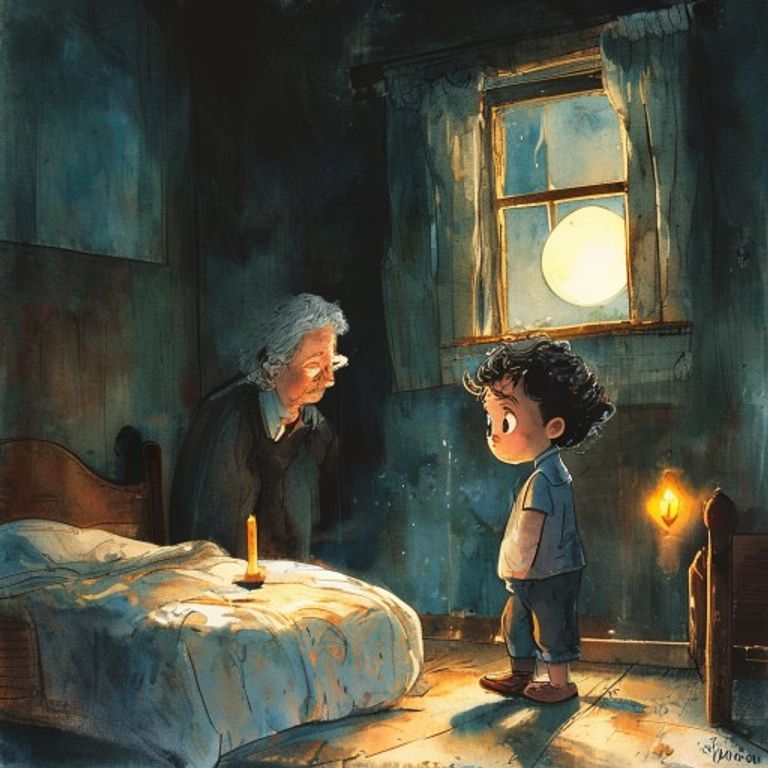
The streets of Bellhaven at night were different from the daytime. The bells were quiet. The shops were dark. The only sounds were the occasional cat and the wind moving through the narrow lanes like breath through a flute.
Samir found the chandlery. He found the stairs. He climbed them, his heart beating like a small bird against his ribs.
The door to Mr. Elias's room was closed. Samir knocked. No answer. He knocked again, louder. Still nothing. He tried the handle. It was unlocked.
The room was dark and smelled of medicine and old dust. In the corner, on a narrow bed, Mr. Elias lay. His eyes were closed. His breathing was shallow, each breath a small struggle, like a fish trying to swim upstream.
Samir rushed to him. "Mr. Elias," he whispered. "Mr. Elias, wake up."
The old man opened his eyes. They were clouded, confused. "Who...?"
"Samir. From the market. The boy who always buys chestnuts."
Mr. Elias focused on him, recognition dawning slowly. "Samir," he said, his voice a rasp. "Why are you here?"
"I heard your silence," Samir said. "It was sharp. Like something broken."
Mr. Elias almost smiled. "You always were a strange child." He tried to sit up, failed, fell back against the pillow. "I fell," he said. "Three days ago. I hit my head. I have been... unable to move properly. Unable to... to get help."
Samir looked around the room. There was no water by the bed. No food. The old man had been lying there for three days, unable to reach the door, unable to call for help, his silence growing sharper and sharper as the world forgot him.
"I'll get help," Samir said. "I'll get my father. I'll get a doctor."
"Wait," Mr. Elias whispered. He reached out, his trembling hand finding Samir's small one. "Before you go. Tell me... tell me about the bells."
"The bells?"
"I have not heard them. Three days. No bells. I miss them."
Samir understood. The bells were the heartbeat of Bellhaven. Without them, the city was just stone and silence.
"The great bronze bell rang noon today," Samir said. "It was a clear day, so the sound carried far. The north bell was being tuned, so it had a wobble, like a voice that needs to clear its throat. The tiny silver bell at the chapel on the hill—someone rang it by mistake at midnight last night, and it woke up Mrs. Gerhardt's baby, and she was very angry."
Mr. Elias closed his eyes, but he was smiling. "Thank you," he said. "Now I have heard them. Through you."
Samir ran. He ran through the streets of Bellhaven, his small feet barely touching the cobblestones. He ran to his father's workshop, where the great bells hung in rows, waiting to be born. He ran to the doctor's house, where the light was still on. He ran until his lungs burned and his legs shook.
The doctor came. Samir's father came. They carried Mr. Elias down the narrow stairs on a makeshift stretcher, the old man wincing with each step but gripping Samir's hand like a lifeline.
At the hospital, they learned that Mr. Elias had a concussion and severe dehydration. Another day, the doctor said, and he might not have survived.
Samir's father was angry at first. Angry that Samir had gone out at night. Angry that he had entered a stranger's room. Angry that he had put himself in danger.
But when he saw Mr. Elias holding Samir's hand, thanking him with tears in his clouded eyes, his anger melted into something else. Something like wonder.
"How did you know?" his father asked, as they walked home in the grey light of dawn. "How did you know he was in trouble?"
"I heard his silence," Samir said. "It was sharp. Like a bell that had cracked."
His father stopped walking. He looked at his son, really looked at him, as if seeing him for the first time. "You hear silences," he said. It was not a question.
"Yes," Samir said.
"And what does my silence sound like?"
Samir hesitated. Then: "Yours is warm. Like a bell that has just been rung, still humming."
His father smiled, a rare and precious thing. "And your mother's?"
"Hers is... busy. Like a loom with many threads. But underneath, it is soft. Like wool."
His father knelt, putting his hands on Samir's shoulders. "This gift of yours," he said. "It is not imagination. It is not sensitivity. It is... I don't know what it is. But it saved a man's life tonight."
Samir nodded, tired beyond measure, but somewhere in his chest, a warmth was growing. The warmth of being understood. The warmth of being seen.
Mr. Elias recovered, slowly. He never returned to his corner by the great bronze bell—his legs were too weak, his hands too unsteady. But Samir visited him every day after school. He brought him chestnuts from the new vendor, who was kind but whose silence was ordinary, unremarkable, nothing like Mr. Elias's well-worn blanket.
More importantly, Samir brought him the sounds of the city. The bells. The gossip. The laughter of children and the arguments of merchants and the songs the chimney sweeps sang as they worked. He brought him the world, one sound at a time, filling the silence with life.
And Mr. Elias, in return, taught Samir about compassion.
"Compassion," the old man said one afternoon, as autumn turned to winter and the first snow fell on Bellhaven, "is not just feeling sorry for someone. It is hearing their silence. It is noticing when they are not making noise, and wondering why. It is seeing the frost on their heart and bringing them warmth, not because they asked, but because you noticed."
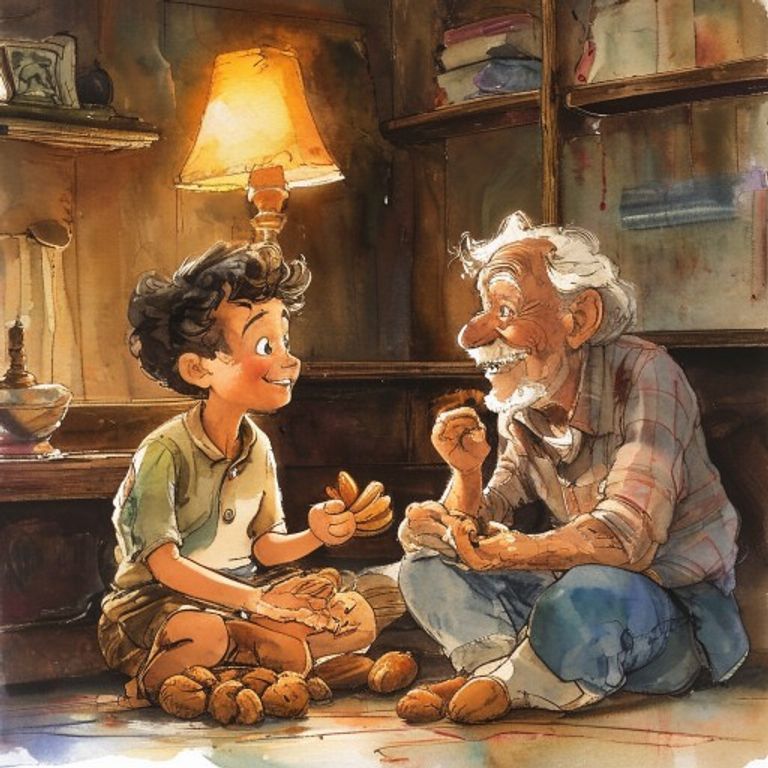
"But how do I help everyone?" Samir asked. "There are so many silences. So many sharp ones. I cannot save everyone."
"No," Mr. Elias agreed. "You cannot. And that is the hardest truth of compassion. You cannot save everyone. But you can notice everyone. You can see them. You can let them know that their silence has been heard. And sometimes, that is enough. Sometimes, being seen is the first step toward being saved."
He took Samir's hand, his own still trembling but steady in its grip. "You saved me because you heard my silence. But you also saved me because you acted. You did not just feel my pain. You walked through the dark streets to find me. You ran for help. You stayed with me while I was afraid. Compassion is not just feeling. It is doing. It is the bridge between noticing and helping."
Samir grew up with this understanding. He became known in Bellhaven as the boy who noticed. The boy who saw the old woman struggling with her groceries and carried them home for her. The boy who found the lost dog and sat with it in the rain until its owner came. The boy who saw the new girl at school sitting alone at lunch and sat with her, not saying much, just being there.
He did not become famous. He did not become rich. He became something better. He became necessary.
Years later, when Mr. Elias finally passed—peacefully, in his sleep, with Samir holding his hand—the city mourned. The great bronze bell rang a special rhythm, a pattern that Mr. Elias had loved. And at the funeral, people spoke of the old chestnut seller and his kind smile.
But Samir, now a young man with dark curls that still wouldn't stay combed, spoke of something else. He spoke of compassion. Of the silences between sounds. Of the importance of noticing.
"We are surrounded by noise," he told the crowd gathered by the great bronze bell. "Bells and voices and music and traffic. But the people who need us most are often the quietest. They are the ones who have stopped ringing. They are the ones whose silences have grown sharp. Compassion is the gift of hearing those silences. It is the choice to stop, to listen, to notice. It is not about being a hero. It is about being present. It is about seeing the person that everyone else is walking past."
He looked at the spot where Mr. Elias's cart had once stood, now occupied by a flower seller whose silence was bright and musical.
"I heard an old man's silence one autumn night. It was sharp, and it was lonely, and it was dying. And because I heard it, I acted. That is compassion. Not grand gestures. Not heroic rescues. Just the willingness to hear what others cannot, and the courage to do something about it."
The crowd was silent. But it was not the sharp silence of neglect. It was the soft silence of understanding. The warm silence of hearts opening.
And somewhere in that silence, Samir knew, Mr. Elias was listening.
Moral of the Story: Compassion is not just feeling sorry for someone. It is hearing their silence. It is noticing when they are not making noise, and wondering why. Samir had a gift—he could hear the silences inside people, the quiet spaces where pain lived. But the gift alone was not enough. What saved Mr. Elias was not Samir's ability to hear the silence, but his willingness to walk through dark streets to find it. Compassion is the bridge between noticing and helping. It is not about being a hero or saving everyone. It is about being present. It is about seeing the person that everyone else is walking past. The world is full of noise, but the people who need us most are often the quietest. They have stopped ringing. Their silences have grown sharp. And the only thing that can soften a sharp silence is the warmth of someone who noticed, who cared, who came. Compassion is not a feeling. It is an action. It is the choice to stop, to listen, to see. And in that choice, in that small, brave act of attention, lives are saved, hearts are healed, and the world becomes a little less lonely.
Age Range: 4-8 years | Reading Time: ~10 minutes | Core Value: Compassion