The Sparkle That Wasnt Mine: A Story About Honesty
In the small town of Meadowbrook, where cobblestone streets wound between houses painted in cheerful shades of butter-yellow, sky-blue, and rose-pink, there stood a schoolhouse that everyone simply called "The Nest." It was a warm, welcoming building with windows that caught the morning sun and turned them into golden squares of light.
On this particular autumn morning, the air smelled of fallen leaves and distant woodsmoke. The children of Meadowbrook tumbled through the schoolhouse doors, their voices bubbling with excitement like a pot of soup left too long on the stove. Today was special—the Autumn Festival was only three days away, and every student had been working on something wonderful to share.
Among these eager children was a girl named Clara.
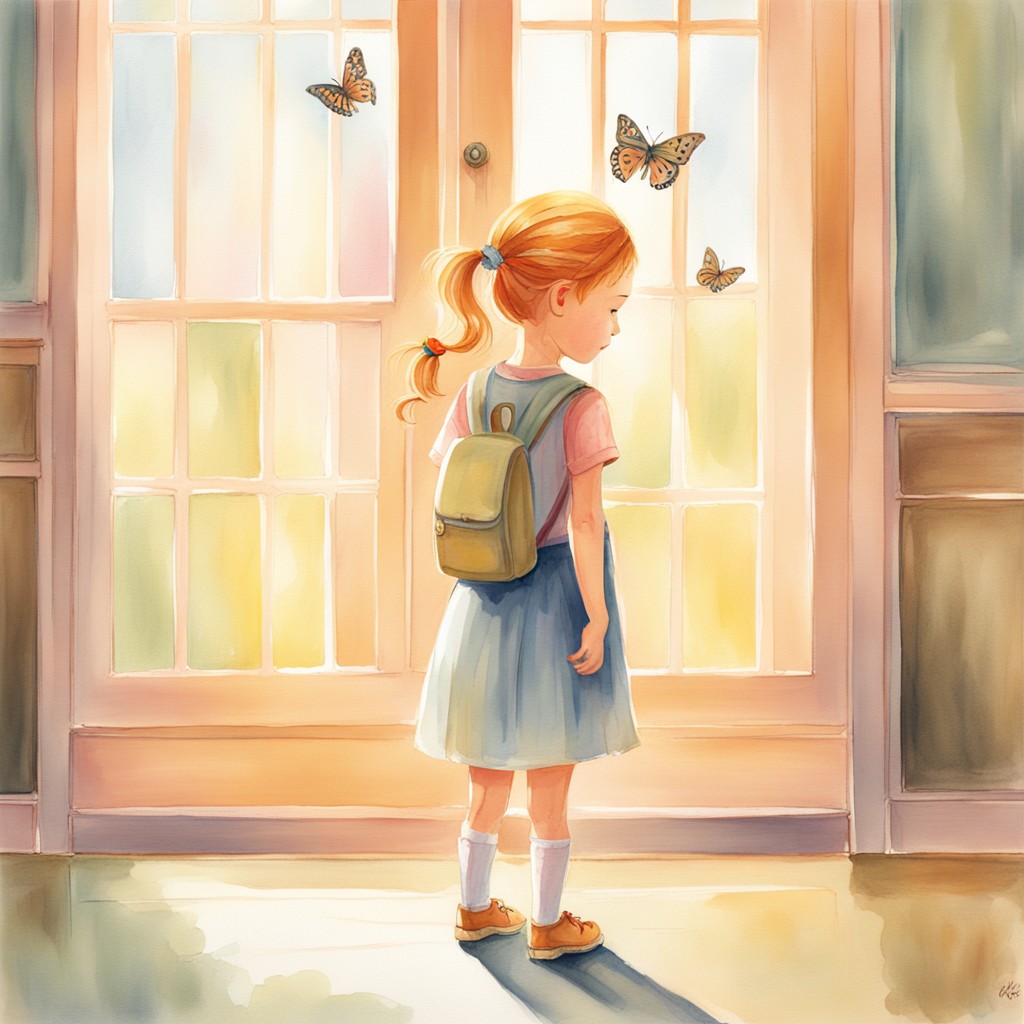
Clara was nine years old, with freckles scattered across her nose like someone had sprinkled cinnamon on warm bread, and hair the color of autumn honey that she wore in two braids tied with blue ribbons. She wasn't the fastest runner in her class, nor the best at arithmetic, nor the most talented singer. But Clara had something that made her quietly special: she noticed things that others missed.
She noticed when the school's old tabby cat, Whiskers, was limping and told the caretaker. She noticed when her friend Lila's shoelace was untied before Lila tripped. She noticed the way the morning light turned the dewdrops on the grass into tiny rainbows.
And on this particular morning, she noticed something that made her stop in the middle of the hallway.
It was lying near the trophy case, half-hidden beneath a bench where students left their muddy boots on rainy days. At first, Clara thought it was just a trick of the light—a stray sunbeam catching something shiny. But when she looked closer, her eyes grew wide.
It was a brooch. A beautiful, breathtaking brooch shaped like a dancing butterfly. Its wings were crafted from tiny blue stones that caught the light and scattered it like captured starlight. The body was a single pearl that glowed with a soft, inner warmth. Around the edge, small diamonds winked like mischievous fireflies.
Clara had never seen anything so lovely. She picked it up carefully, holding it in her small palm, and the butterfly seemed to shimmer with a life of its own.
"Wow," she breathed.
She looked around the hallway. It was empty—the other children had already gone to their classrooms. The trophy case stood silent, its shelves lined with dusty cups and ribbons won by students long graduated. The bench held only boots and forgotten scarves.
No one was watching.
Clara's heart began to beat faster. She could slip the brooch into her pocket. No one would know. It was just lying there, forgotten. Finders keepers, some might say. She could wear it to the Autumn Festival. She could pin it to her best dress—the blue one with the white collar—and everyone would think she looked like a princess.
She imagined walking through the festival, the butterfly brooch catching lantern light, her classmates gasping with admiration. "Where did you get that, Clara?" they would ask, and she would smile mysteriously and say, "It's special."
But even as she imagined this, something tugged at her heart. A small, quiet voice that sounded like her grandmother's gentle wisdom.
"The prettiest things in the world," her grandmother always said, "are only pretty if they belong to you honestly. A stolen jewel is just a heavy stone in your pocket. But an honest heart? That's worth more than all the treasure in the world."
Clara looked at the butterfly brooch again. It was beautiful, yes. But she noticed something she hadn't before—a tiny engraving on the back, so small she had to squint to read it:
"For my butterfly — E."
Someone had loved this brooch. Someone had given it as a gift, with a tender nickname and a private meaning. It wasn't just a pretty thing lying in the hallway. It was someone's treasure. Someone's memory. Someone's heart, made visible in silver and stone.
Clara closed her fingers around the brooch, but this time she didn't feel the temptation to keep it. She felt a responsibility. A treasure had been lost, and she was the one who had found it. That meant she was the one who could return it.
She turned toward the head teacher's office.
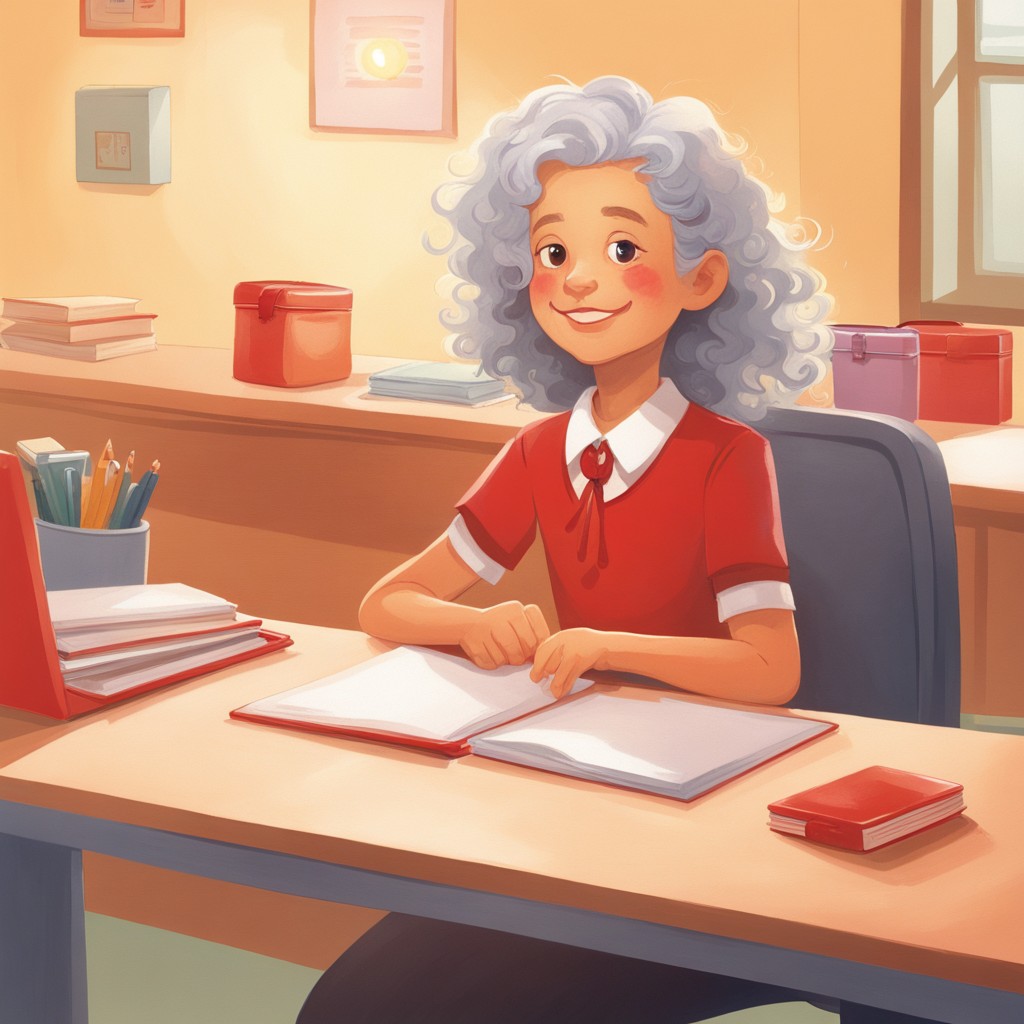
Mrs. Pemberton was sorting through papers when Clara knocked softly on the open door. The head teacher was a kind woman with silver hair she wore in a loose bun, and reading glasses that perpetually slid down her nose. She looked up and smiled.
"Clara! Come in, dear. Is everything alright?"
Clara stepped forward and opened her palm. The butterfly brooch glimmered in the morning light streaming through the office window.
"I found this in the hallway, Mrs. Pemberton. Near the trophy case. I think... I think someone lost it. It has writing on the back."
Mrs. Pemberton took the brooch gently, her eyes widening behind her glasses. She turned it over and read the engraving. Her expression changed—something flickered across her face that Clara couldn't quite read.
"Oh my," Mrs. Pemberton whispered. She looked up at Clara with eyes that seemed suddenly moist. "Do you know whose this is, Clara?"
Clara shook her head.
"It belongs to Mrs. Elara Vance," Mrs. Pemberton said softly. "She taught music here at The Nest for forty years. She retired this past summer. This brooch was a gift from her husband, Edward, on their fiftieth wedding anniversary. He passed away last winter."
Clara felt her heart clench. "She must be so sad without it."
"She is," Mrs. Pemberton said. "She came back to visit yesterday and noticed it was gone. She's been searching everywhere—her home, her car, every place she visited. She was here for the retirement committee meeting. She must have lost it then."
The head teacher reached across her desk and took Clara's hand. "You could have kept this, Clara. No one would have known. It's worth a great deal of money. More money than most people in Meadowbrook see in a year."
Clara looked at the brooch, then at Mrs. Pemberton. "But it wasn't mine, Mrs. Pemberton. It belongs to Mrs. Vance. It was a gift from her husband. Keeping it would be like... like stealing her memories."
Mrs. Pemberton smiled, and this time her eyes definitely glistened with tears. "You are a remarkable child, Clara. Do you know that?"
Clara blushed. "I just did what was right."
"And that," Mrs. Pemberton said, squeezing her hand, "is exactly what makes it remarkable."
That afternoon, something unexpected happened.
Mrs. Vance came to The Nest. She was a tall, elegant woman with white hair pinned in a soft roll, and she wore a lavender dress that smelled faintly of lavender flowers. But what Clara noticed most were her hands—they were graceful and musical, the hands of someone who had played piano for decades.
When Mrs. Vance saw the butterfly brooch resting on Mrs. Pemberton's desk, she gasped and pressed both hands to her heart.
"My butterfly," she whispered. "Edward always called me his butterfly. He said I flitted from one piece of music to another, never settling, always exploring. He gave me this on our golden anniversary. He said, 'Now you have a butterfly of your very own, so you'll always have a reason to come home.'"
She picked up the brooch with trembling fingers and turned to Clara, who stood shyly near the door.
"You found this?" Mrs. Vance asked, her voice rich and melodious even when soft.
Clara nodded. "Near the trophy case. I'm sorry I couldn't find it sooner."
"Sorry?" Mrs. Vance laughed, a warm, musical sound. "Dear child, you have returned something priceless to me. Not because of what it's worth in money, but because of what it's worth in memory. Every time I look at this brooch, I see Edward's smile. I hear his voice. I remember fifty years of love."
She knelt down—no small feat for a woman her age—and looked Clara directly in the eyes. "You had the opportunity to keep this. To sell it, perhaps, or to wear it as your own. Many would have. But you chose honesty. You chose to return what wasn't yours. Do you understand how special that is?"
Clara thought about this. "I think... I think it's special because it's hard. Because wanting to keep it felt like a big wave, but doing the right thing felt like... like an anchor. Something solid that holds you in place."
Mrs. Vance's eyes filled with tears, but she was smiling. "Oh, child. That is the truest thing I've heard in a very long time."
Word spread through The Nest and Meadowbrook. Clara hadn't told anyone about her choice—she hadn't wanted praise or attention—but Mrs. Pemberton mentioned it to a teacher, who mentioned it to a parent, who mentioned it to a neighbor. Soon, the whole town knew about the girl who had found a treasure and returned it.
But the story didn't end there.
Three days later, at the Autumn Festival, Clara stood with her classmates, wearing her simple blue dress with the white collar. She had made a watercolor painting of The Nest at sunrise for the festival—nothing fancy, just something she enjoyed doing. She didn't expect anyone to notice it among the elaborate crafts and sculptures.
But as she stood by her painting, a familiar figure approached. Mrs. Vance, elegant in a shawl the color of autumn leaves, walked up to Clara with a small package wrapped in gold paper.
"I have something for you, Clara," Mrs. Vance said. "It's not payment for returning the brooch. You can't be paid for honesty—that would make it a transaction, not a virtue. But I wanted you to have something that reminds you of what you did. Something that says, 'I see you. I see your good heart.'"
Clara unwrapped the paper. Inside was a small silver pin shaped like an open eye—the symbol of someone who sees clearly and acts truly. Beneath it, in Mrs. Vance's elegant handwriting, were the words:
"To Clara, who sees what matters. With gratitude and admiration — Elara Vance."
Clara looked up, her own eyes glistening. "I don't know what to say."
"Then don't say anything," Mrs. Vance said gently. "Just keep being who you are. The world needs more Claras."
As the Autumn Festival lanterns glowed to life and the smell of apple cider and cinnamon treats filled the air, Clara pinned the silver eye to her dress. It wasn't as flashy as a jeweled butterfly. It didn't catch the light and scatter rainbows. But as Clara looked at it, she felt something warm and solid in her chest—the same feeling she'd felt when she chose honesty over temptation.
Her friend Lila appeared at her side, admiring the pin. "That's beautiful, Clara. Where did you get it?"
Clara told her the story. Not the shortened, heroic version that had spread through town, but the real version. The version where she felt tempted. The version where she imagined keeping the brooch. The version where doing the right thing wasn't easy—it was a choice.
Lila listened, wide-eyed. "You really wanted to keep it?"
"For a moment," Clara admitted. "It was so beautiful. But then I thought about how sad I'd be if I lost something special that belonged to my grandmother. And I knew I couldn't take someone else's treasure."
Lila was quiet for a moment. "That makes it even better," she said finally. "Not that it was easy, but that it was hard and you still did it."
Clara smiled. "Yeah. That's what makes it matter, I think."
Years later, when Clara was grown and had children of her own, she would tell them this story. She would show them the silver eye pin, now worn smooth with age but still gleaming with quiet dignity.
"Honesty isn't about never being tempted," she would tell them. "It's about hearing the temptation, feeling the pull, and choosing to do what's right anyway. It's about understanding that something beautiful isn't truly beautiful if it comes from a wrong choice. And most importantly, it's about trusting that when you do the right thing—even when it's hard—the world notices. Not always with gifts and praise. Sometimes it just notices quietly, and that quiet noticing changes you from the inside."
Her children would touch the silver eye and ask, "Did you ever wish you'd kept the butterfly?"
And Clara, with her freckled nose and autumn honey hair now streaked with silver, would smile and say:
"Never. Because this—" she would touch the pin over her heart, "—this I earned. And anything earned through honesty shines brighter than any jewel."
And in Meadowbrook, the story of the girl who returned the butterfly brooch became a gentle legend. Parents told it to children who found lost toys. Teachers told it to students who faced difficult choices. And whenever anyone walked past The Nest trophy case, they would glance at the bench where muddy boots rested, and they would remember:
That the smallest choices often matter the most.
That honesty isn't the absence of temptation—it's the triumph over it.
And that a heart that chooses truth over treasure is the rarest treasure of all.
THE END
Moral of the Story: Honesty isn't about never feeling tempted to do the wrong thing—it's about choosing to do what's right even when it's difficult. True integrity means listening to that quiet voice inside that knows what we ought to do, even when no one is watching. The hardest choices to make are often the ones that matter most, and doing the right thing creates a kind of wealth that no stolen treasure can match: the wealth of knowing you are someone who can be trusted, especially by yourself.