The Tree Court: A Story About Justice
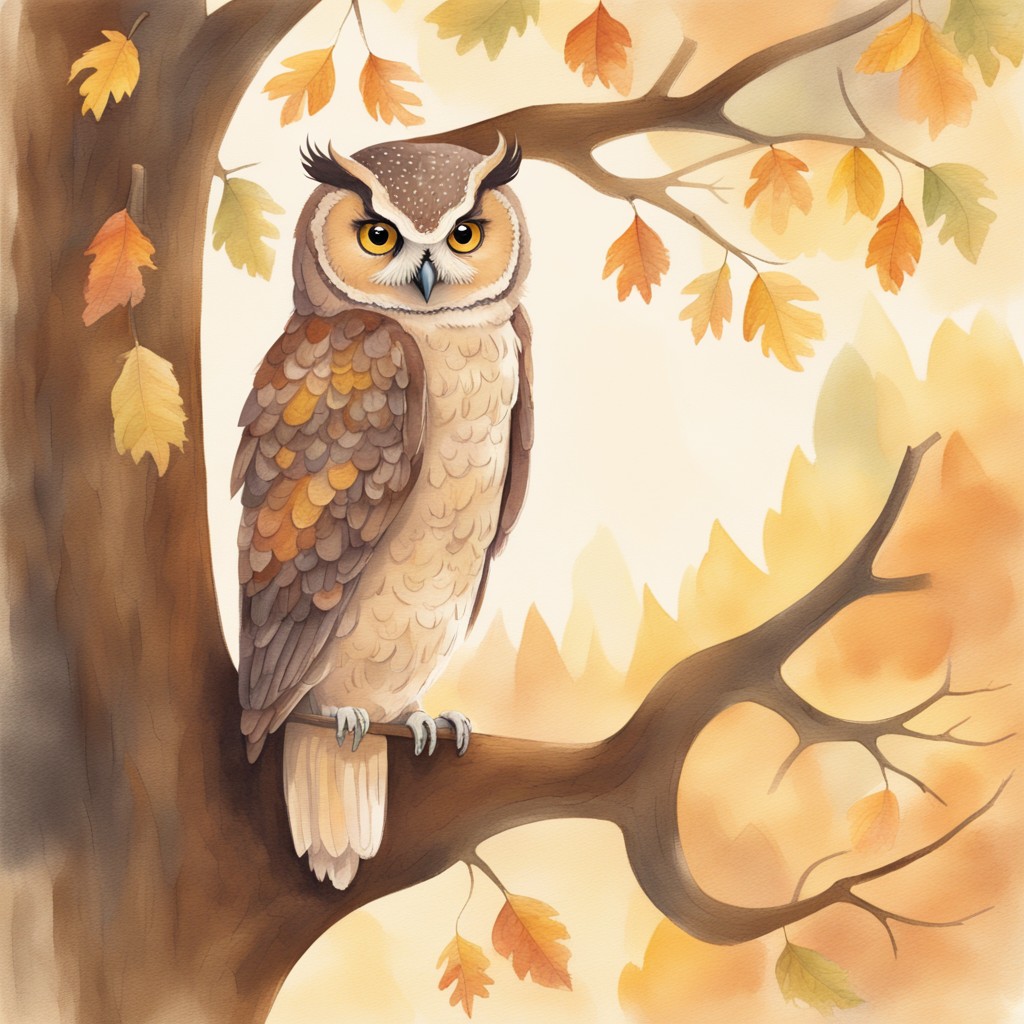
High above the Whispering Woods, where the tallest oak tree stretched toward the clouds like a giant reaching for the stars, there lived a courtroom unlike any other. It wasn't made of wood and stone with stern judges in black robes. It was built from woven branches, soft moss cushions, and dappled sunlight filtering through emerald leaves. This was the Tree Court, and its judge was a wise old owl named Solomon.
Solomon had feathers the color of autumn twilight—deep browns and soft grays with eyes that shone like polished amber. He wore no gavel, no wig, no robes of authority. His only symbols of office were his patient heart and his extraordinary ability to listen—not just to words, but to the feelings behind them.
"Justice," Solomon often told the young owlets who gathered at his talons, "isn't about being right. It's about being fair. And fairness sometimes means looking at things from every side, not just your own."
The Tree Court met every week, but this particular morning was different. Word had spread quickly through the forest that a serious dispute had arisen—one that threatened to divide the meadow creatures from the woodland creatures, the fliers from the ground-dwellers. Solomon ruffled his feathers and blinked his amber eyes. It was going to be a challenging case.
The dispute centered on the Meadow Stream, a sparkling ribbon of water that wound through the forest like a silver necklace. For as long as anyone could remember, all creatures had shared the stream freely. The rabbits drank from its banks, the fish swam in its depths, the birds bathed in its shallows, and the deer waded through its gentle currents to reach the sweetest clover.
But then came the Dry Season.
For three long months, the rain had stayed away. The stream, once full and singing, had shrunk to a narrow trickle. The water that remained was barely enough for everyone, and tempers had grown as short as the water supply.
The beavers, led by a large, hardworking fellow named Brutus, had built a dam upstream. "We need deep water for our lodge," Brutus insisted, his flat tail slapping the muddy bank. "Our kits are small. They can't swim in shallow water. We're not being selfish—we're protecting our family!"
But downstream, the situation grew desperate. The frogs found their puddles drying up. The herons had nowhere to stand and fish. The meadow mice traveled farther and farther, risking encounters with hawks, just to find a sip of water.
"The beavers are hoarding all the water!" cried Felicity, a sleek fox who spoke for the downstream creatures. "They've taken more than their share. It isn't fair!"
"Fair?" Brutus splashed angrily. "We worked hard to build that dam! We used our teeth, our energy, our time. Why shouldn't we benefit from our own labor?"
The argument had grown so heated that creatures had stopped speaking to each other. The meadow, once a place of sharing and friendship, had become divided into "upstream" and "downstream," with suspicion and resentment flowing stronger than the water itself.
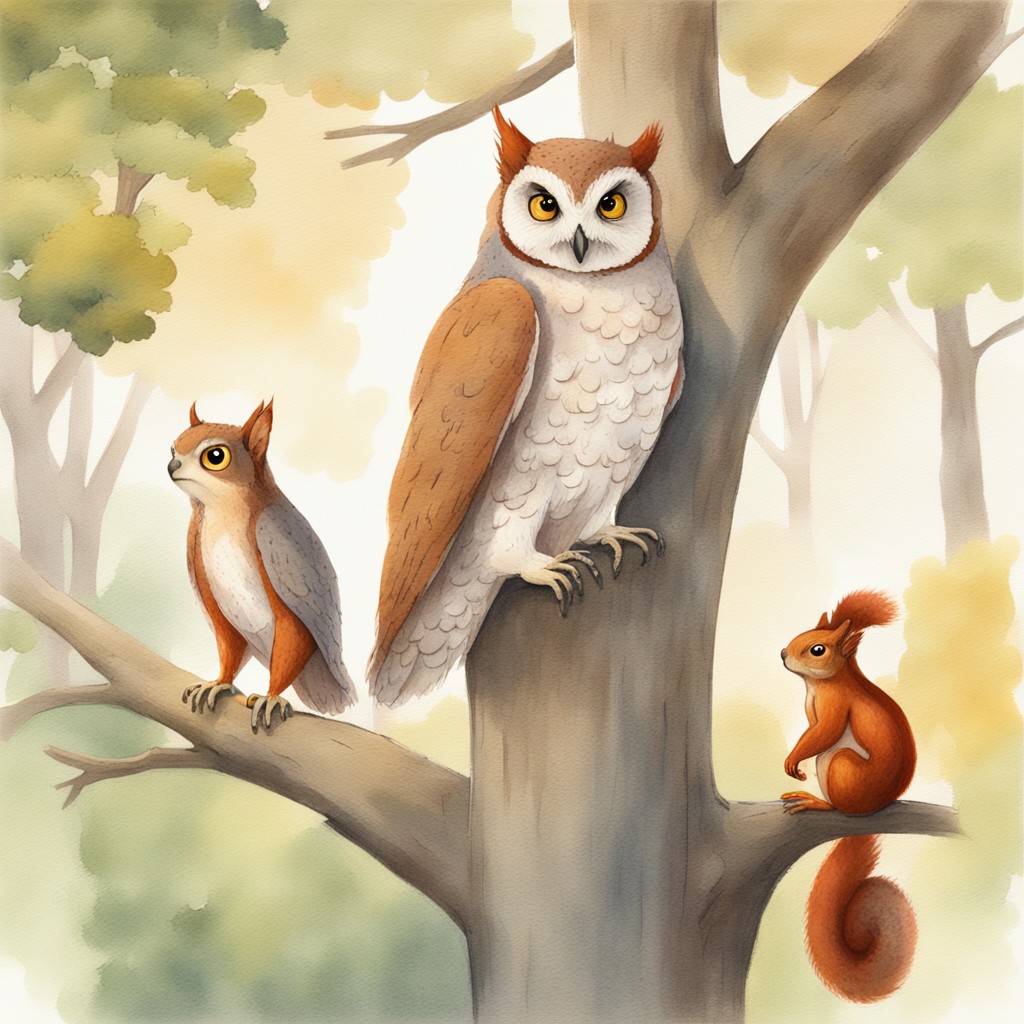
Solomon listened to both sides in his tree court, perched on his branch bench with the morning sun warming his back. He asked questions—gentle but probing questions that made everyone think deeper.
"Brutus," Solomon hooted softly, "tell me about your kits. How many do you have?"
"Six," the beaver replied, his voice softening at the mention of his children. "The youngest is barely bigger than my paw. She needs calm, deep water to learn to swim safely."
"And how many creatures live downstream who also need this water?"
Brutus was silent for a moment. "I... I don't know. I never counted."
"Felicity," Solomon turned his head, "tell me about the work the beavers did. How long did it take them to build that dam?"
"Weeks," the fox admitted grudgingly. "They worked from dawn to dusk."
"And what would happen if the dam disappeared? If a storm broke it?"
"The water would rush downstream," Felicity said slowly. "But then... there would be no deep pools for anyone. Not even the beavers."
Solomon nodded. "So the dam creates something valuable. But it also changes who can use the water."
He asked more questions—of the herons, the frogs, the mice, even the fish who swam silently beneath the surface. He learned that some creatures needed deep water, others needed flowing water, and some just needed a small, quiet place to drink.
After three days of listening, Solomon called the court to order for his judgment. The Tree Court was packed. Creatures hung from branches, perched on twigs, and sat on mossy stones. Even the wind seemed to quiet, waiting to hear what the wise owl would say.
"My friends," Solomon began, his voice carrying clearly through the branches, "I have heard your fears, your frustrations, and your needs. And I believe there is a solution that can be fair to everyone—but it requires something from all of you."
He spread his wings to indicate the entire forest. "Justice is not about taking sides. It is not about deciding who is right and who is wrong. True justice asks: how can we all get what we need while respecting what others need too?"
Solomon explained that the beavers' dam was important—it created safe homes and deep pools. But the dam could be modified. Small channels could allow water to flow downstream in a controlled way. Rocks could be placed to create shallow drinking spots for small creatures. The deep pools could be shared at certain times.
"Brutus, your family deserves safety. But does safety require all the water, or just enough deep water for your lodge?"
The beaver thought hard. "Just... just enough for the lodge and the nearby pools. We don't need the entire stream."
"And Felicity, do the downstream creatures need all the water rushing freely, or do they need reliable access to enough water for their needs?"
Felicity's ears drooped slightly. "We need... enough. We don't want to take everything from the beavers. We just don't want to be left with nothing."
Solomon's amber eyes glowed with warmth. "Then we have the beginning of justice. Both sides are willing to share. Now we must figure out how."
He proposed a plan:
The beavers would keep their dam but add small openings—"friendship gates" he called them—that would let a measured amount of water flow downstream at all times.
In return, the downstream creatures would help maintain these gates and protect the beaver lodge from any creature who might try to damage it.
A schedule would be created: early morning for large animals to drink, midday for birds to bathe, and evening for small creatures to gather at safe, shallow pools.
Everyone would contribute something. The strong helped build and maintain. The quick helped deliver messages. The small helped find leaks and blockages. Even the youngest creatures could help by keeping the area clean.
At first, some creatures grumbled. Change is hard, especially when fear has been your companion for weeks. But Solomon didn't just give orders—he worked alongside them. He flew overhead, watching how the water moved, helping the beavers figure out where to place the gates. He encouraged the frogs to speak up about exactly how much water they needed. He helped the herons find new fishing spots that the modified stream had created.
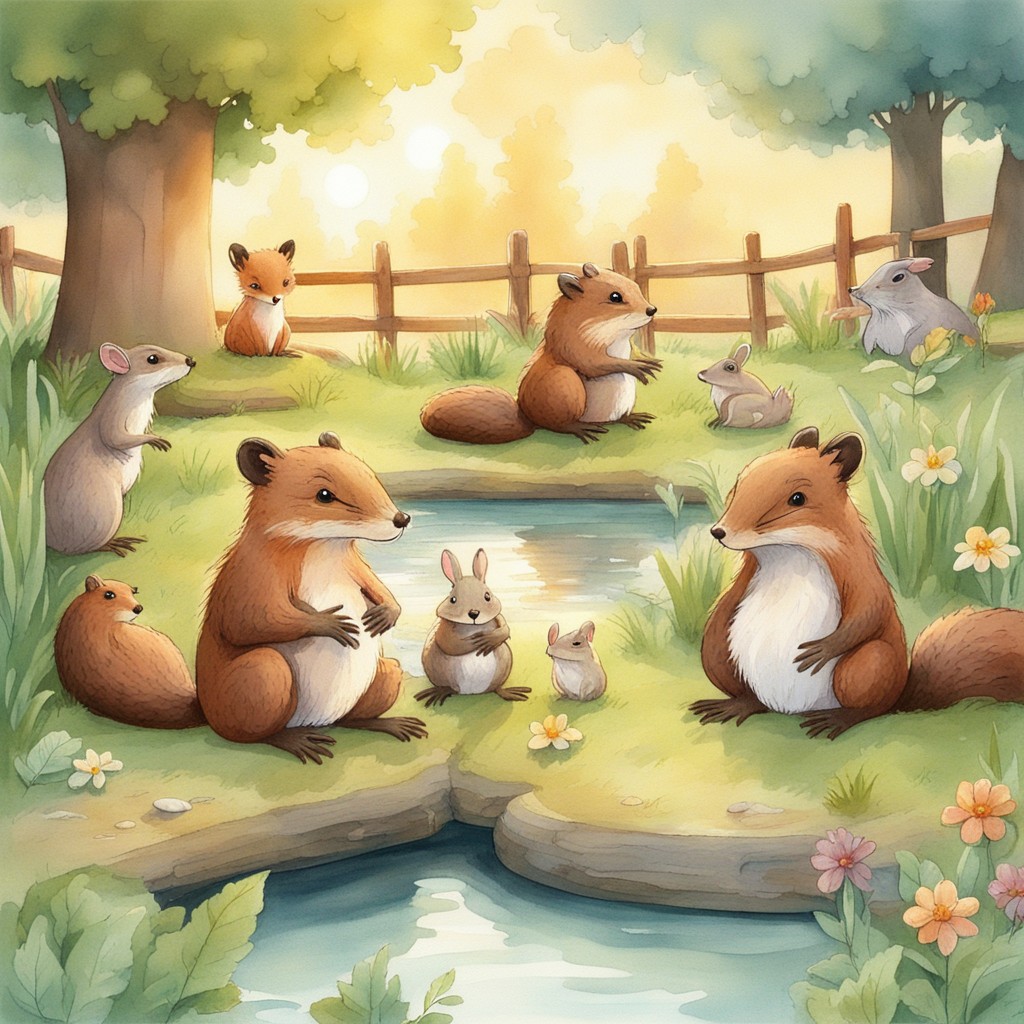
Slowly, something wonderful happened. The meadow began to heal—not just physically, but in spirit.
Brutus discovered that by sharing water, he had made friends who warned him when predators approached. Felicity found that the controlled flow created new, richer hunting grounds for her kits. The frogs, with their steady water supply, sang louder and more beautifully than ever, their evening chorus becoming the meadow's favorite lullaby.
One evening, as the sun painted the sky in watercolor pinks and golds, young Thistle—a tiny field mouse who had been too frightened to speak during the dispute—approached Solomon's tree.
"Sir?" Thistle squeaked, his whiskers trembling. "I don't understand. Why did everyone have to change? The beavers were taking too much. Why didn't you just make them stop?"
Solomon flew down to a low branch so the small mouse wouldn't have to crane his neck. "Because justice isn't about punishment, little one. It's about balance. If I had simply forced the beavers to remove their dam, their kits would have suffered. That wouldn't be fair either."
"But they were wrong to take all the water," Thistle insisted.
"They were afraid," Solomon corrected gently. "Fear makes us protect what we have, sometimes too fiercely. The beavers weren't bad—they were scared for their family. And the downstream creatures were scared too. Fear was the real problem, not the beavers themselves."
He gestured with a wing toward the stream below, where rabbits and beavers now drank side by side. "True justice finds a way for everyone to feel safe. It doesn't just take from one to give to another. It asks: how can we all have enough?"
Thistle thought about this. "So justice means... sharing?"
"It means more than sharing," Solomon explained. "It means listening to understand, not just to argue. It means looking at problems from every side. It means finding solutions where everyone benefits, even if no one gets everything they want."
The owl blinked slowly, his amber eyes thoughtful. "Justice is hard work, Thistle. It's much easier to just say 'you're wrong and I'm right.' But easy answers usually leave someone hurt. Real justice takes patience, creativity, and a big heart."
As the seasons changed and the rains eventually returned, the Meadow Stream flowed full and strong once more. But the creatures never forgot what they had learned.
The friendship gates remained, not because they were needed for water anymore, but as a reminder that cooperation and fairness had saved them all.
The Tree Court continued to meet, and Solomon continued to listen. Over time, other disputes came to his branch bench: arguments over food stores, misunderstandings about territory, accidents that caused hurt feelings. Each time, Solomon applied the same principles.
Listen to everyone. Ask gentle questions. Look for solutions where all can win. Remember that fairness doesn't mean everyone gets the same thing—it means everyone gets what they need. And always, always look for the fear or worry behind the anger. Because creatures who feel safe and heard rarely need to fight.
One autumn evening, years later, a young owl named Athena came to Solomon. She was ready to become a judge herself, and she asked him the secret of his wisdom.
"How do you always know what is fair?" she asked, her eyes wide with admiration.
Solomon chuckled, a soft hooting sound. "I don't, my dear. I don't always know. But I always listen. I always ask. I always remember that every creature sees the world from their own branch, and no single branch shows the whole forest."
He gazed at the Meadow Stream below, where creatures of every kind now lived in harmony. "Justice isn't about having all the answers. It's about caring enough to find answers that work for everyone. It's about being brave enough to look past your own needs to see the needs of others."
Athena nodded slowly, understanding. "Justice is... love with fairness?"
Solomon smiled, his amber eyes glowing in the sunset. "Yes, little one. Justice is love with fairness. And fairness with love. Two wings that help the whole forest fly."
As the stars began to twinkle above the Whispering Woods, the creatures of the meadow settled into their homes—beavers in their lodge, rabbits in their burrows, birds in their nests, mice in their cozy holes. Each had enough. Each felt safe. Each knew that if tomorrow brought a new problem, the Tree Court would help them find a fair solution.
Because in a just community, no one is left behind. And no one stands alone.
THE END
Moral of the Story: Justice isn't about deciding who wins and who loses. It's about listening to all sides, understanding different needs, and finding solutions where everyone can feel safe and respected. True fairness means making sure everyone has enough—not that everyone gets exactly the same thing. When we approach conflicts with patience and empathy, we discover that most problems have solutions that help everyone, not just some.