The Song of Many Voices: A Story About Cooperation
The Song of Many Voices: A Story About Cooperation
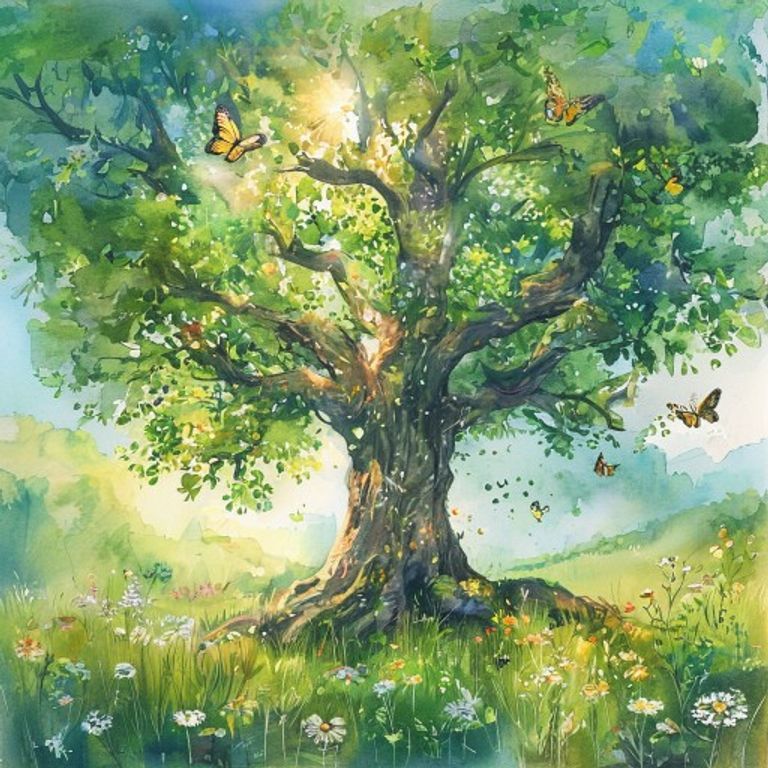
In a sun-dappled meadow at the edge of the Whispering Woods, where wildflowers danced in the breeze and butterflies painted the air with color, lived a community of forest animals. They were neighbors, but they were not truly friends. Each creature kept to themselves, tending their own burrows, gathering their own food, solving their own problems.
The squirrels hoarded acorns in secret stashes. The rabbits dug their warrens alone. The birds sang only solos. And the ants, though they lived in a colony, marched in rigid lines that never deviated from their predetermined paths.
In the center of the meadow stood the Great Oak, the oldest tree in the forest. Its branches reached toward the sky like welcoming arms, and its roots stretched deep into the earth, binding the soil together. But the Great Oak was dying. Its leaves, once a vibrant green, had turned the color of old parchment. Its bark was cracking. And deep within its trunk, a fungal infection was spreading, slowly consuming its heartwood.
The animals noticed, of course. But each thought the same thing: Someone else will fix it. It is not my problem.
Little Finch, the smallest songbird in the meadow, was the first to truly see. She perched on a drooping branch one morning, her feathers the color of sunshine, and felt the Great Oak shudder beneath her feet.
"Please," the tree seemed to whisper, though its voice was faint and dry. "Help me."
Finch fluttered to the ground and hopped from animal to animal, begging for help.
"Squirrel," she chirped. "The Great Oak is sick. Will you gather medicine herbs from the high branches?"
Squirrel twitched his bushy tail. "I am too busy collecting acorns for winter. The oak is not my concern."
"Rabbit," Finch pleaded. "Will you dig channels to drain the stagnant water pooling at the roots?"
Rabbit twitched her nose. "My warren needs expanding. I have no time for trees."
"Ants," Finch begged. "Will you carry nutrients from the forest floor to feed the roots?"
The Ant Queen, riding on a leaf carried by her soldiers, clicked her mandibles. "We follow our paths. We do not deviate. The oak is not on our route."
Finch sat alone beneath the dying tree, tears falling like dewdrops. "No one will help," she whispered. "No one cares."
But then she heard a voice, soft and melodious, coming from inside the hollow trunk.
"They do care," the voice said. "They have simply forgotten how to work together."

From the shadows emerged a creature no one had ever seen before. She was part butterfly, with wings that shimmered like stained glass. Part firefly, with a gentle glow that pulsed like a heartbeat. And part songbird, with a voice that harmonized with itself in three parts.
"I am Harmonia," she said, bowing gracefully. "The Spirit of Cooperation. I have slept in this oak for a hundred years, waiting for the meadow to need me again."
"Can you save the tree?" Finch asked.
"Not alone," Harmonia said. "But together, you can."
She spread her wings, and from them fell glittering dust that sparkled in the sunlight. The dust drifted on the wind, carrying with it a melody so beautiful that every animal in the meadow stopped what they were doing and listened.
"Gather, friends of the meadow!" Harmonia's voice rang out, clear and warm. "The Great Oak needs you. And more importantly, you need each other."
The animals came, slowly at first, then with growing curiosity. Squirrel descended from his oak. Rabbit emerged from her burrow. The ants marched in a new formation, their paths converging on the Great Oak.
"The tree is sick," Harmonia explained, touching the cracked bark with gentle fingers. "But no single creature can heal it. Squirrel, you are nimble and brave. Can you climb to the highest branches and apply healing sap to the fungus?"
Squirrel puffed out his chest. "I can climb anything! But I cannot carry enough sap. It is too heavy for my small paws."
"Ants," Harmonia said. "You are strong for your size, and there are many of you. Can you carry the sap in your mandibles, bucket-brigade style, from the forest floor to the highest branches?"
The Ant Queen considered. "It is not our usual path. But... yes. We can do this."
"Rabbit," Harmonia continued. "Your digging skills are unmatched. Can you create channels to drain the stagnant water and aerate the soil?"
Rabbit's ears perked up. "I love digging! But the soil near the oak is hard clay. My paws will grow sore."
"Finch," Harmonia said, turning to the little songbird. "Your beak is perfect for breaking up compacted soil. And your songs can cheer the workers when they grow tired. Will you help?"
Finch puffed out her chest, which was barely the size of a thimble. "I will do my best!"
"And I," Harmonia said, "will coordinate. I will sing the rhythm that keeps us in time. I will shine my light so work can continue after sunset. And I will remind each of you, when you grow weary, why this matters."
The work began.
Squirrel scampered up the trunk, his claws finding holds in the rough bark. He reached the highest branches, where the fungus had spread like dark lace, and called down: "I am ready!"
The ants formed a living chain, passing tiny drops of healing sap from mandible to mandible, up the trunk, across branches, until they reached Squirrel. He applied the medicine with careful paws, spreading it over the infected areas.
But the ants grew tired. Their legs ached. Their mandibles cramped.
"I cannot continue," the Ant Queen admitted, her antennae drooping.
Finch landed on a branch above them and began to sing. It was a song of perseverance, of small creatures doing big things. The melody lifted the ants' spirits, and they found new strength.
Meanwhile, Rabbit dug channels through the clay soil, her powerful hind legs throwing dirt in rhythmic arcs. But the clay was stubborn, and soon her paws were raw and bleeding.
"I must stop," she panted. "It hurts too much."
Finch fluttered down and used her tiny beak to break up the hardest clumps. "Together," she chirped. "We are stronger together."
And Harmonia sang a song of healing, her voice wrapping around Rabbit's paws like a cool balm, easing the pain.
By sunset, the first stage was complete. The fungus had been treated. The water was draining. The soil was breathing again.
But the Great Oak was still weak. It needed nutrients. Deep nutrients, from the heart of the earth, that only the tree's deepest roots could reach.
"The roots stretch far," Harmonia explained. "To the riverbed in the east, the mineral caves in the west, the composting forest in the north, and the volcanic warm springs in the south. No single animal can make all these journeys."
"I can reach the riverbed," Squirrel said. "But I cannot carry much."
"My ants can reach the mineral caves," the Ant Queen offered. "But only if we work in shifts."
"I can dig to the composting forest," Rabbit said. "But I am not fast."
"And I can fly to the warm springs," Finch chirped. "But my beak can only carry a single drop."
"Then we will all go," Harmonia said, smiling. "And we will meet back here by moonrise."

Squirrel raced to the riverbed, his tail streaming behind him like a banner. He filled his cheeks with nutrient-rich water, careful not to swallow a drop. The journey back was harder - his cheeks were heavy, his legs tired. But he thought of the Great Oak, and he kept running.
The ants marched to the mineral caves, a thousand tiny feet moving in perfect synchronization. They gathered grains of phosphorus and potassium, loading them onto their backs like precious cargo. The journey was long, and many ants stumbled. But their sisters helped them up, carrying their loads until they recovered.
Rabbit dug through the forest floor, following the scent of rich, dark compost. She filled her burrow with the life-giving material, then pushed it toward the surface, one hop at a time. Her paws screamed in protest, but she thought of Finch's song, and she kept digging.
Finch flew to the warm springs, her tiny wings beating faster than a hummingbird's heart. She dipped her beak into the mineral-rich water, filling a thimble-sized leaf-cup that she carried in her claws. The leaf was heavy. The wind buffeted her. But she tucked the leaf close and flew with all her might.
By moonrise, they all returned.
Squirrel emptied his cheeks at the base of the tree. The ants deposited their minerals in neat piles. Rabbit pushed the compost to the surface. And Finch carefully poured her thimble of warm spring water onto the roots.
Harmonia raised her wings, and her light grew bright as the moon. "Now," she sang, "we must combine these gifts. Finch, use your beak to mix the compost and minerals. Rabbit, dig them into the soil. Squirrel, pour the river water. And ants, spread the spring water along the roots."
They worked through the night. When one grew tired, another took their place. When one despaired, another offered encouragement. They were no longer separate animals, each alone in the world. They were a team. A community. A family.
And as dawn broke over the meadow, something miraculous happened.
A single bud appeared on the highest branch of the Great Oak. It was small and green and perfect. Then another appeared. And another. Within hours, the tree was covered in new growth, its leaves unfurling like flags of hope.
The animals cheered. Squirrel did backflips from branch to branch. Rabbit thumped her powerful legs in joy. The ants formed a celebratory spiral. And Finch sang a song so beautiful that birds from neighboring forests flew to listen.
"You see?" Harmonia said, her voice gentle. "Alone, each of you is small. Squirrel, you can climb but cannot carry heavy loads. Rabbit, you can dig but cannot reach high places. Ants, you are many but tiny. Finch, you can fly but are fragile."
"But together?" she continued, her wings spreading to encompass them all. "Together, you can do anything. The tree is healed not because one of you was strong enough, but because all of you were strong together."
From that day forward, the meadow changed.
The squirrels shared their acorn stashes with hungry rabbits in winter. The rabbits dug communal burrows where everyone could shelter from storms. The birds sang in choirs, their harmonies so beautiful that travelers would stop to listen. And the ants expanded their routes to help deliver messages and goods across the meadow.
When the Great Oak bore acorns that fall, they were the largest and sweetest anyone had ever tasted. The animals gathered beneath its branches for a harvest feast, each bringing something to share.
Squirrel brought acorn bread. Rabbit brought carrot cakes. The ants brought honeydew wine. And Finch led the community in a song of thanks.
"To cooperation!" they cheered, raising their glasses.
"To us!" Harmonia amended, her light glowing warm and golden. "To all of us, together."
And beneath the Great Oak, now stronger than ever, the animals danced and sang and celebrated the truth they had learned:
Alone, we are but single notes. But together, we are a symphony.
Moral of the Story: Cooperation means working together to achieve what we cannot do alone. Squirrel could climb but not carry heavy loads. Rabbit could dig but not reach high places. The ants were many but tiny. Finch could fly but was small. Alone, none of them could save the Great Oak. But together, their combined strengths healed the tree and made their meadow a better home for everyone. So remember, when a task seems too big, do not try to do it all yourself. Ask for help. Offer help. Work together. Because together, we can do anything. Alone, we are but single notes. But together, we are a symphony.
Age Range: 4-8 years | Reading Time: ~10 minutes | Core Value: Cooperation