The Rabbit Who Learned to Jump with His Heart: A Story About Humility
In the heart of Whiskerwood Forest, where the trees grew so tall they tickled the bellies of clouds and the streams sang lullabies to the ferns, there lived a young rabbit named Bramble. He was not the biggest rabbit, nor the strongest, nor the fastest. But he had something that made him special—a gift so rare that animals traveled from three valleys away just to witness it.
Bramble could jump.
Not just hop, like ordinary rabbits. Not just leap, like skilled rabbits. Bramble could soar through the air like a feather caught in an updraft, like a leaf dancing on the wind, like a dream taking flight. He could clear streams in a single bound, leap over fallen logs that other rabbits had to walk around, and once—though only the oldest squirrels remembered it—he had jumped so high that his ears had brushed against a low-hanging cloud.
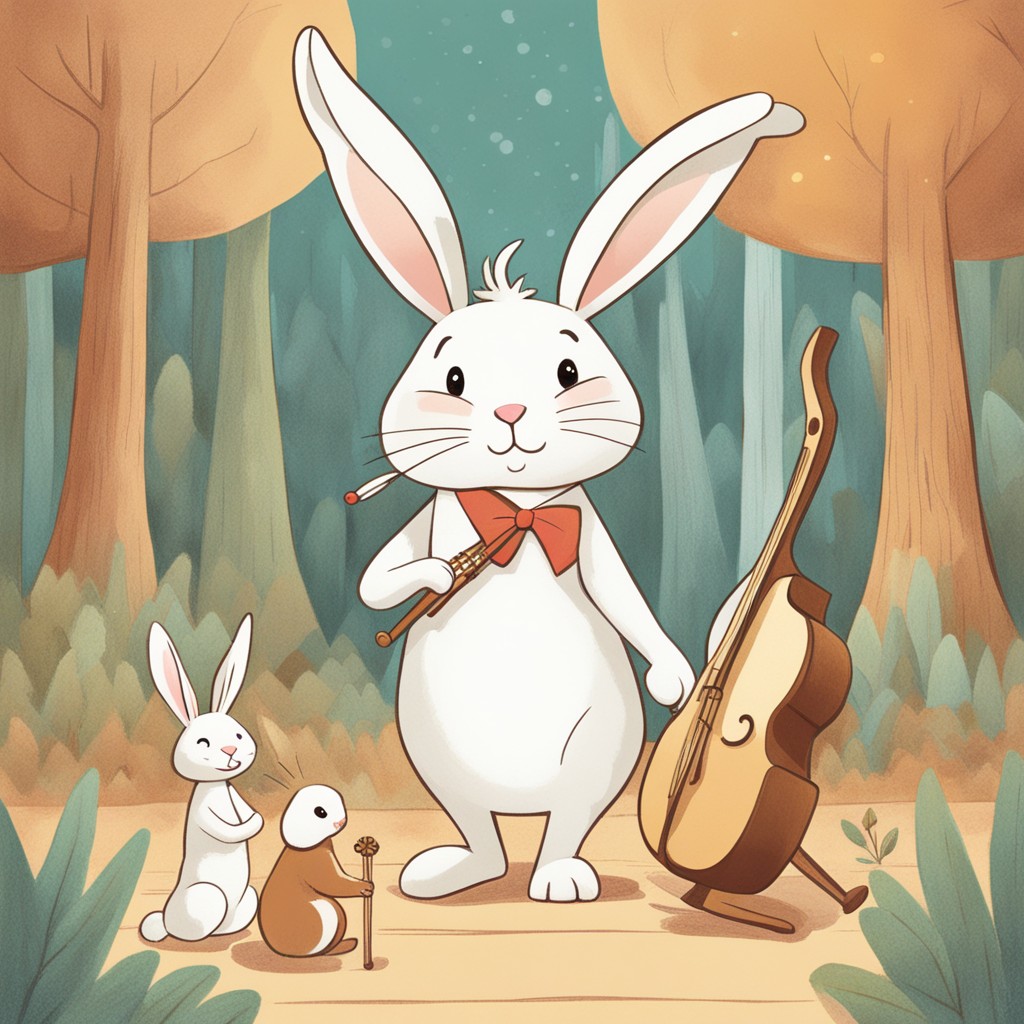
Every morning, Bramble practiced his jumps in the Great Clearing, a meadow of soft grass and wildflowers that the forest animals used as their gathering place. He would begin with small hops, warming his legs, feeling the earth beneath his paws. Then he would run, faster and faster, his muscles coiling like springs, and launch himself into the air.
The first jump of the day was always good. The second was better. But by the tenth jump, when his blood was singing and his heart was drumming and the wind was whispering secrets in his ears, Bramble could fly.
And every morning, a crowd gathered to watch.
Squirrels chattered from the branches. Mice squeaked from the grass. Birds paused in their singing to watch him pass. Even the foxes, who normally inspired fear in rabbits, sat at the edge of the clearing with something like wonder in their golden eyes.
"Did you see that?" the animals would gasp as Bramble touched down, his landing so soft that the dandelions barely trembled. "He jumped higher than the blackberry bushes!"
"Higher than the ferns!"
"Higher than the young oak tree!"
Bramble loved the attention. He loved the gasps, the applause, the way the other animals looked at him with eyes full of admiration. He began to jump not just for the joy of it, but for the praise. He started adding flourishes—twists in midair, landing poses, dramatic bows that made his ears sweep the grass.
"Thank you, thank you," he would say, accepting the admiration like a king accepting tribute. "Yes, I know. I'm quite remarkable."
At first, the other animals didn't mind his pride. After all, he WAS remarkable. His jumps were truly extraordinary. But as the seasons turned and the leaves changed from green to gold to white and back again, something began to shift in Bramble's heart.
He stopped practicing with the other young rabbits. "They're too slow," he told himself. "They'd only hold me back."
He stopped listening to advice. "What could a squirrel know about jumping?" he scoffed when Nutkin the squirrel suggested he tuck his legs differently. "I am the greatest jumper in the history of Whiskerwood. I don't need advice."
He stopped thanking the forest for his gift. No longer did he feel the grass beneath his paws and whisper a grateful prayer. No longer did he land and look up at the sky with wonder. Instead, he looked around for the crowd, for the admiring eyes, for the validation that he was special.
And slowly, quietly, the other animals began to drift away.
One crisp autumn morning, when the air smelled of cider and the leaves were painting the forest in shades of flame and gold, an announcement echoed through Whiskerwood. The Forest Council was organizing the Grand Talent Show—a celebration where every animal could share their special gift. There would be singing and dancing, storytelling and acrobatics, and of course, a jumping competition.
Bramble's heart leaped at the news. This was his moment. This was his chance to show everyone—not just the animals of Whiskerwood, but all the creatures from the neighboring valleys—just how extraordinary he truly was.
"I will win, of course," he told anyone who would listen. "There is no one who can jump like me. I am the greatest jumper the forest has ever known. Perhaps the greatest jumper in the entire world."
The other rabbits, who had once been his friends, exchanged glances. "Maybe," said Thistle, a gentle brown rabbit with kind eyes, "you should practice with us. The Talent Show is different from jumping in the clearing. There are rules. There are judges. There are—"
"I don't need practice," Bramble interrupted, his nose twitching with impatience. "I don't need rules. I am Bramble the Magnificent, and my jumps speak for themselves."
In the weeks leading up to the Talent Show, Bramble grew more insufferable with each passing day. He boasted to the sparrows, who were practicing their harmony. He bragged to the badgers, who were rehearsing their poetry. He even dismissed the foxes' elaborate dance routine as "nothing compared to what I can do."
"You're very talented," said Sable, a silver-furred fox who had always been kind to Bramble, even when others grew tired of his boasting. "But talent without humility is like a song without melody. It may be loud, but it is not beautiful."
Bramble laughed, a sharp sound like dry leaves cracking. "Humility is for ordinary animals. I am extraordinary. I don't need to be humble."
Sable said nothing more. But her golden eyes held a sadness that Bramble was too proud to see.
The day of the Grand Talent Show dawned bright and clear. The Great Clearing had been transformed into a magnificent stage, with rings of mushrooms for seats and ribbons of ivy for decoration. Animals from three valleys crowded the meadow, their excited chatter filling the air like the buzzing of a thousand bees.
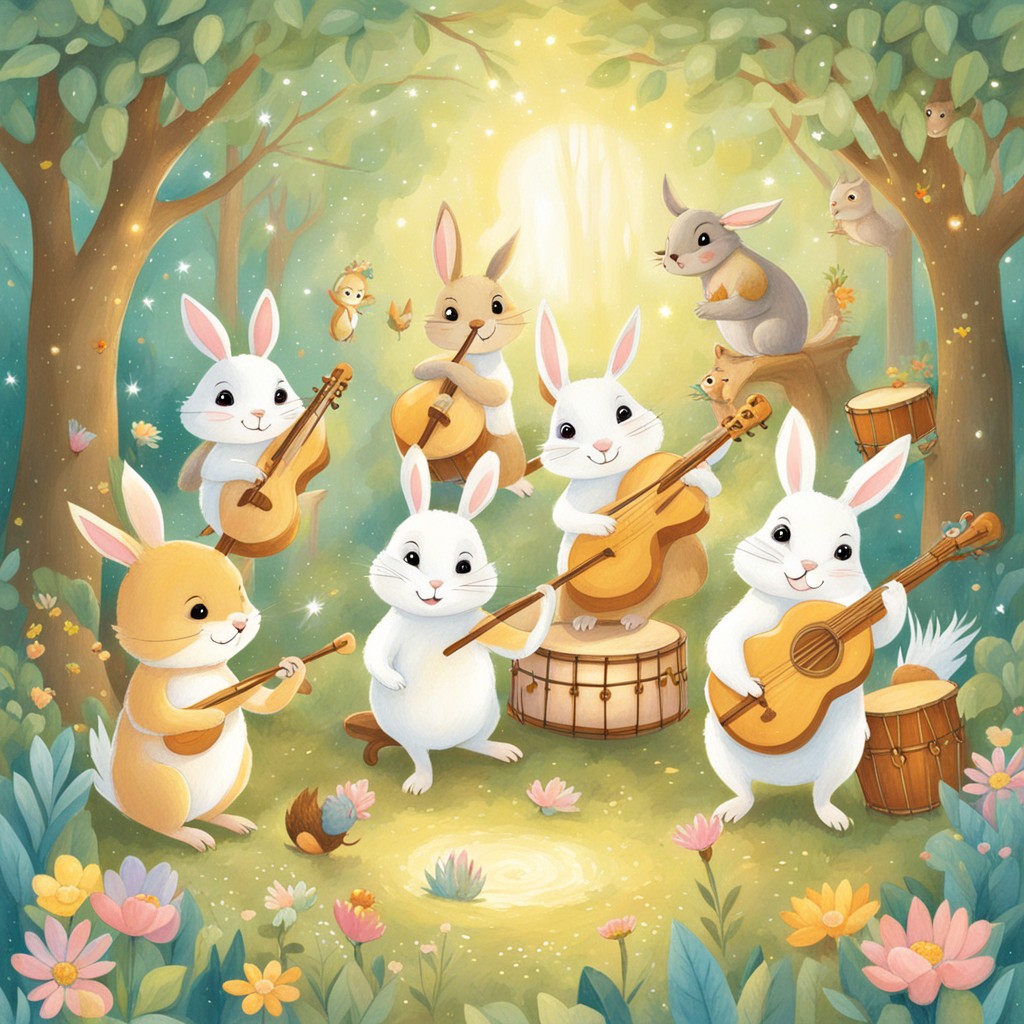
Bramble arrived fashionably late, his fur groomed to perfection, his ears held high. He pushed through the crowd without apology, expecting—and receiving—a path to the front.
"Make way for the champion!" he announced, though the competition hadn't even begun.
The Talent Show opened with the sparrows' harmony, which was so beautiful that tears formed in the eyes of the hardest-hearted badgers. Then came the badgers' poetry, which spoke of ancient forests and forgotten wisdom. The foxes' dance was breathtaking, a swirling display of grace and precision that left the audience gasping.
Bramble watched each performance with growing impatience. "When do I go on?" he demanded of the squirrel who was managing the schedule. "These other acts are fine, I suppose, for ordinary animals. But everyone is waiting for ME."
"You'll be last," the squirrel said quietly. "The finale."
"As it should be," Bramble said, settling into a patch of clover. "Save the best for last."
But as he waited, something unexpected happened. He began to truly watch the other performances. He saw the sparrows—not just heard their song, but saw how they worked together, each bird adjusting to the others, creating something greater than any single voice could achieve. He saw the badgers' poetry—not just the words, but the years of study, the love of language, the desire to share wisdom. He saw the foxes' dance—not just the leaps and spins, but the hours of practice, the bruised paws, the determination to create something beautiful.
And for the first time, Bramble felt a strange sensation in his chest. It wasn't pride. It wasn't confidence. It was something smaller, quieter, but somehow more powerful.
It was wonder.
"They're... they're amazing," he whispered to himself, and the words felt strange in his mouth. "All of them. They're all amazing."
At last, it was Bramble's turn. His name was announced, and the crowd fell silent. Thousands of eyes turned to him, expectant, curious, hopeful.
Bramble hopped onto the stage, his heart pounding. But something was different. The pride that usually filled him like a balloon was... smaller. The confidence that made his ears stand tall felt... shaky.
He looked out at the crowd and saw Thistle, his old friend, who had offered to practice with him. He saw Sable the fox, who had spoken of humility. He saw the sparrows and badgers and foxes, all of whom had shared their gifts so generously, without boasting, without demanding admiration.
And Bramble realized, with a clarity that made his whiskers tremble, that he had been wrong.
Not about his jumping. His jumps WERE extraordinary. But about what made them matter. He had thought his gift made him better than others. He had thought talent was a reason to look down, not around. He had thought that being special meant being separate.
He was wrong.
The music began—a gentle melody played by crickets and cicadas, their wings creating rhythms that made the heart swell. Bramble ran, his legs pumping, his muscles coiling.
And he jumped.
It was a good jump. A very good jump. Higher than the ferns, higher than the young oak, almost high enough to touch the clouds. The crowd gasped and cheered, and Bramble felt the familiar rush of pride.
But as he landed, he looked at Thistle. He looked at Sable. He looked at all the animals who had shared their gifts today, not for praise, but for joy. And he made a choice.
He didn't take a bow. He didn't accept the applause as his due. Instead, he turned to the other rabbits who had competed—rabbits whose jumps had been good, very good, but not as high as his.
"Did you see Thistle's jump?" Bramble called out, his voice ringing across the clearing. "The way he tucked his legs? That was perfect form. I could learn from that."
The crowd fell silent, confused. This was not the Bramble they knew.
"And Clover," Bramble continued, pointing to a small white rabbit who had trembled with nerves before her jump. "She was so afraid, but she jumped anyway. That took more courage than any height I could reach."
Clover's ears perked up in surprise, her eyes wide with disbelief.
"And Hickory," Bramble said, turning to an older rabbit with a lame leg who had done a simple hop rather than a grand leap. "He taught us that jumping isn't about how high you go. It's about getting back up when life knocks you down."
Hickory, who had been preparing to leave early to avoid the pitying looks, sat up straighter, his chest swelling with pride.
Bramble turned to the crowd, and his voice was different now—not the voice of a boastful show-off, but the voice of a friend, a fellow traveler, a grateful heart.
"I can jump high," he said. "Very high. But I am not the greatest jumper in the forest. I am not the greatest jumper in the world. I am just a rabbit who loves to jump, who was given a gift by the forest, who had teachers and friends and lucky breaks that helped me become what I am."
He looked at Thistle, at Sable, at all the animals who had drifted away from him over the seasons.
"I forgot something important," he said, his voice trembling. "I forgot that a gift is not about the one who receives it. It's about the one who gives it. The forest gave me my jumps, not so I could look down on others, but so I could lift them up. Not so I could be separate, but so I could be part of something bigger."
He took a deep breath, and when he spoke again, his words were simple but true.
"I am sorry," he said. "I am sorry for my pride. I am sorry for my boasting. I am sorry for forgetting that every animal here has a gift worth celebrating—not just mine."
The clearing was silent. Then, slowly, Thistle began to clap. Clover joined in. Hickory thumped his good leg against the ground. The sparrows chirped, the badgers huffed, the foxes yipped, and soon the entire meadow was filled with a sound more beautiful than any single performance—the sound of a community forgiving, accepting, welcoming home one of its own.
Sable the fox stepped forward, her silver fur gleaming in the afternoon light. "Bramble," she said, her voice warm with approval, "do you know what true greatness is?"
Bramble shook his head.
"True greatness," Sable said, "is not jumping higher than everyone else. It is recognizing that everyone has something worth jumping for. True humility is not thinking less of yourself. It is thinking of yourself less. And today, Bramble, you have shown us all what true greatness looks like."
The Grand Talent Show concluded not with Bramble's magnificent jump, but with something far more meaningful—a group performance where every animal contributed their gift, where the sparrows sang and the badgers recited and the foxes danced and the rabbits jumped, all together, all equally valued, all part of one beautiful whole.
Bramble didn't jump the highest that day. But he had never felt lighter, never felt freer, never felt more genuinely happy. For he had discovered something far more valuable than the ability to soar through the air.
He had discovered the ability to lift others up with him.
In the seasons that followed, Bramble became known not as Bramble the Magnificent, but as Bramble the Humble—the rabbit who had learned that true talent is not a crown to wear, but a gift to share. He practiced with the other rabbits, sharing techniques, offering encouragement, celebrating their progress as much as his own.
When young rabbits came to him, awestruck by his jumps, he didn't boast. Instead, he told them about the teachers who had helped him, the friends who had supported him, the forest that had given him his gift. He told them about the sparrows' harmony, the badgers' poetry, the foxes' dance. He told them that every gift mattered, that every animal was special, that the world was richer because of its variety.
And sometimes, on quiet mornings when the mist clung to the grass and the world felt new, Bramble would jump—not for the crowd, not for the praise, but for the pure, simple joy of feeling the wind in his fur and the sky above his ears.
And as he soared through the air, higher than the ferns, higher than the young oak, almost high enough to touch the clouds, he would whisper a prayer of gratitude—to the forest, to his friends, to the gift that had taught him the most important lesson of all.
That humility is not weakness. It is the strength to see the beauty in others. It is the wisdom to know that we are all part of something greater. It is the courage to say, "I am special, but so are you."
And that, in the end, is the highest jump of all.
The End
This story is part of the Core Values Series - a collection of bedtime stories that teach children important life values through magical tales.
Related Stories: